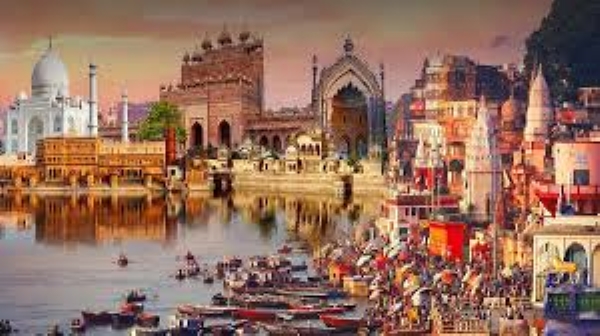
Lucknow, 07 June (HS): Circuit Uttar Pradesh depicts tourism
as a civilisational purpose. With this in mind, Chief Minister Yogi Adityanath
examined the tourist department's strategy. This connects growth to a cultural
rebirth, employment creation, and worldwide recognition. The Gyan Bharatam
Mission, Naimisharanya, Vindhyachal, and historical museums serve as anchors
for a vision based on Bharat's spiritual and intellectual history.
Uttar Pradesh is transforming the very foundation of tourism. Chief Minister
Yogi Adityanath reviewed the Tourism Department's strategy, and provided a
clear guidance. Tourism is more than just roads and buildings. It represents
cultural rebirth, local prosperity, and international respect. He also remarked
that Uttar Pradesh is more than just a religious hotspot. It reflects India's
cultural consciousness, spiritual tradition, and intellectual legacy. That
single remark reframes the state's tourist ambitions.
The Chief Minister emphasized that tourism must drive the
cultural economy. Local items increase market share, while handicrafts find
clients. Traditional arts, food, and the service industry are all increasing.
Every Mandir town serves as a source of income. Every pilgrim becomes a client
for a local craftsman.
Manuscripts as cultural capital: An assessment that began
with the Gyan Bharatam Mission. This program identifies, preserves, and
digitizes historic texts. More than 13.7 lakh manuscripts have already been
examined, digitized, and saved.The Chief Minister referred to these texts as
precious artifacts. They represent India's civilization, philosophy, science,
and cultural consciousness. He defined digitization as a bridge that ties
future generations to their roots, rather than an archive activity. This is an
example of heritage being used strategically. A nation's memory is lost when
its books disappear. Uttar Pradesh has chosen to remember.
Investment, innovation, and experience: The Chief Minister
also discussed suggested changes to the Tourism Policy-2022. The objective is
to make Uttar Pradesh a major hub for investment, innovation, and
experience-based tourism. New circuits will be developed in the following
months. Neem Karoli Baba Circuit will cater to a rising worldwide fanbase. The
Bundelkhand Fort Circuit would introduce visitors to a hitherto unexplored
area. Additionally, new circuits are being considered. The policy reasoning is
simple: attract investment, generate employment, and provide tourists with
something they cannot get anywhere else. The experience will become the
product.
Honoring national heroes: In Lucknow, the newly opened Naval
Shaurya Vatika and the under-construction INS Gomti Shaurya Museum will tell
the tale of India's maritime history to the young. The two museums will create
a narrative of national pride among Indian adolescents.
The INS Gomti museum will incorporate cutting-edge
technology, interactive displays, and simulators. It will examine the Indian
Navy's history, naval activities, and nautical customs. A young cadet arena
will provide tourists with a sense of discipline in service. The Chief Minister
stated that the project will foster a sense of national duty among young
people.
The Chhatrapati Shivaji Maharaj Museum is set to be built in
Agra. The Chief Minister stated that it is a national obligation to continue
the story of national heroes. The museum will represent Shivaji's founding of
Swarajya, his travel to Agra, and his defiance at the court of Aurangzeb. It
will depict his coronation, military leadership, and understanding of good
administration. He also indicated a certain direction. The museum shall
highlight the historical ties between the Maratha Empire and Uttar Pradesh. It
must recognize Ahilyabai Holkar's contribution to the restoration of the Kashi
Vishwanath Mandir.
Naimisharanya and the resurrection of the Vedas: The growth
of Naimisharanya received a lot of attention. The Chief Minister described it
as a living hub of the Indian Vedic knowledge tradition. Its development must
strike a balance between faith, the environment, and modern facilities. Veda
Vigyan Centre is included in the master plan. A Vedaranyam Wellness and Vedic
Theme Park, as well as a Rajghat Riverfront, Mandir complexes, pilgrim lodging,
and an Interpretation Centre, would be built. That Interpretation Centre would
showcase Naimisharanya as the birthplace of the Vedas. Projection mapping,
laser performances, and Dashavatar visualisations will bring the past to life.
The Chief Minister directed that the strategy be progressed in mission mode.
Vindhyachal and Chitrakoot circuits: At Mirzapur-Vindhyachal, an Integrated
Master Plan is being implemented. Maa Vindhyavasini Dham is one of the
country's important Shakti Peeths. The Chief Minister stressed on the plan's
long-term scope. Facilities are being developed to accommodate the numbers
expected until the year 2050. The Trikon Parikrama region will be improved. The
narrative of Mata Sati will be successfully told via partnership with the
private sector. The historic Somnath Mandir in Chitrakoot is still undergoing
conservation efforts.
The Chief Minister described heritage protection as a common
obligation. The original character must survive. Historical authenticity must
last. The common thread that runs across all projects is obvious. When faith
meets commerce, legacy meets technology, a self-sufficient Bharat develops.
Uttar Pradesh is not just seeking visitors; it is also regaining a
civilizational identity and transforming it into riches. Chief Minister Yogi
Adityanath reviewed the new tourist vision during a review meeting.
Hindusthan Samachar / Abhishek Awasthi

07 Jun 2026
Malayali entrepreneur’s herbal liquor brand wins gold at World Liqueur Awards 2026
Malayali entrepreneur’s herbal liquor brand wins gold at World Liqueur Awards 2026..