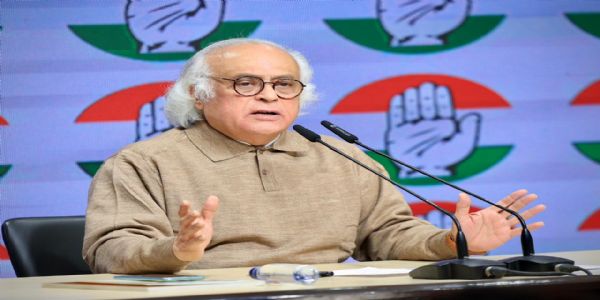
New Delhi, 22 June (H.S.): The Congress on Monday accused the Central Government of manipulating rural wage data. The party alleged that, just as it had changed the definition of employment in 2024 to project higher job creation, the government is now altering the methodology and definition of rural wage data to artificially inflate wage growth figures.
Congress General Secretary (Communications) Jairam Ramesh said in a post on social media platform X that he had warned in 2024 that the government, through the Reserve Bank of India (RBI), had attempted to show an increase in employment by changing the definition of employment, thereby claiming the creation of 168 million new jobs since the financial year 2017-18.
He said the government is now attempting to follow the same approach with rural wages. The Congress has consistently maintained that stagnation in wages is one of the principal reasons behind the country's economic slowdown. Weak wage growth, he said, has adversely affected consumer demand and stalled private investment. To conceal this reality, the government is allegedly manipulating both the methodology and the definition of rural wage data. According to a recently released report, the annual rural wage growth rate has risen from around 6 per cent to nearly 17–18 per cent, with the average daily wage reportedly increasing by 12.7 per cent within a single month.
Ramesh alleged that this sharp rise in rural wages was engineered through a systematic change in the data collection process. He claimed that the Labour Bureau included workers from the northeastern states, the National Capital Territory of Delhi, and Goa in its sample pool without issuing any press release or updating its official website. Although workers from these regions account for only about 1.2 per cent of India's total workforce, the newly added data points constitute nearly 11 per cent of the total sample. He further alleged that average wages in these regions are approximately 50–55 per cent higher than those in the earlier sample because they have relatively lower agricultural employment and a higher proportion of skilled workers.
Ramesh claimed that the actual annual wage growth is approximately 4.3 per cent, the lowest recorded over the past four years. He described the exercise as a case of data manipulation.
Notably, a June report by Mumbai-based Systematix Research indicated a structural shift in rural wage growth beginning in July 2025. According to the report, annual rural wage growth accelerated from around 6 per cent to nearly 17 per cent. It stated that average daily wages witnessed a sharp increase in certain months, driven by stronger agricultural activity, higher construction activity, and growing demand for non-agricultural employment.
---------------
Hindusthan Samachar / Jun Sarkar