New Delhi, 22 June (H.S.):
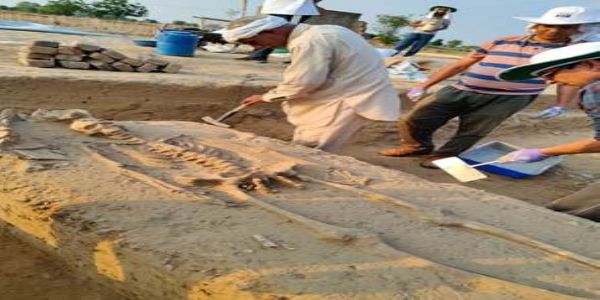
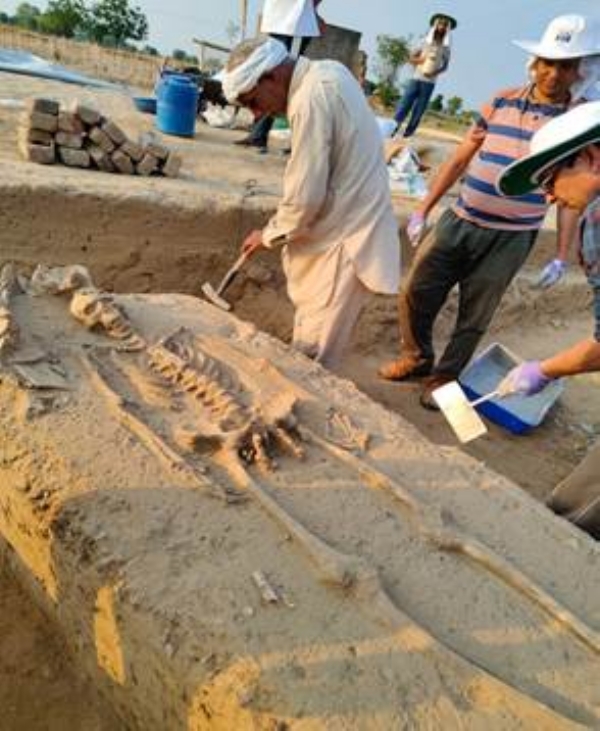
Human skeletons unearthed during excavations at the Rakhigarhi archaeological site in Haryana's Hisar district have been handed over to the Anthropological Survey of India (AnSI) for detailed scientific examination and analysis. The significant step has been taken under a Memorandum of Understanding (MoU) signed between the Archaeological Survey of India (ASI) and the Anthropological Survey of India. Scientific examination of these skeletal remains using advanced technologies is expected to reveal crucial insights into the history, society, lifestyle, and human evolution associated with the Indus-Saraswati, or Harappan, Civilization.
According to the Union Ministry of Culture, Rakhigarhi is regarded as the largest known urban settlement of the Indus-Saraswati Civilization discovered so far. The site is of immense significance not only for understanding the ancient history of the Indian subcontinent but also for studying one of the world's earliest urban civilizations. Archaeological excavations carried out over the past few years have yielded substantial evidence that has provided new perspectives on the social, economic, and cultural framework of the Harappan Civilization.
Scientists believe that the study of the human skeletons will provide detailed information about the biological characteristics, genetic ancestry, dietary patterns, health conditions, and lifestyle of the people who lived during that period. The research is also expected to shed light on how ancient populations adapted to changing climatic and environmental conditions.
According to experts, the skeletal remains will undergo ancient DNA (aDNA) analysis, isotope studies, bioanthropological examinations, and several other advanced scientific investigations. DNA analysis is expected to help determine who the people of the Harappan Civilization were, their genetic origins, the regions from which their ancestors migrated, and the nature of their relationship with present-day populations.
In addition, scientists will attempt to determine the dietary habits of the Harappan people, including the agricultural produce and food they consumed, the diseases that affected them, and their overall health status. Analysis of bones and teeth may also provide valuable evidence regarding nutrition, life expectancy, and the social conditions prevailing during that era.
According to the Ministry of Culture, excavations conducted during the 2025–26 field season at Rakhigarhi's Mound No. 7, identified as an ancient cemetery, led to the discovery of eight burials. Three complete human skeletons, along with several other skeletal remains recovered from these graves, have been transferred to the ASI's Ancient Human Skeletal Repository and Laboratory in Kolkata. After preliminary conservation and documentation, the remains will undergo detailed scientific examination.
The multidisciplinary research project involves collaboration among several leading academic and scientific institutions in India and abroad. These include Banaras Hindu University (BHU), the Birbal Sahni Institute of Palaeosciences, and University College London (UCL). Experts from these institutions will jointly conduct research in the fields of genetics, anthropology, archaeology, biological sciences, and palaeoenvironmental studies.
Padma Shri awardee and senior scientist Dr Kumarasamy Thangaraj, along with BHU Professor Gyaneshwer Chaubey, said that opportunities to study a human genome dating back to around 3000 BCE are exceptionally rare. According to them, the research will not only help establish the genetic identity of the Harappan people but could also answer several long-standing questions regarding the evolution and migration of human populations across the Indian subcontinent.
Experts believe that the biological evidence recovered from Rakhigarhi could provide fresh perspectives on long-standing debates concerning the origins of the Harappan Civilization, its expansion, its social organisation, and the relationships among different ancient populations. The study is also expected to make a significant contribution to the scientific understanding of ancient Indian history while strengthening India's role in global archaeological research.
The ongoing research at Rakhigarhi is being regarded as a major milestone in the fields of Indian archaeology and human history. Researchers are hopeful that the findings of these studies in the coming years will help unravel many of the unresolved mysteries of the Harappan Civilization and significantly enrich the understanding of ancient India's past.
---------------
Hindusthan Samachar / Jun Sarkar