Kyiv, 16 May (H.S.):
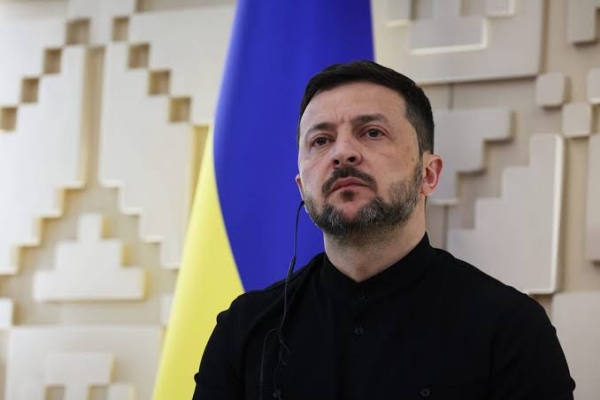
Ukrainian President Volodymyr Zelensky has warned that Russia is actively weighing plans to launch military operations from Belarus against either northern Ukraine or a NATO member state, charges that have prompted Washington to intensify scrutiny of Moscow’s intentions along the alliance’s eastern flank. Speaking on Friday, Zelensky framed the alert as part of a broader Russian effort to drag Belarus deeper into the war in Ukraine and to test NATO’s cohesion.
After a meeting with Ukraine’s military and intelligence leadership, Zelensky said there was evidence of fresh contacts between Russian officials and Belarusian President Alexander Lukashenko aimed at persuading Minsk to join “new Russian aggressive operations.”
He stated that Russia is considering operations both south and north of Belarusian territory: in the Chernihiv–Kyiv direction within Ukraine or against a NATO country directly from Belarus. Zelensky did not provide specific operational details, but he stressed that Ukraine had intelligence on the “details of the conversations” between Moscow and Minsk.
The Ukrainian president added that he had directed Ukraine’s defense and security forces to strengthen defenses in the northern Chernihiv and Kyiv regions and to prepare a response plan in case of increased aggression from Belarusian territory. He warned that Ukraine would “undoubtedly defend itself” if Lukashenko chose to back Russian plans, underscoring Kyiv’s readiness for a wider escalation.
Belarus shares a border with Ukraine to the south and with NATO members Poland, Lithuania, and Latvia to the north and west, placing Vilnius, Warsaw, and Riga within reach of any forward‑based Russian systems. Minsk has already agreed to host Russian tactical nuclear weapons and hypersonic Oreshnik missiles, which Western analysts say could compress NATO’s warning and decision‑making time in the event of a crisis.
Zelensky’s warning on Friday amounts to a direct signal that Russia may seek to exploit that deployment for coercive or kinetic operations aimed at NATO’s eastern flank.
For the United States, such a scenario would pose a serious test of Article 5 commitments and of the credibility of extended deterrence in Eastern Europe. U.S. officials have repeatedly warned Moscow that any attack on NATO territory would trigger a collective response, but have also cautioned publicly that Washington reserves the right to curtail military support to Kyiv if Kyiv’s actions are seen as needlessly widening the war.
In the hours following Zelensky’s remarks, American officials signaled that Washington was treating the warning as a serious escalation risk, even as both Moscow and Minsk declined to comment on his claims. U.S. security and intelligence teams began coordinating with NATO allies to assess the latest intelligence on Belarusian and Russian troop movements, missile deployments, and command‑and‑control indicators along the shared border. Behind the scenes, senior officials in Washington have also weighed the possibility of conditioning further arms shipments or security assurances to Kyiv on tighter constraints on how and where Ukrainian forces target Russian and Belarusian assets.
From the U.S. perspective, Zelenskiy’s Friday warning complicates an already delicate balancing act: supporting Ukraine’s right to self‑defense while preventing Moscow from using Kyiv’s actions as a pretext for moving against NATO.
Some in the U.S. administration argue that openly challenging Russia’s planning in Belarus can help deter Moscow, while others warn that overly aggressive rhetoric could increase the risk of miscalculation along the eastern flank.
The Kremlin has not confirmed any plans for an attack on a NATO country from Belarus, and Russian and Belarussian officials have in the past dismissed Kyiv’s warnings as psychological operations or baseless alarmism. Kyiv, however, points to the ongoing buildup of Russian forces and dual‑capable systems in Belarus as evidence that Moscow has the option to open a new, high‑risk front.
At the same time, Zelensky has used similar warnings to rally Western support and to pressure NATO members to grant Ukraine more advanced weapons and long‑range capabilities. For the United States, this raises an additional concern: that Kyiv may be right about Russian plans, but also using the threat to push Washington and its allies toward escalatory measures that could eventually draw NATO directly into the conflict.
Hindusthan Samachar / Jun Sarkar

18 Aug 2026