Beijing, 15 May (H.S.):
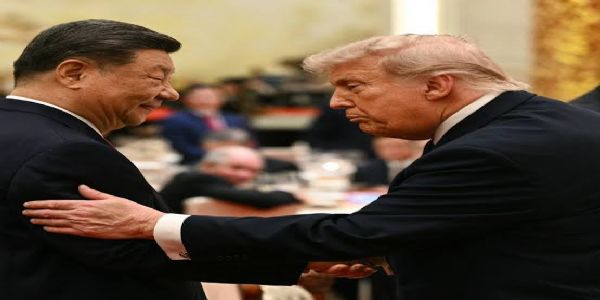
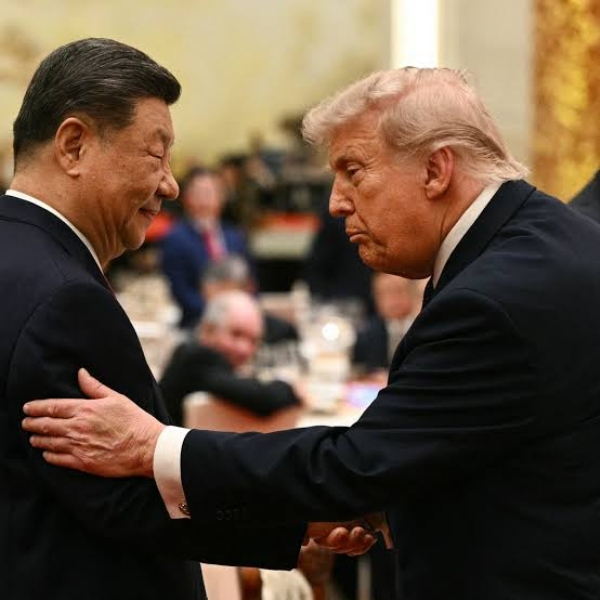
U.S. President Donald Trump has concluded his visit to China and left the capital Beijing for home. He held two days of talks with Chinese President Xi Jinping, covering a wide range of issues from Iran and Taiwan to trade, oil, and Boeing aircraft purchases.
According to Chinese state media, Xi said the United States and China have agreed on “strategic stability” for the next three years.
During an interview given in Beijing, Trump said China has agreed to buy American oil and soybeans. He claimed that Beijing has also committed to purchasing 200 large commercial jet aircraft from Boeing, which could be the largest ever order for U.S.‑manufactured airplanes in about a decade. This is widely being seen as an attempt to ease trade tensions between the two countries.
Reporting from CNN, CBS News, CNBC, Fox News, and China’s official news agency Xinhua, Trump reportedly invited President Xi to the White House on 24 September during a dinner hosted by the American leader on Thursday. China has not yet confirmed whether Xi will accept the invitation. The two leaders also have opportunities to meet on the sidelines of the Asia‑Pacific Economic Cooperation (APEC) summit in Shenzhen in November and the G20 summit in Florida in December. The UN General Assembly session is scheduled to open in New York in early September.
During the trip, Trump praised the trade deals reached with Xi. President Trump said on Friday that he and Jinping had concluded “some very important deals” at the Beijing summit and had shared a desire to end the U.S.–Iran conflict. The two leaders held a bilateral meeting on Friday morning at Zhongnanhai, the seat of power in China, before Trump boarded Air Force One and departed for Washington in the afternoon.
A day earlier, Trump had stated that China had agreed to purchase American aircraft and agricultural products. Among the agreements is the establishment of a U.S.–China trade board. Trump said both leaders “have very similar thoughts” on the Iran issue and that both countries want the Strait of Hormuz to be reopened. The U.S. President added, “Our relations are very strong. We have truly done a great job.”
The two presidents had met earlier on Thursday in a closed‑door session that lasted about two hours and fifteen minutes. The meeting covered topics such as trade, Iran, and Taiwan. Trump described the discussion as “terrific.” He also said Xi had pledged not to supply any military equipment to Iran and had agreed that Tehran should not have nuclear weapons.
According to Chinese state media, during Thursday’s talks Xi warned Trump that if the Taiwan issue is not handled properly, it could lead to confrontation and even conflict. This was a sharp warning, yet the American side did not mention Taiwan at all in its official readout of the meeting. Taiwan is of critical importance to China, which is pushing hard to reassert control over the island, while the United States has provided it with billions of dollars in military support.
Officials from both countries have said that only a few concrete agreements have emerged so far from the two‑day discussions between Trump and Xi, though more deals may follow. Analysts who closely track the two nations argue that the turbulent history of their relationship suggests that any agreements struck now could fall apart later. Billions of dollars’ worth of deals may take years to implement, giving ample time for tensions to flare—whether by design or by mistake—and for the agreements themselves to unravel.
---------------
Hindusthan Samachar / Jun Sarkar