New Delhi, May 15 (HS)As the global landscape shifts toward a more multipolar and inclusive order, the historic bond between India and the African continent is undergoing a profound metamorphosis. Moving beyond the legacy of shared colonial struggles, the partnership has evolved into a powerhouse of innovation, digital transformation, and strategic resilience.
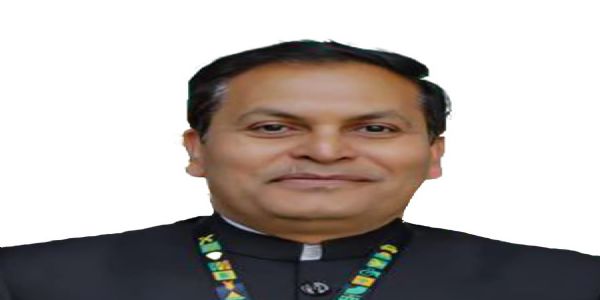
In an exclusive and wide-ranging conversation with Hindusthan Samachar, Anil Kumar Rai, Ambassador of India to Ethiopia, also serves as the Permanent Representative of India to the African Union, provides a masterclass on the future of South–South cooperation. Speaking on the eve of the landmark 4th India–Africa Forum Summit (IAFS-IV) in New Delhi, Ambassador Rai outlines a vision where political goodwill is distilled into measurable, implementation-driven outcomes.
From the deployment of Digital Public Infrastructure (DPI) to the synchronization of India’s Viksit Bharat 2047 with Africa’s Agenda 2063, this interview captures the pulse of a relationship defined by mutual respect and demand-driven growth. Dive into this insightful dialogue to understand how India and Africa are not just navigating the 21st century, but actively rewriting its developmental blueprint.
Key Highlights of the Interview: The IA SPIRIT: Unpacking the theme of Strategic Partnership for Innovation, Resilience, and Inclusive Transformation. Accountability in Action: The introduction of a Joint Monitoring Mechanism to ensure promises translate into progress. Digital Sovereignty: How India’s open-source digital architecture is empowering African nations to build their own futures. Global Leadership: India’s pivotal role in integrating the African Union into the G20, amplifying the voice of the Global South.
Q: How do you view the current phase of India–Africa relations ahead of the 4th India–Africa Forum Summit? Ambassador Anil Kumar Rai: India and Africa are entering a transformative new chapter. Built on shared developmental aspirations, South–South solidarity and a long history of people-to-people connections, the relationship today extends far beyond traditional diplomacy into technology cooperation, trade, healthcare, education and innovation. With preparations underway for the 4th India–Africa Forum Summit (IAFS-IV), both sides are seeking to translate decades of political goodwill into concrete and measurable outcomes that directly benefit citizens across both regions.
Q: What are the key objectives of the upcoming summit? Ambassador Rai: India will host the 4th India–Africa Forum Summit in New Delhi from May 28 to 31 in collaboration with the African Union Commission. The summit will bring together leaders from across the African continent, regional economic communities, specialised institutions and representatives from the Indian and African diaspora. The goal is to develop a practical roadmap to deepen cooperation across sectors such as digital technology, trade, agriculture, healthcare and innovation. In the lead-up to the summit, several preparatory initiatives are planned, including think-tank consultations, an India–Africa Business Dialogue, policy workshops and cultural events celebrating the historic ties between the two regions. The summit theme — “IA SPIRIT: India–Africa Strategic Partnership for Innovation, Resilience and Inclusive Transformation” — reflects the ambition to move beyond dialogue toward concrete developmental cooperation.
Q: How is India aligning its approach with Africa’s long-term developmental priorities? Ambassador Rai: India’s approach is aligned with Africa’s long-term development blueprint, Agenda 2063 — “The Africa We Want” — and also resonates with India’s national vision of Viksit Bharat 2047. Because both regions share similar developmental challenges, India is focusing on population-scale solutions that African nations can adapt according to local priorities and conditions.
Q: There is increasing discussion about accountability and implementation. Are new mechanisms being considered? Ambassador Rai: Yes. To ensure that summit commitments translate into real impact, India and African partners are working toward establishing a Joint Monitoring and Implementation Mechanism. This framework will introduce clearly defined targets and periodic review meetings to track progress on summit initiatives. The goal is to strengthen transparency and accountability while ensuring that decisions taken at the leadership level are implemented effectively on the ground. Such structured monitoring is expected to improve delivery of development projects and accelerate cooperation in priority sectors.
Q: What makes India’s partnership model with Africa distinct? Ambassador Rai: India’s engagement with Africa differs from many external actors because of its historical roots and development-oriented philosophy. The relationship is built on shared anti-colonial struggles, decades of people-to-people interaction and a strong tradition of South–South cooperation. Rather than transactional engagement, India emphasizes demand-driven partnerships, capacity building and affordable technological solutions. Key sectors of cooperation include healthcare, education, agriculture, digital technology and institution building. Emerging areas are also gaining prominence. Platforms such as the AI Impact Summit and the WAVES Summit are opening new opportunities for collaboration in artificial intelligence, innovation and creative industries. “This is what makes the India–Africa partnership unique. It is shaped by Africa’s priorities and driven by mutual respect and shared progress.”
Q: Digital Public Infrastructure has emerged as an important area globally. How do you see cooperation in this sector? Ambassador Rai: One of the most promising areas of collaboration is Digital Public Infrastructure (DPI). India’s large-scale digital ecosystem — covering digital identity, financial services, healthcare, education and governance — has dramatically improved efficiency in public service delivery. A key advantage of India’s digital architecture is that it is open-source, allowing countries to maintain full data sovereignty while adapting systems according to national needs. Through the summit process, India is offering its digital experience as a model that African governments can study, customise and deploy to accelerate digital transformation across the continent.
Q: Which principles continue to guide India’s engagement with Africa? Ambassador Rai: The guiding philosophy of India’s engagement with Africa was articulated by Prime Minister Narendra Modi through the Kampala Principles during his 2018 address to the Parliament of Uganda. These principles emphasize solidarity, equality, mutual respect and partnerships guided by African priorities. Africa remains a central pillar of India’s foreign policy, with cooperation focused on capacity building, human resource development and institutional strengthening. Education, skill development, healthcare and agriculture remain key pillars. The partnership also promotes mutual prosperity through trade, investment, industrialisation and technology transfer aligned with the goals of the African Continental Free Trade Area. India also supports peace and security cooperation across the continent, including collaboration in UN peacekeeping, counter-terrorism and maritime security. Another major dimension is reform of global governance. India strongly supported granting permanent membership to the African Union in the G20 during India’s presidency in 2023, reflecting its commitment to strengthening the voice of the Global South.
Q: How do you view the future trajectory of India–Africa relations? Ambassador Rai: The upcoming summit marks what can be described as a “season of renewal” in India–Africa relations. In an increasingly uncertain global environment, the steady expansion of India–Africa relations represents stability, reliability and mutual trust. India has also expanded its diplomatic footprint in Africa, including the opening of 17 new Indian diplomatic missions across the continent in recent years. The summit will focus on sectors where India’s development experience aligns closely with Africa’s priorities — including digital infrastructure, fintech, artificial intelligence, industrialisation, renewable energy, healthcare, telemedicine, education, space cooperation and creative industries. As preparations intensify for the 4th India–Africa Forum Summit, both India and Africa increasingly view their relationship not only as a bilateral engagement, but as a broader partnership capable of contributing to a more balanced and inclusive global order grounded in shared development, innovation and strategic cooperation.
---------------
Hindusthan Samachar / Sachin Budhauliya