Washington, 16 May (H.S.):
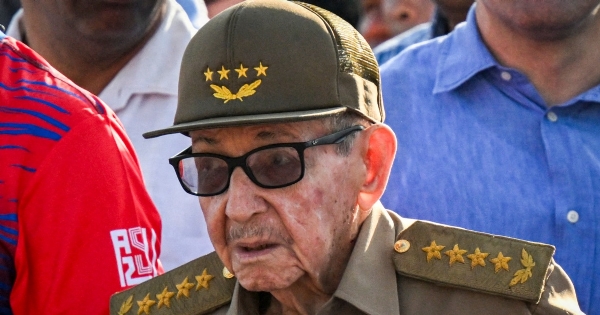
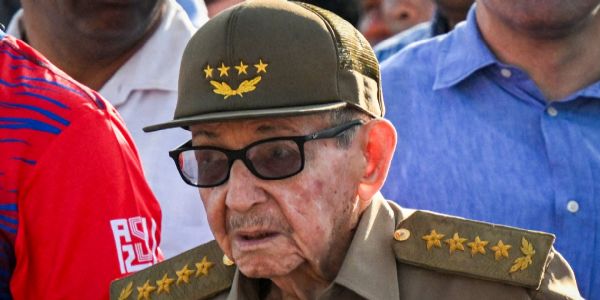
The Trump administration is preparing to announce criminal charges against Raúl Castro, the 94-year-old former president of Cuba and longtime architect of the island’s communist regime, in a dramatic escalation of Washington’s pressure campaign against Havana.
According to a senior U.S. Justice Department official who spoke on condition of anonymity, federal prosecutors intend to unseal an indictment against Castro in Miami on Wednesday, May 20, 2026, following grand jury approval. The announcement is expected next Wednesday, with the prosecutors’ office in Miami scheduled to host an event honoring victims of the incident central to the case.
The pending indictment stems from a decades-old incident: on February 24, 1996, Cuban fighter jets shot down two small aircraft operated by Brothers to the Rescue, a Cuban-American exile humanitarian group, killing four pilots—three of them U.S. citizens. At the time, Raúl Castro served as Cuba’s defense minister under his brother, the revolutionary leader Fidel Castro.
The Cuban government has long maintained that the strike was a legitimate act of defense against foreign aircraft violating Cuban airspace. The United States condemned the attack and imposed sanctions but did not pursue criminal charges against Cuban officials at the time.
The planned indictment arrives amid sharply heightened tensions between Washington and Havana. President Donald Trump’s administration has repeatedly labeled Cuba’s current communist-led government as “corrupt and incompetent” and has made regime change an explicit objective. In recent months, Trump has effectively imposed an economic blockade by threatening sanctions on countries supplying fuel to Cuba, triggering widespread power outages and inflicting severe damage on the island’s struggling economy.
CIA Director John Ratcliffe delivered a direct message from President Trump during a rare visit to Havana on Thursday, stating that the United States would engage with Cuba on economic and security issues “only if it makes fundamental changes”.
The legal strategy against Castro closely mirrors the administration’s earlier approach toward Venezuela. In January, the Trump administration cited a drug-trafficking indictment against Venezuelan President Nicolás Maduro as justification for a raid that captured Maduro and brought him to the United States to face charges; he has pleaded not guilty.
In March, Trump explicitly warned that Cuba “is next” after Venezuela, signaling that Castro could be the administration’s next high-profile target for legal action.
The case is being overseen by Jason Reding Quiñones, the top federal prosecutor in Miami, a known ally of President Trump. Quiñones is also leading an investigation into former CIA Director John Brennan, a longtime Trump adversary, and a broader inquiry into whether prior investigations of Trump constituted a political conspiracy.
The indictment must first be approved by a federal grand jury before it can be unsealed. If approved, the charges would mark the first time the United States has pursued criminal liability against a former head of state of Cuba, potentially triggering significant diplomatic repercussions and deepening the rift between the two nations after decades of hostility.
Raúl Castro stepped down as Cuba’s president in 2018 and surrendered leadership of the Communist Party in 2021, ending more than six decades of Castro family rule. Nevertheless, he remains a powerful symbolic figure within the Cuban establishment.
The coming weeks will test whether the United States is prepared to translate its legal threats into action against one of the last remaining icons of Cold War-era communism in the Western Hemisphere.
---------------
Hindusthan Samachar / Jun Sarkar
16 May 2026