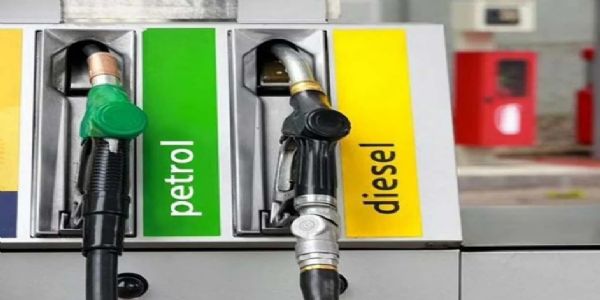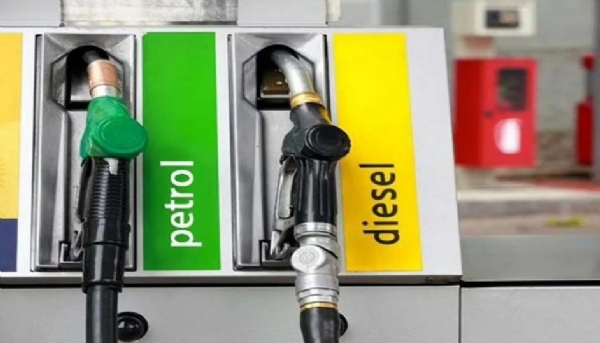
New Delhi, 25 December (H.S.): India has officially become the world’s third-largest fuel retail market, following a decade of rapid expansion in its petroleum retail network. According to the Petroleum Planning and Analysis Cell (PPAC), which functions under the Ministry of Petroleum and Natural Gas, the number of petrol pumps and gas stations across the country has now crossed the 1,00,000 mark, making India one of the fastest-growing markets for petroleum distribution globally.
As of November 30, 2025, India had 1,00,266 fuel retail outlets, trailing only the United States and China. While the United States leads with nearly 1,95,000 outlets, China has a little over 1,15,000. India’s growth has been fueled by proactive government initiatives aimed at ensuring the easy availability of petrol, diesel, and liquefied petroleum gas (LPG), even in remote and rural parts of the country.
Rapid Expansion Since 2015
The PPAC report highlights that after 2015, the expansion of retail fuel outlets accelerated significantly. At that time, India had around 50,451 outlets, but within a decade, the network more than doubled. The growth was driven by policies encouraging public sector oil marketing companies (OMCs) to set up new fuel stations at a fast pace, while also giving a strategic push to private sector participation.
Government incentives focused on establishing outlets along national highways and rural belts—regions where fuel accessibility was previously limited. These measures have transformed India’s energy retail infrastructure, improving both mobility and last-mile fuel distribution.
Public Sector Dominance ContinuesCurrently, public sector OMCs continue to dominate over 90% of India’s retail fuel market. As of November 30:
Indian Oil Corporation Limited (IOCL) operates 41,664 outlets, the highest in the country.
Bharat Petroleum Corporation Limited (BPCL) runs 24,605 outlets.
Hindustan Petroleum Corporation Limited (HPCL) manages 24,418 outlets.
Together, these three state-run companies account for the vast majority of the country’s retail fuel supply chain, maintaining a strong presence across both urban and rural areas.
Private Players Gaining MomentumDespite their smaller market share, private players are gradually expanding their footprint. Nayara Energy Limited, backed by Russian oil major Rosneft, operates over 6,900 fuel outlets nationwide. Reliance Industries Limited (RIL), one of India’s largest conglomerates, runs more than 2,100 retail stations, while Shell has 346 active outlets across the country.
In 2015, private sector companies operated only 2,967 outlets, contributing less than 6% to India’s retail fuel network. The share has now increased to 9.3%, reflecting steady liberalization and the government’s push to enhance private investment in energy retailing.
Strengthening Energy AccessibilityExperts suggest that this expansion marks a milestone in India’s energy accessibility strategy. Tens of thousands of new outlets have been set up over the past decade to fill long-standing supply gaps in semi-urban and rural territories.
According to PPAC data, the availability of fuel across national and state highways has eased travel and transportation, strengthening economic connectivity.With over one lakh operational outlets, India’s retail fuel network now mirrors the scale of its economy and population.
Industry observers note that as the demand for cleaner fuels and alternative energy sources rises, the next decade will likely witness diversification into CNG, EV charging infrastructure, and biofuel distribution.By transforming from a limited regional network into the world’s third-largest fuel retail market, India has not only strengthened domestic energy availability but also reaffirmed its position as a rising energy powerhouse on the global stage.
---------------
Hindusthan Samachar / Jun Sarkar