New Delhi, 10 June (H.S.):
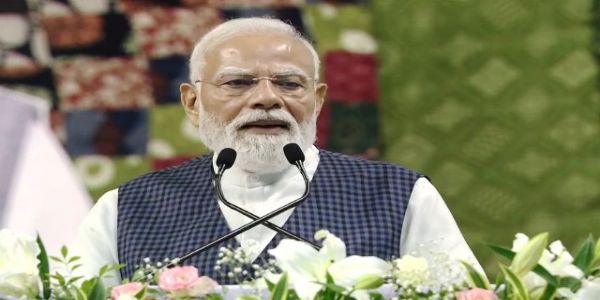
A key meeting of the Bharatiya Janata Party (BJP)-led National Democratic Alliance (NDA) will be held at Bharat Mandapam in New Delhi on Wednesday afternoon, where Prime Minister Narendra Modi is set to be felicitated for becoming India’s longest-serving democratically elected Prime Minister.
The meeting, scheduled to begin at 3 p.m., will be attended by NDA chief ministers, deputy chief ministers, and leaders of alliance partners. Andhra Pradesh Chief Minister and Telugu Desam Party (TDP) president N. Chandrababu Naidu is expected to move a congratulatory resolution recognizing Modi’s record tenure, while leaders of other alliance partners will support the proposal.
The resolution will highlight the achievements of the Prime Minister over the past 12 years. Discussions are also expected on the NDA government’s accomplishments and future political strategy as the alliance marks 12 years in power.
The National Democratic Alliance government led by Prime Minister Narendra Modi completed a historic 12 years in office in June 2026. Modi, who first took oath as Prime Minister on May 26, 2014, and was sworn in for a third consecutive term on June 9, 2024, completed 4,398 days in office as Prime Minister on June 9, 2026.
In doing so, Modi surpassed the record of India’s first Prime Minister, Jawaharlal Nehru, in terms of time served as a democratically elected Prime Minister. While Nehru remained Prime Minister from August 15, 1947, until his death on May 27, 1964, his tenure as an elected Prime Minister began after the first general election in 1952 and lasted 4,397 days.
Celebrating the milestone, the BJP posted on social media on June 9, describing the period as “12 years of transformation: from promises to development.” The party said India had witnessed a remarkable journey over the past decade, marked by improved housing, access to drinking water, healthcare, sanitation, and clean energy, resulting in tangible improvements in the lives of millions of citizens.
The party further stated that the government’s development model has been driven by service, commitment, and prosperity. According to the BJP, major infrastructure initiatives, welfare programmes, and sustainable development projects have helped create new opportunities and strengthened the vision of a self-reliant India. It cited the Rameswaram–Paradip Greenfield Coastal Highway Project as an example of balancing economic development, national security, and environmental sustainability.
Prime Minister Modi’s achievement has drawn congratulatory messages from several world leaders, including Anura Kumara Dissanayake, James Marape, and Kamla Persad-Bissessar.
Former Prime Minister H. D. Deve Gowda and Andhra Pradesh Chief Minister Chandrababu Naidu have also written extensively about Modi’s tenure, highlighting what they described as his democratic approach to governance.
Deve Gowda said Modi had become India’s longest-serving continuously serving democratically elected Prime Minister, surpassing Nehru’s record. Reflecting on the expansion of Indian democracy, he noted that while only 53 political parties and around 170 million voters participated in the country’s first general election in 1952, the 2024 Lok Sabha election saw participation from 2,593 political parties, with India’s population exceeding 1.46 billion.
The former Prime Minister also described the current Union Council of Ministers as broader and more socially inclusive, noting that it includes 27 ministers from Other Backward Classes (OBCs), 10 from Scheduled Castes (SCs), and five from Scheduled Tribes (STs). He praised the Women’s Reservation legislation as a historic step toward enhancing women’s political participation and representation in Parliament and state legislatures.
Deve Gowda further observed that public criticism in the age of social media has become increasingly personal and intense, yet Modi has remained active and focused on providing direction to the nation. He also highlighted the Prime Minister’s leadership on national security issues and his direct engagement with citizens through programmes such as “Mann Ki Baat.”
In his article, Chandrababu Naidu described Modi’s principles of “Nation First” and “Sabka Saath, Sabka Vikas, Sabka Vishwas” as foundational pillars of India’s development. He said the Prime Minister had successfully integrated India’s cultural heritage and civilizational values with modern governance and technology to create a new development model.
According to Naidu, India has achieved significant economic progress during the past 12 years, advancing from the world’s 11th-largest economy to the fourth-largest economy. He identified Digital Public Infrastructure (DPI), the Jan Dhan financial inclusion programme, Aadhaar, and the Unified Payments Interface (UPI) as transformative initiatives that expanded financial access across the country.
He noted that more than ₹51 lakh crore had been transferred directly into beneficiaries’ bank accounts through the Direct Benefit Transfer (DBT) system, reducing leakages and improving transparency in the delivery of government welfare schemes.
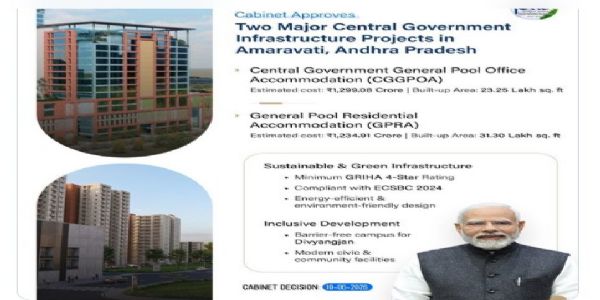
Naidu also highlighted major investments in highways, railways, ports, airports, and renewable energy. He credited the concept of “competitive and cooperative federalism” with improving coordination between the Centre and the states. According to him, Andhra Pradesh has benefited significantly from this approach through support for the Amaravati project, industrial development, infrastructure expansion, and the adoption of emerging technologies.
He added that history would remember this period not only for economic growth and political stability but also for restoring India’s confidence and advancing the vision of “Viksit Bharat 2047.”
The perspectives shared by both leaders underscore the view that Prime Minister Modi’s 12-year tenure represents not only political continuity but also progress in self-reliance, technological advancement, social inclusion, and India’s growing stature on the global stage. They argue that this period has provided the nation with renewed confidence, modernisation, and a stronger sense of global leadership.
---------------
Hindusthan Samachar / Jun Sarkar
10 Jun 2026