Lucknow/Jaipur,
16 March (HS): On Monday, Uttar Pradesh Chief Minister Yogi Adityanath stated
that, while the caste system is intended to order society, casteism damages the
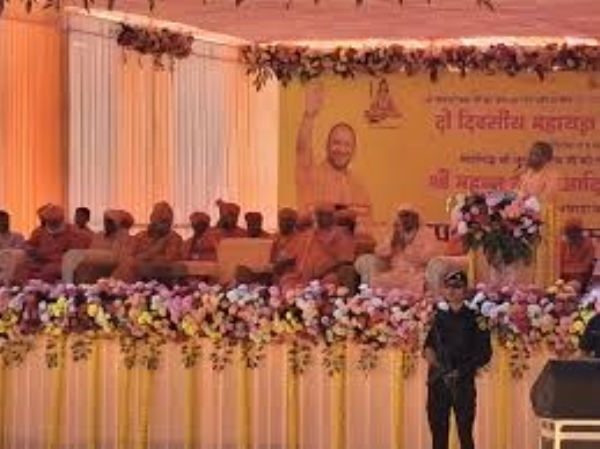
social fabric and divides the country. Adityanath, speaking at an event at the
Sire temple in Jalore, also stated that religion should serve as a unifying
factor in society. Caste should be used to administer society in a methodical
manner, but casteism undermines that system, Adityanath stated. Previous
regimes believed in segregating people based on caste, area, and language,
which weakened the country and resulted in issues such as Kashmir instability,
Naxalism, linguistic disagreements, and caste strife. He said that the
advantages of government frequently did not reach Dalits, the impoverished, or
other marginalized groups.
However,
under Prime Minister Narendra Modi, India is rapidly becoming a major global
player. Under his leadership, the country has come together, according to
Adityanath, who also stated that measures have been done to resolve the
concerns of Kashmir and Naxalism while ensuring that social initiatives reach
everyone without prejudice. The chief minister further stated that the
administration is committed to building infrastructure and public amenities
around the country. Adityanath stated that good roads have been created in
previously undeveloped regions, railway connectivity has been extended, and
airports, Metro, medical institutions, and engineering colleges have been
established in underserved areas. Adityanath
accused the former UPA administration at the Centre of seeing India's spiritual
traditions as retrograde.
In
contrast, current leadership acknowledged that our faith is inextricably linked
to Sanatan Dharma and that society cannot progress without faith, he
stated. Adityanath said that the Ram temple in Ayodhya could have been built
decades ago, but prior administrations ignored it and even questioned Lord
Ram's existence. The Ram temple is making great development. When people work
together with commitment, feats like the Ram temple become feasible, he
remarked. Referring to the creation of the Kashi-Vishwanath corridor in
Varanasi, he stated that formerly, only a limited number of devotees could
attend the temple at a time, but today thousands may receive 'darshan'
concurrently. Similar accommodations are being made for pilgrims in Mathura and
Vrindavan, he explained.
Adityanath
described India as a unique nation fashioned by the spiritual practices of
saints, the courage of warriors, and the hard work of farmers, craftsmen, and
laborers, saying that every person should strive for the goal of 'Ek Bharat,
Shreshtha Bharat'. And keeping religion is critical for the country's unity and
strength. Adityanath further claimed that India has been attacked by foreign
invaders for millennia, looting the country, disrupting social order, and
disrespecting cultural customs. Internal divides played a significant role in
these forces' success. Adityanath said that if the country had stayed unified,
no invader could have conquered it.
Hindusthan Samachar / Abhishek Awasthi

16 Mar 2026