Prayagraj,
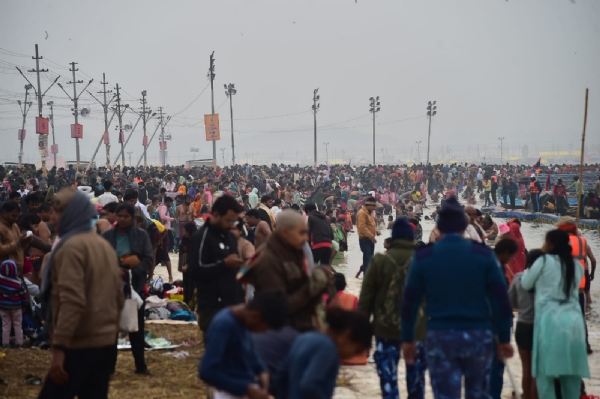
03 Jan (HS): The Magh Mela has begun on the sacred land of Prayag, the holy
land of pilgrimage, with the Paush Purnima bath. The gentle coolness of winter,
the divine sounds flowing on the banks of the Triveni River, and the ascetic
presence of the Kalpavasis have all arrived. This entire atmosphere bears
witness to the spiritual memory of all human civilization. Prayagraj is the
proclamation of the vibrant, continuous, and eternal consciousness of Sanatan
culture.
Astrologer
Avinash Chandra Rai said that with the start of the Magh Mela, Prayagraj has
once again awakened as a center of consciousness, where religion flows not
merely as faith but as a vision of life. This is the same Prayagraj where time
itself pauses and becomes a witness. History, mythology, and the present merge
in a single moment.
He
said that the memory of the Maha Kumbh held last year in 2025 is still fresh in
the world's consciousness. At that Maha Kumbh, not only millions of Indians but
also people from all corners of the globe were present on the banks of the
Sangam. Through cameras, research papers, documentaries, and studies, the
entire world saw that Sanatan culture is not a bygone tradition, but a living
and dynamic consciousness even today. At that time, it was no exaggeration to
say that the entire world was looking towards the Sangam and was immersed in
Sanatan culture. Magh Mela 2026 is the next chapter in that continuity—a calm,
restrained, and spiritual chapter.
Prayagraj,
a pioneer of the pilgrimage tradition: According to Prof. Rajendra Tripathi,
Rasraj, the confluence of Prayag isn't merely a confluence of
rivers. It's a synthesis of elements. Ganga symbolizes goodness, Yamuna
represents the flow of action, and Saraswati, the subtle stream of knowledge,
represents the confluence of these three. The confluence of these three
represents a philosophical embodiment of the completeness of human life. Indian
wisdom calls Prayag Tirtharaj (the king of pilgrimages), not
because the king is supreme, but because he is a guide. Just as a king guides
his subjects, Prayag provides meaning to the entire pilgrimage tradition. This
is why the scriptures say that Prayag स्ननामात्रेनसर्वपापैःप्रमुच्यते। Bathing here is not a refinement of the
body but of the consciousness.
Mahakumbh
2025 was a moment of introspection, the world saw Sanatan: Omkarnath Tripathi
said that the Mahakumbh of 2025 was not just a spectacle of a crowd. It was a
huge platform for dialogue between civilizations. The modern world, which
stands at the pinnacle of material progress but is suffering from mental
unrest, came to Prayag and asked itself whether there is a spiritual
alternative to development? The answer was present in silence on the banks of
the Sangam. Crores of people were disciplined without any centralized order. No
compulsion, no control, only internal acceptance. This is the power of Sanatan
culture. It does not bind man, it awakens him.
Magh
Mela: A Festival of Penance, Restraint, and Meditation - He explained that
while the Kumbh Mela symbolizes grandeur, the Magh Mela is a festival of
restraint and introspection. There is less noise and more devotion. The
tradition of Kalpavas, silence, bathing, chanting, and meditation all take a
person on an inner journey. This is why the Magh Mela is not merely a religious
ritual, but a celebration of mental purification.
Hindusthan Samachar / Abhishek Awasthi
05 Jan 2026