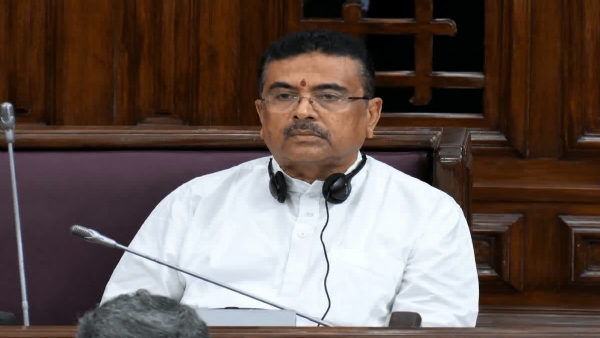
Kolkata, 18 August (H.S.) : The BJP government led by Chief Minister Shubhendu Adhikari in West Bengal completed its first 100 days in office on Tuesday, with the administration presenting a department-wise account of its achievements and describing the period as a phase of rapid implementation of its electoral commitments.
The government has highlighted border security, infrastructure development, reopening of closed jute mills, financial assistance for women, expansion of central welfare schemes and efforts to attract investment as some of its key priorities. However, questions remain over the implementation of some schemes, the number of beneficiaries and their impact on the ground.
One of the most prominent initiatives has been the allocation of land to strengthen security along the India-Bangladesh border. The BJP had repeatedly alleged that fencing work at several stretches had been delayed because the state government had not made the required land available. After assuming office, the new government prioritised the issue and transferred more than 767 acres of land to the Border Security Force (BSF) across nine border districts, according to government figures. The state Cabinet has also approved the transfer of another 362 acres, taking the total land made available or approved for the BSF to more than 1,100 acres.
More than 44 acres have also been provided to the Sashastra Seema Bal (SSB) in Darjeeling, Jalpaiguri and Alipurduar. In addition, around 110 acres have been made available in Darjeeling for the construction of a battalion headquarters of the Indo-Tibetan Border Police (ITBP). The government has described these measures as significant steps towards strengthening national security.
The Land and Land Reforms Department has also accelerated land allocation for infrastructure projects. Around 20 acres have been provided to the Railways for the Sevok-Rangpo broad-gauge railway project, while nearly six acres have been made available in West Midnapore for the construction of a 100-bed Employees' State Insurance (ESI) hospital. The process of transferring land for government warehouses, power substations and other infrastructure projects has also been expedited.
The Chingrighata metro project has emerged as another major infrastructure focus during the government's first 100 days. The long-delayed project gained momentum following directions from the new administration. In coordination with the Rail Vikas Nigam Limited (RVNL), traffic was regulated at Chingrighata crossing on two weekends in May to facilitate the installation of viaduct sections. Work on connecting the Beliaghata and Gour Kishore Ghosh stations subsequently progressed. The BJP has cited the development as an example of administrative will and faster decision-making.
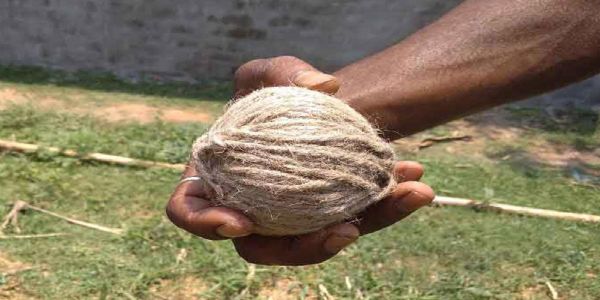
On employment, the government has highlighted the reopening of closed jute mills as one of its major achievements. According to the Labour Department, 16 closed jute mills on both banks of the Hooghly river have reopened during the first 100 days, restoring livelihoods for more than 35,000 workers, according to government claims. The move is being projected as an important step towards reviving West Bengal's long-troubled jute industry.
In the transport sector, the government has sought to implement one of its key electoral promises by introducing free travel for women on state-run buses. New government buses have also been introduced on several routes. However, concerns remain over the inadequate number of buses compared with demand, leaving the administration with the challenge of taking further measures to strengthen public transport.
The Annapurna scheme, one of the BJP's major electoral promises, has also received considerable attention. Under the scheme, eligible women are being provided financial assistance of Rs 3,000 per month. The BJP has projected it as evidence of the government's commitment to its election promises. However, complaints have emerged regarding the complicated application process and delays in extending benefits to some eligible women. The 12- to 13-page application form has also drawn criticism. The government maintains that a detailed verification process is necessary to eliminate fraudulent beneficiaries and ensure that assistance reaches genuine beneficiaries.
In healthcare and social security, the government has focused on implementing several Central schemes in the state. Steps have been taken to introduce or expand schemes including Ayushman Bharat, the Pradhan Mantri Kisan Samman Nidhi, the Pradhan Mantri Vishwakarma scheme and the PM Surya Ghar scheme. The state government has also entered into agreements with the Centre for their implementation. The extent to which these programmes ultimately reach beneficiaries, however, will remain a key test for the administration.
The BJP government has also highlighted the expansion of the Kisan Samman Nidhi beneficiary base and faster implementation of other Central schemes as major achievements. The ruling party has argued that having governments led by the same party at the Centre and in the state could facilitate smoother implementation of these programmes.
Law and order has remained another major component of the government's 100-day agenda. Chief Minister Shubhendu Adhikari has repeatedly asserted that the rule of law is being established in the state and has maintained that legal action would be taken even if BJP workers were accused of unlawful activities. The Trinamool Congress and Left parties, however, have continued to raise questions over the law-and-order situation. Supporters of the government claim that complaints regarding alleged political interference in the police and administration have declined during the first 100 days.
The government has also sought to showcase progress on the investment front. Foundation stones have been laid for major projects in the textile sector, while the foundation stone for a large Amul dairy plant has been laid in Howrah. Investment proposals have also emerged in the steel sector. Another steel-related project is scheduled to be inaugurated in Purulia as part of the government's 100-day milestone programme, with the Chief Minister expected to attend the event.
During its first 100 days, the government has sought to move quickly on several elements of its electoral agenda — from transferring land for border security and accelerating infrastructure projects to reopening closed jute mills, providing financial assistance to women and expanding Central welfare schemes.
The real test, however, begins now. The government's performance over the next phase will be judged by the sustainability of these initiatives, the number of people who actually receive the promised benefits, the extent to which investment and employment claims translate into tangible outcomes, and the impact of these measures on the everyday lives of people in West Bengal.
Hindusthan Samachar / Satya Prakash Singh