TEHRAN/WASHINGTON, 16 July (H.S.): The impact of the United States' naval blockade against Iranian ports has begun to unfold, with American forces disabling an empty oil tanker that attempted to violate the blockade while heading towards Iran. The U.S. military also diverted two commercial vessels that complied with the newly imposed restrictions during the first 24 hours of the blockade. Simultaneously, the United States launched fresh airstrikes targeting Iranian military and strategic installations, triggering powerful explosions across several Iranian cities. President Donald Trump convened a high-level meeting with senior officials in the White House Situation Room to assess the rapidly deteriorating security situation in the Middle East.
According to reports by ABC News, CNN and Al Jazeera, the U.S. Central Command (CENTCOM) announced on X that it had disabled an empty oil tanker attempting to breach the American naval blockade imposed on Iranian ports.
The Curaçao-flagged tanker, MT Belma, was sailing through international waters towards Iran's Kharg Island despite repeated warnings from U.S. forces. An American aircraft ultimately fired Hellfire missiles at the vessel's smokestack, rendering it inoperable without sinking it.
Kharg Island is one of Iran's most strategically significant economic hubs, serving as a major oil export terminal. The vessel is the first to be intercepted since the United States reinstated its naval blockade of Iranian ports.
Time to Eliminate the IRGC: Trump
Amid the escalating regional crisis, President Donald Trump held a high-level meeting with senior national security officials in the White House Situation Room on Tuesday evening to discuss options for expanding military operations against Iran.
Trump declared that the time has come to eliminate the Islamic Revolutionary Guard Corps (IRGC), asserting that negotiations with the organization were no longer possible. He also claimed that several Iranian officials had contacted the United States seeking a meeting.
Vance Says Situation Remains Complicated
CENTCOM stated that U.S. forces launched a fresh wave of airstrikes against Iran on Wednesday. Beginning at approximately 3:00 p.m. Eastern Time, the strikes targeted military capabilities allegedly used to threaten vessels exercising freedom of navigation through the Strait of Hormuz.
American forces also carried out strikes on Greater Tunb Island.
U.S. Vice President JD Vance acknowledged that while Washington was fundamentally pursuing the right course, the conflict remained highly complex. He maintained that the United States would not become involved in an open-ended bombing campaign.
Projectile Falls Near Cancer Hospital
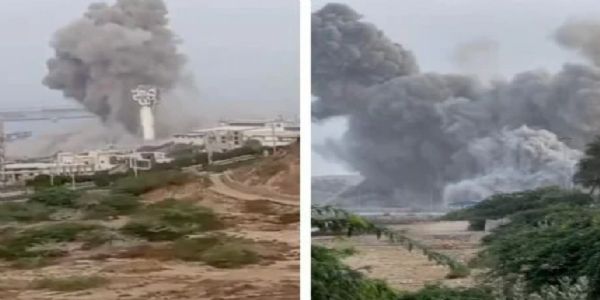
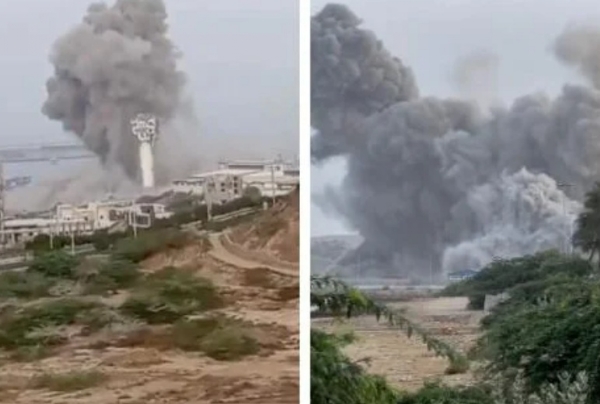
Powerful explosions were reported across several parts of Iran on Wednesday evening, including the port city of Bandar Abbas and the southern cities of Ahvaz and Chabahar.
According to Iran's state broadcaster, the Islamic Republic of Iran Broadcasting (IRIB), a projectile from a U.S. strike landed near Shahid Baghaei Cancer Hospital in Ahvaz, causing extensive damage.
Hospital authorities evacuated 211 patients from the facility under emergency conditions. Patients dependent on oxygen supplies, ventilators and other life-support equipment were among those affected by the attack.
Late Wednesday night, additional explosions were reported on Qeshm Island, in Bandar Abbas, and at several locations across Iran's Sistan-Baluchestan province.
Only 13 Commercial Ships Cross Hormuz
MarineTraffic data indicates that despite mounting tensions between the United States and Iran, at least 13 commercial vessels transited the Strait of Hormuz over the past 24 hours. Eight of those ships entered the Persian Gulf.
Before the conflict intensified, the strategic waterway typically handled an average of around 110 vessels each day.
Meanwhile, the U.S. military intercepted three vessels bound for Iran as part of measures enforcing its naval blockade. However, the Iranian military maintained that the Strait of Hormuz would remain closed until the United States complied with Iran's conditions.
United Nations Secretary-General António Guterres expressed deep concern over the latest escalation in tensions between the United States and Iran, warning that the situation poses a serious threat to regional stability.
---------------
Hindusthan Samachar / Jun Sarkar