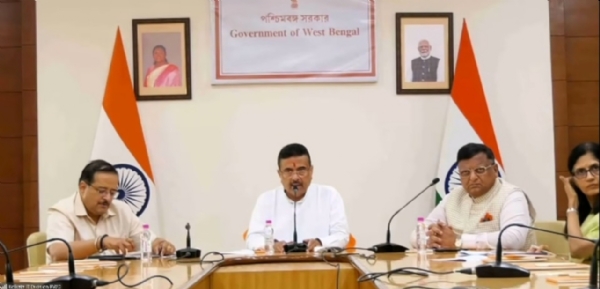
Kolkata, 14 July (H.S.): The West Bengal government has constituted a commission of inquiry to investigate allegations of institutional corruption in various government departments during the period from 2011 to May 2026. According to a government notification issued on July 10, the commission will be headed by retired Calcutta High Court judge Justice Biswajit Basu.
The notification states that the commission will examine allegations of corruption and irregularities in several departments, including Education, Food and Supplies, Relief and Disaster Management, Urban Development, Municipal Affairs, Panchayats, Housing and Fisheries.
According to sources in the state Home Department, the inquiry will cover a wide range of alleged irregularities, including bribery, corruption in the distribution of Cyclone Amphan relief, alleged misuse of funds under the Mahatma Gandhi National Rural Employment Guarantee Scheme (MGNREGS), irregularities in the Mid-Day Meal Scheme, embezzlement and misappropriation of government funds, abuse of official position, recruitment scams in government jobs, alleged corruption in educational institutions from the primary to higher education levels, and irregularities in government hospitals and medical education.
The commission will also examine allegations of illegal arrests, the filing of false criminal cases against individuals, and the role of government agencies in permitting or facilitating illegal constructions.
The inquiry wing of the commission will be headed by a senior IPS officer, while an IAS or West Bengal Civil Service (WBCS) officer will oversee its administrative functions. A West Bengal Revenue Service (WBRS) officer will provide technical assistance. The commission may also appoint additional members with the approval of the state government, if required.
Apart from investigating allegations, the commission has been tasked with recommending measures for the recovery of financial losses allegedly caused by corruption and suggesting mechanisms for recovering misappropriated public funds.
The panel has been vested with powers equivalent to those of a civil court. It can summon witnesses, record statements under oath, call for official records and documents, and conduct hearings anywhere in the state. If the commission finds prima facie evidence of corruption during its inquiry, it may recommend that the appropriate police agency register a First Information Report (FIR) against those involved.
However, cases that are already under investigation by central agencies will remain outside the commission's jurisdiction. The panel has also been directed to submit periodic progress reports and its final findings to the state government.
Chief Minister Suvendu Adhikari has repeatedly stated that his government follows a zero tolerance policy against corruption. During the Assembly session, he had announced that those found guilty of corruption would face strict legal action and that, if necessary, their properties could be attached and auctioned. The constitution of the commission is being seen as a key step in implementing that policy.
Hindusthan Samachar / Satya Prakash Singh