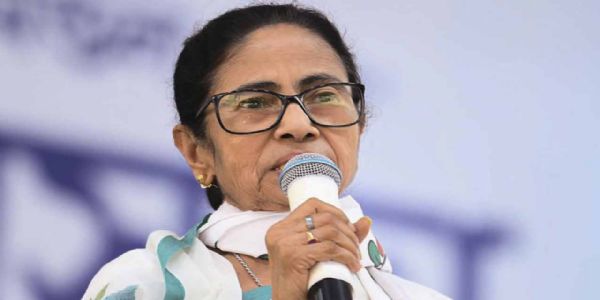
Kolkata, 04 June (H.S.) : What unfolded over a span of 13 days inside West Bengal’s ruling Trinamool Congress (TMC) has now emerged as one of the most turbulent internal political phases for the party in recent memory, marked by sharp factionalism, institutional disputes, and unprecedented public dissent within the legislature.
The sequence of events began after the election results on May 4, when Chief Minister Mamata Banerjee called a meeting of newly elected MLAs at her Kalighat office on May 6. During this meeting, her directive asking members to stand and acknowledge Abhishek Banerjee’s organisational role reportedly created unease among sections of legislators, setting off early signs of internal friction within the legislative ranks.
Tensions escalated further on May 19, when another key meeting at Kalighat witnessed open questioning by legislators, including Ritabrata Banerjee and Sandipan Saha, over why Jahangir Khan, who had reportedly withdrawn from electoral politics, had not been expelled from the party. The issue was seen as politically sensitive within the party structure, given Khan’s perceived proximity to Abhishek Banerjee. The discussion soon widened into broader organisational disagreements, with MLA Kunal Ghosh also aligning with the dissenting voices during the meeting.
A crucial turning point came around May 21–22, when Ritabrata Banerjee travelled to Delhi to complete formal administrative processes following the end of his Rajya Sabha term. During his visit, he met Chief Minister Mamata Banerjee at the Bengal Bhavan in Delhi over lunch, where he also reportedly had an interaction with Leader of the Opposition Suvendu Adhikari. Following this, Ritabrata publicly commented on the need for a “new political culture,” describing administrative inclusion of opposition voices as a positive step—remarks that drew attention within political circles.
Simultaneously, controversy erupted over alleged irregularities in signatures on official legislative documents submitted to the Assembly Speaker regarding key opposition posts such as Leader of the Opposition, deputy leaders, and chief whip. Allegations surfaced that signatures of certain MLAs had been forged or obtained retrospectively, triggering a formal complaint.
Ritabrata Banerjee and Sandipan Saha escalated the matter by writing to the Speaker, prompting the state administration to initiate a CID investigation. The probe included questioning of multiple MLAs, including Nayana Bandyopadhyay, Tapas Maitra, and Baharul Islam, intensifying political unease within the Assembly.
The issue soon took a decisive turn when, following a public briefing from the state government, disciplinary action was taken within minutes against Ritabrata Banerjee and Sandipan Saha, leading to their expulsion from primary party membership. The development marked a sharp escalation in internal confrontation.
In response, parallel political mobilisation began within the TMC legislature group. Competing camps emerged, with one faction led by Ritabrata Banerjee submitting a signed document supported by 58 MLAs, reportedly backing a new leadership structure within the legislative party. The proposed list included changes in key positions such as deputy leaders and chief whip roles.
By the end of the sequence, both factions converged at administrative and legislative platforms, including participation in government meetings at Nabanna, underscoring the complexity of the internal alignment within the ruling party.
What began as routine post-election organisational discussions gradually evolved into a high-stakes internal power struggle, one that exposed deep divisions within the TMC’s legislative framework and raised questions about its internal cohesion during a politically sensitive period in West Bengal.
Hindusthan Samachar / Satya Prakash Singh
04 Jun 2026