AK-47, Pistol and
Explosives Were Recovered from College Hostel
Mohali, 04 June (H.S.): The special NIA court in Mohali
has sentenced three Kashmiri accused linked to the terror outfit Ansar
Ghazwat-ul-Hind (AGH) to 10 years’ imprisonment each in connection with the
recovery of a large cache of weapons from a college hostel in Jalandhar. The
court also imposed a fine of Rs 1.10 lakh on each convict.
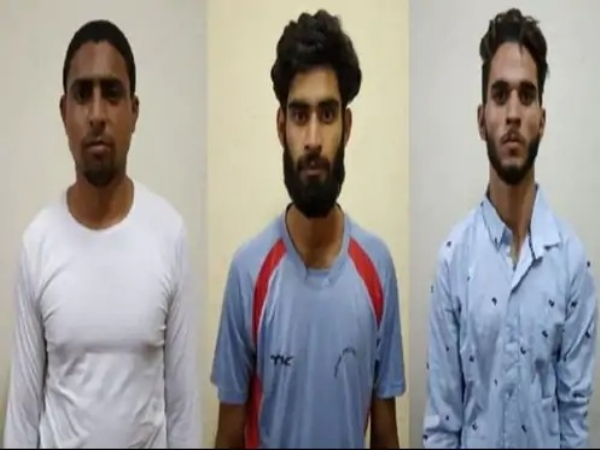
The convicts have been identified as Yasir Rafiq Bhat,
Zahid Gulzar and Mohammad Idris Shah. The court found them guilty of hatching
an anti-national conspiracy and convicted them under the Unlawful Activities
(Prevention) Act, the Arms Act and the Explosive Substances Act. Another
accused in the case, Suhail Ahmad Bhat, had already been acquitted by the court
earlier.
On October 10, 2018, when Punjab Police received
information that some Kashmiri students staying at the hostel of CT Institute
of Engineering, Management and Technology in Jalandhar were involved in
suspicious activities. Acting on the input, the police conducted a raid and
arrested three students. During the operation, an AK-47 rifle, a Mauser pistol,
several cartridges and nearly one kilogram of explosive material were
recovered.
After initial investigation indicated links with the
terror outfit Ansar Ghazwat-ul-Hind, the case was handed over to the National
Investigation Agency. During its detailed probe, the NIA collected mobile
forensic data, call detail records, Telegram chats, email records and other
technical evidence. The investigation revealed that the accused were allegedly
coordinating and carrying out activities through online platforms.
During the trial, the prosecution examined 62 witnesses,
including investigating officers, forensic experts, college administration
officials and other related persons. Although some witnesses turned hostile
during the proceedings, the court considered the available scientific and
physical evidence sufficient to convict the accused.
In its judgment, the court said the three accused were
active members of the banned terror outfit and were preparing to carry out
anti-national activities using weapons and explosive material. The court
considered the recovered weapons, digital records and other evidence as crucial
in the case.
Yasir Rafiq Bhat remained the most discussed accused in
the case, as the investigation revealed that he was a cousin of Zakir Musa, the
former chief of Ansar Ghazwat-ul-Hind. Investigators had claimed that material
related to the outfit, pictures of weapons and other digital evidence were
recovered from his mobile phone. A loaded AK-47 rifle and cartridges were also
allegedly recovered from his room.
Digital evidence played an important role in strengthening the NIA’s case.
The agency told the court that mobile forensic data, call records, Telegram
chats and email records helped establish links between the accused and their
activities. The court accepted these technical evidence as key grounds for
conviction.
Hindusthan Samachar / GURSHARAN SINGH