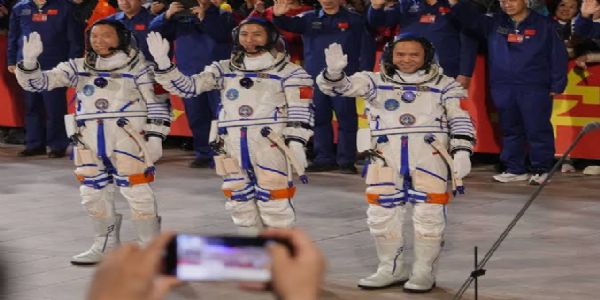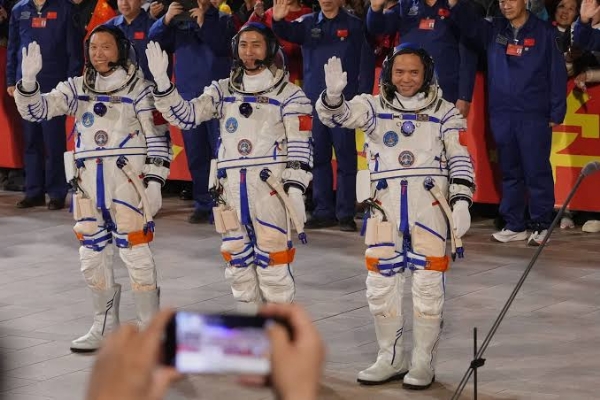
Beijing, 30 May (H.S.): Three Chinese astronauts have returned safely to Earth after completing nearly seven months aboard the country’s space station, marking the longest continuous orbital mission undertaken by a Chinese crew to date.
The spacecraft carrying astronauts Zhang Lu, Wu Fei, and Zhang Hongzhang of the Shenzhou 21 mission touched down at the Dongfeng landing site in Inner Mongolia on Friday evening, according to official reports from China’s space authorities.
The mission is being viewed as a significant milestone in China’s rapidly expanding space programme, which aims to land astronauts on the Moon by 2030 and strengthen long-duration human spaceflight capabilities.
During their extended stay aboard the Tiangong space station—meaning “Heavenly Palace”—the crew conducted a wide range of scientific experiments, including the processing and transmission of experimental data and the transfer of supplies between missions. They also worked closely with the incoming Shenzhou 23 crew, who arrived earlier in the week.
According to China’s Manned Space Agency, the astronauts completed multiple spacewalks during the mission. Notably, Zhang Lu, who previously participated in the Shenzhou 15 mission, has now completed seven extravehicular activities in total, making him the Chinese astronaut with the highest number of spacewalks on record.
Officials said the crew also conducted three major extravehicular operations during the mission, contributing to maintenance work and scientific experimentation on the space station.
Upon returning, Zhang Lu expressed deep emotion, crediting the success of the mission to the support of families, colleagues, and national space program teams. Zhang Hongzhang reflected on the mission from orbit, describing the experience of viewing Earth from space as a reminder of humanity’s shared future.
The Shenzhou programme continues to expand China’s human spaceflight capabilities, with overlapping crew rotations now becoming routine at Tiangong. One astronaut from the newly arrived Shenzhou 23 crew is expected to remain in orbit for up to one year as part of extended-duration studies.
China’s space programme has accelerated in recent years, conducting frequent crewed missions and spacewalks aboard Tiangong. The station was developed after China was excluded from participation in the International Space Station due to U.S. national security restrictions.
Space analysts note that China’s human spaceflight achievements are increasingly positioning it as a major rival to the United States in space exploration, with both nations pursuing ambitious lunar landing programmes in the coming decade.
---------------
Hindusthan Samachar / Jun Sarkar

30 May 2026
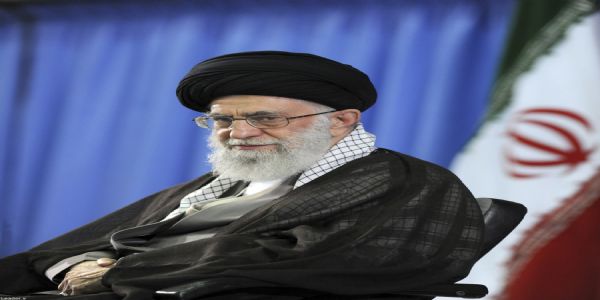
Trump Weighs Iran Ceasefire Deal in White House Crisis Meeting as Hormuz Strategy Looms Over Final Call
30 May 2026