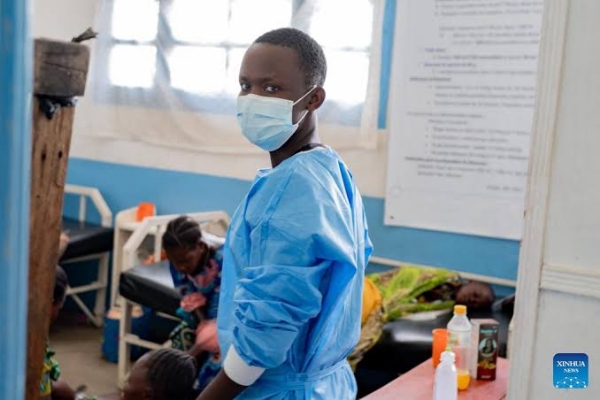
Bunia/Kinshasa, 20 May (H.S.): The World Health Organization (WHO) has raised serious concerns over the rapid spread of a rare and highly dangerous strain of Ebola virus disease in the Democratic Republic of Congo (DRC), as suspected deaths climbed to at least 134 and more than 500 suspected infections were reported across the country’s conflict-hit eastern provinces.
WHO Director-General Tedros Adhanom Ghebreyesus described the situation as “deeply concerning,” warning that the “scale and speed” of the outbreak posed a major public health threat not only to Congo but also to neighbouring countries. The outbreak has already crossed borders, with Uganda confirming cases linked to travellers arriving from eastern Congo.
The current epidemic involves the Bundibugyo strain of the Ebola virus — a rare variant for which no fully approved vaccine or targeted treatment currently exists. Health experts say the outbreak spread silently for weeks after initial tests failed to detect the virus because authorities were screening for the more common Zaire strain of Ebola.
The first known fatality was reported on April 24 in Bunia, the capital of Ituri province. According to Congolese health authorities, the body of the deceased was later transported to the mining region of Mongbwalu, potentially accelerating transmission through funeral-related exposure — a known driver of Ebola outbreaks.
The WHO has officially classified the crisis as a Public Health Emergency of International Concern, triggering an international response involving humanitarian agencies, medical organisations and regional health authorities.
Cases have now been confirmed in Bunia, Goma, Butembo, Mongbwalu and Nyakunde — densely populated urban centres that collectively house more than one million residents. The spread into urban areas has heightened fears of wider regional transmission, particularly given the extensive population movement across eastern Congo and neighbouring Uganda.
Health officials also confirmed infections among frontline healthcare workers, further complicating containment efforts. An American doctor working in Bunia reportedly tested positive for the virus and was transferred to Germany for specialised treatment.
The outbreak presents an additional challenge because eastern Congo remains deeply unstable due to armed conflict involving rebel groups, including the Rwanda-backed M23 movement, which currently controls parts of North Kivu province. Medical access, surveillance operations and transportation of laboratory samples have all been severely hindered by insecurity and poor infrastructure.
Scientists and virologists in Congo are now preparing to test experimental vaccines developed by researchers at the University of Oxford and supported by international partners. However, experts caution that emergency authorisation and large-scale deployment could take weeks.
Dr. Anne Ancia, who leads the WHO response team in Congo, warned that existing Ebola vaccines such as Ervebo were designed primarily for the Zaire strain and may not offer complete protection against the Bundibugyo variant.
Public health officials have intensified emergency measures including isolation protocols, contact tracing, disinfection campaigns and public awareness drives focused on hygiene and safe burial practices. Relief supplies, including protective equipment, disinfectants, soaps and water purification tablets, have been distributed to affected areas by UNICEF and humanitarian agencies.
Medical experts emphasise that Ebola remains one of the world’s deadliest infectious diseases, spreading through direct contact with bodily fluids such as blood, vomit and saliva. Symptoms typically include fever, severe weakness, muscle pain, vomiting, diarrhoea and unexplained bleeding.
The latest outbreak has reignited global concerns over pandemic preparedness and disease surveillance systems, especially in fragile regions affected by conflict and limited healthcare infrastructure. Several international health experts have criticised recent reductions in global health funding and surveillance programmes, arguing that weakened early-warning systems may have contributed to delays in detecting the outbreak.
Despite the alarming rise in infections, Congolese authorities and WHO officials insist that aggressive containment measures can still bring the outbreak under control if surveillance, international coordination and community cooperation improve rapidly in the coming weeks.
---------------
Hindusthan Samachar / Jun Sarkar

20 May 2026