Lucknow,
02 May (HS): As part of the Jal Jeevan Mission, the Uttar Pradesh government
adopted a 10-year operations and maintenance (O&M) 'warranty' for rural
drinking water facilities. The government stated that this move represents a
substantial transition from a construction-centric strategy to long-term,
service-oriented, and community-driven water supply management programs.
Furthermore, the government has created the 'Jal Arpan' project, which aims to
empower villages by changing them from passive recipients to active
participants, giving them ownership, accountability, and leadership in the
administration of local water supply systems.
This
technique ensures long-term sustainability while increasing community
engagement. Under the new system, construction firms will be held liable for
the operation and maintenance of water supply infrastructure for 10 years.
Anurag
Srivastava, Additional Chief Secretary of Namami Ganga and Rural Water Supply
Department, stated that they will work closely with Gram Panchayats to provide
continuous direction and assistance to guarantee the long-term success of the
Har Ghar Jal or water-for-all plan. A tripartite agreement between the Village
Water and Sanitation Committee (VWSC), Jal Nigam, and the O&M Agency will
ensure long-term sustainability as well as the meeting of all Service Level
Benchmarks (SLBs) for quality services. A substantial emphasis has been placed
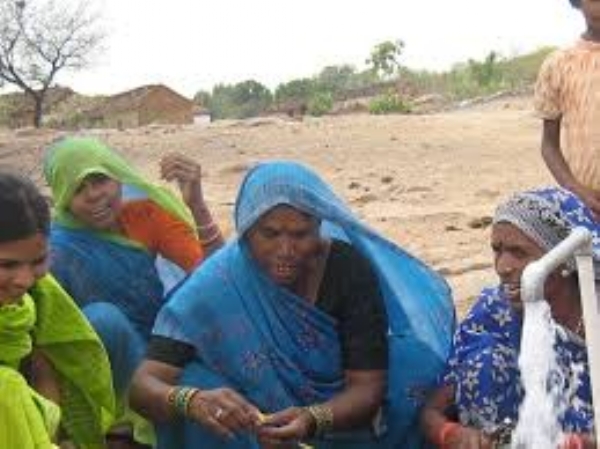
on community participation. Village Water and Sanitation Committees (VWSCs),
also known as 'Paani Samitis', are actively involved at all stages, from
planning and design to everyday operations and maintenance. Previously, several
rural water projects collapsed owing to poor maintenance, significant unpaid
power bills, and minimal community engagement.
As
a result, assets deteriorated significantly, leaving many communities without
adequate water supplies. According to Raj Shekhar, Managing Director of Uttar
Pradesh Jal Nigam (Rural), this circumstance would not happen again. Shekhar, a
2004-batch Indian Administrative Service (IAS) officer, adding that
capacity-building measures have expanded through training programs for Gram
Panchayats and local stakeholders, such as water quality monitoring using field
test kits. Water conservation and ethical consumption are being encouraged
through awareness campaigns, teaching programs in schools, and community
outreach activities.
To
promote accountability and transparency, the state has expanded its water
quality monitoring systems to include district-level, state-level, and mobile
NABL-accredited laboratories. A Citizen Charter is also being proposed to
protect consumer rights concerning water quality, quantity, and service
delivery. Furthermore, an online grievance redressal system has been developed,
allowing citizens to lodge concerns through a toll-free hotline or an online
site, assuring fast resolution and enhanced service accountability,
stated Shekhar. Uttar
Pradesh's reforms aim to turn the Jal Jeevan Mission into a long-term,
community-managed public utility model that ensures rural communities have
access to clean drinking water.
Hindusthan Samachar / Abhishek Awasthi