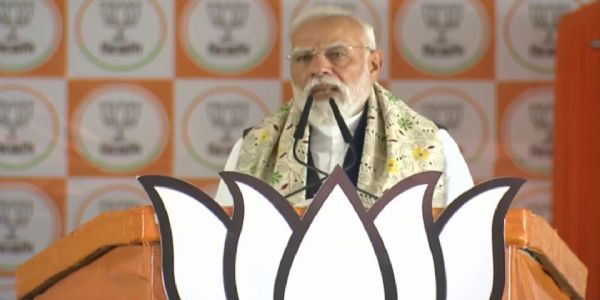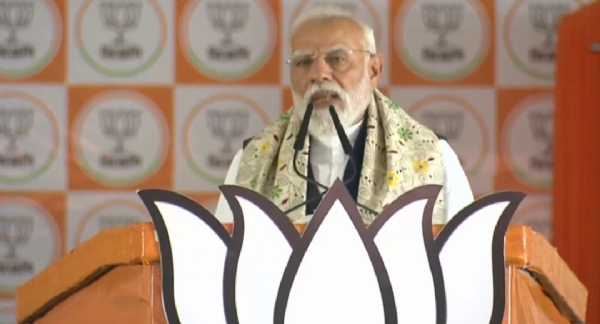
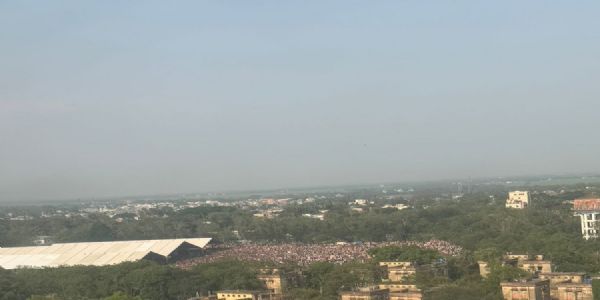
Asansol, 09 April (H.S.): Prime Minister Narendra Modi’s high‑voltage public meeting at the Asansol Polo Ground has injected fresh momentum into the national‑level narrative on West Bengal, with supporters and party strategists framing the atmosphere as a decisive break from the Trinamool Congress (TMC)’s long‑standing grip on the state.
PM Modi painted TMC rule as a regime of “appeasement, lawlessness and smuggling,” and insisted that people in Asansol and across Bengal are now demanding both security and development.
“Decisive shift” in Asansol
PM Modi opened his address by spotlighting the energy in Asansol, declaring that the crowd’s enthusiasm was not just a local show of support but a marker of a broader political transformation.
He said the atmosphere in the city “signals a decisive shift” in West Bengal, alleging that voters were finally rejecting the TMC’s politics of sectarian appeasement, identity‑based mobilisation and “vote‑bank strategies at the expense of Bengal’s future.”
The Prime Minister contrasted this with his own “Sonar Bangla”‑style vision of a Bengal where law and order, industrial growth, and border security would take precedence over partisan patronage.
PM Modi singled out what he described as the TMC’s “open‑border” policy and alleged tolerance of “Bangladeshi infiltrators,” tying the issue to rising crime and demographic anxieties in border districts such as western Bardhaman.
He argued that unregulated illegal migration was straining local resources, driving up land prices, and enabling “criminal networks” that flourished under lax governance. To the audience, he framed the election as a choice between “infiltration‑centric politics versus security‑centric leadership,” and promised that a BJP‑led government would strengthen border security, digitise land records, and clean up the coal, sand and land mafia he claimed were operating with impunity in Asansol‑area clusters.
PM Modi spent a considerable portion of his address distinguishing his idea of inclusive development from what he caricatured as TMC’s “appeasement” model.
He alleged that the TMC’s governance had focused on “selective benefits targeted at a few groups” while neglecting the broader middle class, small entrepreneurs, and youth seeking jobs. In contrast, he said that the BJP‑led central government was investing in infrastructure, affordable housing, subsidised gas and electricity, and nationwide welfare schemes that, he claimed, reached every section of society without religious or caste‑based favouritism.
To the Asansol crowd, he promised that a BJP‑ruled West Bengal would prioritise industrial “ease of doing business,” restore investor confidence, and convert the region’s industrial legacy into a hub of modern manufacturing and green energy.
PM Modi’s oratory blended statistical references with emotionally charged rhetoric, repeatedly invoking the phrase “Bengal wants change” (Bengal chaile poriborton). He recalled past allegations against the TMC, including ties to mafia networks, corruption in coal and land deals, and the “nephew‑tax” he claimed truckers and small traders had to pay, and insisted that these practices would end under BJP rule.
Echoing themes from earlier rallies, he told the crowd that Bengal had already “united” against the TMC’s alleged misrule and that the people would issue Mamata Banerjee a “certificate of former chief minister” if the election verdict went as he predicted.
Hindusthan Samachar / Jun Sarkar
09 Apr 2026