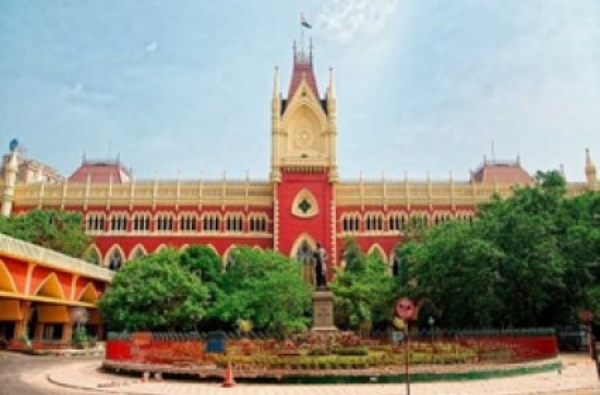
Kolkata, 22 April (H.S.): The Calcutta High Court on Wednesday concluded hearing on a petition filed by the Trinamool Congress ahead of the West Bengal Assembly elections, with the court reserving its verdict in the matter.
The Trinamool Congress has expressed apprehension that around 800 of its leaders and workers across the state could be arrested before polling.
The matter was heard by a division bench comprising Chief Justice Sujoy Paul and Justice Parthasarathi Sen. The Trinamool Congress also submitted a district-wise list of individuals who could allegedly face arrest.
Appearing for the party, senior advocate Kalyan Banerjee argued that it was improper to identify members of a political party as “troublemakers.” He questioned the basis on which such labels were being assigned and said the power to arrest rests with the police, not the Election Commission.
He further argued that detaining individuals merely on apprehension, without any serious offence, would amount to a violation of personal liberty. He said if peaceful elections were the objective, security patrols should be increased instead of targeting political workers.
Representing the state government, advocate Kishore Dutta also supported the petitioners. He argued that the term “troublemaker” is not defined under criminal law or the Representation of the People Act.
He further submitted that preventive detention is permissible only in matters involving national security or the integrity of the country, and no such situation exists in West Bengal.
Counsel for the Election Commission told the court that its constitutional responsibility was to ensure free, fair, and peaceful elections.
The Commission argued that precautionary measures were being taken in view of large-scale violence witnessed in previous elections, so that persons facing allegations do not interfere with the polling process.
The Commission also questioned how confidential information, allegedly forming the basis of the petition, had reached the concerned parties. It informed the court that it was prepared to file an affidavit if granted time.
Counsel representing the Director General of Police submitted that no legal action could be taken unless a serious offence was formally registered. However, all necessary preventive measures would be taken to stop crime, while ensuring that no individual’s fundamental rights were violated.
Notably, the first phase of polling in West Bengal is scheduled for Thursday, making the court’s forthcoming order politically significant.
Hindusthan Samachar / Satya Prakash Singh
22 Apr 2026