New Delhi, 18 April (H.S.):
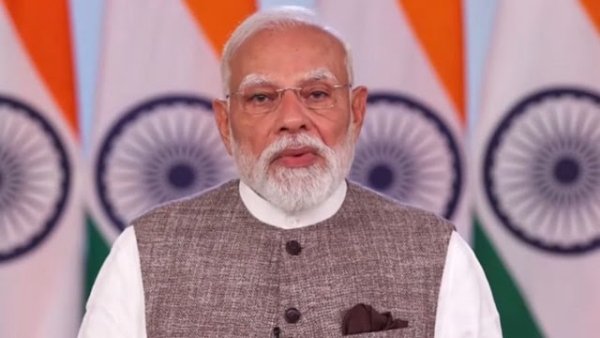
Prime Minister Narendra Modi addressed the nation at 8:30 pm on Saturday, a day after a crucial bill to implement 33% women’s reservation in the Lok Sabha and state assemblies was defeated in the lower house, falling short of the required two‑thirds majority.
Speaking to an anxious electorate still reeling from the bill’s rejection, PM Modi framed the setback as a national wound, accused the opposition of misleading the public, and vowed that the government would not abandon the unfinished mission of women’s political empowerment.
“A great yajna” for Nari Shakti
In his televised address, the Prime Minister described the Nari Shakti initiative—embodied in the Constitution (131st Amendment) Bill, 2026—as a “great yajna” for the 21st‑century empowerment of women.
He argued that the bill was not a partisan project, but an attempt to deliver long‑pending constitutional rights to women, starting with the 2029 general elections, and to ensure that they became active participants in nation‑building rather than symbolic presences in legislatures.
Under the defeated proposal, Lok Sabha strength was to have been expanded from 543 to 816 seats, based on a delimitation exercise using the 2011 Census, to “operationalise” the existing women’s reservation law ahead of 2029.
Parallel increases were envisaged in state and union‑territory assemblies to accommodate 33% reservation for women without shrinking existing male‑dominated electorates.
Shortfall of 54 votes and political fallout
During the Lok Sabha vote on Friday night, 298 MPs voted in favour of the bill, while 230 voted against, out of 528 members present and voting. The Constitution (131st) Amendment required at least 352 votes for a two‑thirds majority, leaving the government short by 54 votes and forcing the Centre to withdraw two related bills—one on delimitation and another on Union Territories—on the grounds that they were “intrinsically linked” to women’s reservation.
PM Modi told the nation that the dreams of women had been crushed in Parliament and that the opposition’s “celebration” of the bill’s fall would be remembered by daughters and sisters across constituencies. He accused dynastic parties of fearing that a surge in women’s representation would destabilise entrenched power structures and warned that the opposition would “pay a heavy political price” for its stand, particularly in the forthcoming state elections in West Bengal and Tamil Nadu.
“Women will not forget their humiliation”
In an unusually emotional passage, the Prime Minister said that what the opposition did “hurt the self‑esteem of women” and that their “insult” of Nari Shakti would not be forgotten. “Women may forget many things, but they never forget their humiliation,” he declared, telling viewers that when leaders who voted against the bill returned to their constituencies, women would recall how those same figures clapped and celebrated after blocking women’s due place in Parliament.
PM Modi apologised to the “mothers, sisters, and daughters of the nation”, saying the government had failed to secure passage and that the women of India had been left empty‑handed despite decades of delay on the core issue of political representation.He reiterated that the bill was not about taking away anyone’s rights, but about expanding the democratic space to include more women, especially from smaller and regional parties, and that the agenda of Nari Shakti would “never be dropped”, even if it had to wait beyond 2029.
BJP’s mobilisation and opposition pushback
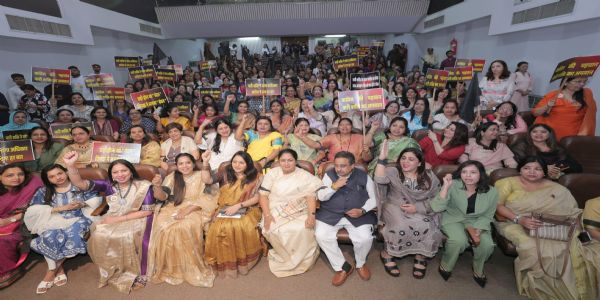
Earlier in the day, several BJP women MPs, including Raksha Khadse, Bansuri Swaraj, and Kamaljeet Sehrawat, led a protest march towards the residence of Congress leader Rahul Gandhi, accusing the opposition, led by him, of deliberately stalling a measure that would have enhanced women’s share in legislatures. Delhi Police used water cannons and detained the demonstrators, including BJP leaders such as Hema Malini and Delhi Chief Minister Rekha Gupta, as tensions ran high in the capital.
Senior BJP leaders, including Smriti Irani and Gopal Krishna Agarwal, echoed Modi’s line, calling the bill’s defeat a “black day” for the Congress‑led INDIA bloc and suggesting that the move exposed an anti‑women mindset among dynastic parties.
Railway Minister Ramesh Pokhriyal Nishank warned that the opposition had “dug a deep pit” for its own future, as women voters would “never forgive” the blocking of the 33% reservation pledge.
Hindusthan Samachar / Jun Sarkar
18 Apr 2026
PM Modi Vows Undaunted Commitment to Women’s Empowerment in National Address After Reservation Bill Setback
18 Apr 2026