New Delhi, 18 April (H.S.): Delhi Chief Minister Rekha Gupta has described the failure of the 131st Constitutional Amendment Bill in the Lok Sabha as a direct injustice to women’s rights, calling the events of 17 April 2026 “painful and disillusioning” for every woman who seeks equality and dignity. Speaking in the capital, she accused sections of the opposition of opposing a historic step toward women’s political empowerment and vowed that the “anger of women” would not go unanswered.
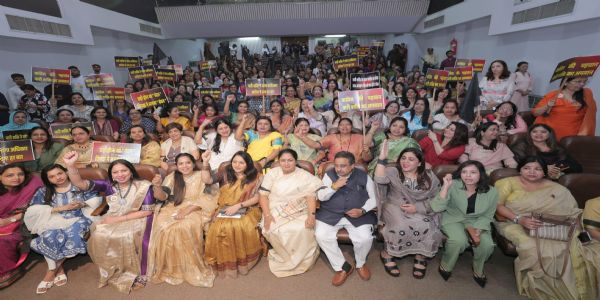
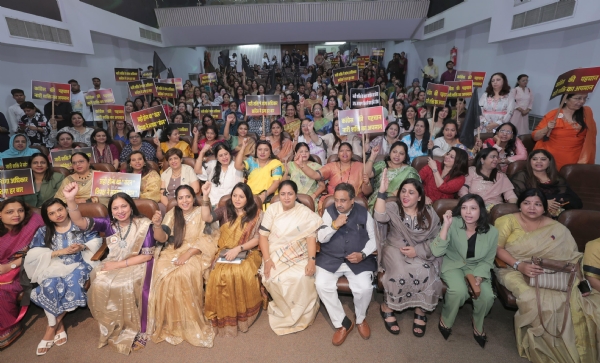
At the Confederation of All India Traders’ National Women Entrepreneurs Summit 2026, held at the Hindi Bhawan, Rekha Gupta led a symbolic protest by tying a black band along with over four hundred women entrepreneurs, signalling strong dissent against the opposition’s stance on women’s reservation.
Under her leadership, participants raised slogans against the “anti‑women politics” of the parties that blocked the bill, branding the outcome as a denial of justice to millions of women.
In her address, the Chief Minister stressed that the Prime Minister’s Nari Shakti Vandana Adhiniyam—the Constitution (131st Amendment) Bill—was a historic and transformative move to bring India’s daughters into the mainstream of decision‑making, yet some parties viewed it through a narrow political lens and opposed women’s rights without hesitation.
She argued that the reasoning offered against the bill lacked any substantive foundation and only revealed an “anti‑women mindset” in the opposition’s ranks.
Rekha Gupta, herself a woman Chief Minister, said the subject is not just a political issue for her, but one of emotion, respect, and self‑respect. She asserted that the rejection of the bill had effectively stolen a vital opportunity to include crores of women in the decision‑making process, and that the leaders who voted against it would be held accountable by women in their own constituencies.
She highlighted that this was not the first time the Congress and its allies had obstructed women’s rights, suggesting that their repeated resistance reflects a deeper reluctance to see women wield genuine power in governance.
The Chief Minister said that the country’s women were watching closely and would ensure that the injustice done to Nari Shakti would not be forgotten or forgiven.
Drawing a parallel with the growing role of women entrepreneurs, Rekha Gupta emphasized that the rise of women in business, startups, and digital platforms was a source of national pride. She noted that under the Prime Minister’s leadership, India’s startup ecosystem was scaling new heights, with women entrepreneurs increasingly at the forefront.
At the summit, a large number of women entrepreneurs, including several BJP MPs and CAIT leaders such as Praveen Khandelwal, echoed the Chief Minister’s sentiments, voicing outrage at the bill’s defeat and reaffirming their commitment to protect and expand women’s rights through democratic means.
Rekha Gupta concluded by assuring them that the Delhi government, under the Prime Minister’s guidance, would remain fully committed to women’s empowerment and development led by women, and would continue to challenge any attempt to sideline them from the centre of power.
---------------
Hindusthan Samachar / Jun Sarkar