Islamabad / Tehran / Washington, 16 April (H.S.):
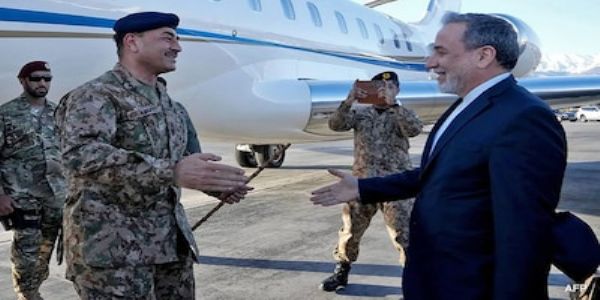
The United States has described itself as “optimistic” about striking a second‑phase peace deal with Iran, even as Tehran escalates its rhetorical defiance of a US‑led naval blockade and threatens to shut down vital Red Sea and Gulf trade routes. The diplomatic momentum is now being funneled through Pakistan, whose senior delegation arrived in Tehran on Wednesday carrying a fresh message from Washington ahead of a potential new round of talks in Islamabad.
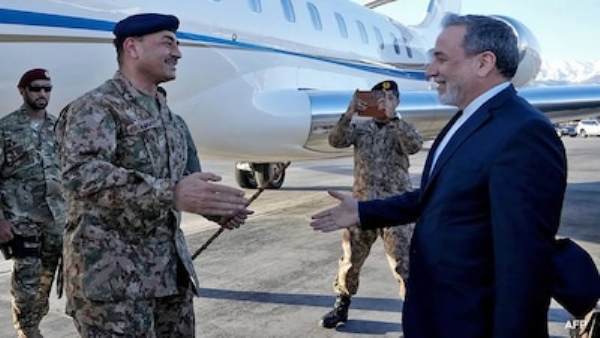
Pakistan’s army chief, General Asim Munir, led the delegation to Tehran at the invitation of both Washington and Iran, underscoring Islamabad’s role as a neutral intermediary in the six‑week war between the US‑led coalition and Iran. Pakistani officials say their modest but crucial goal is not to announce an immediate breakthrough, but simply to “keep the talks going” and prevent a slide back into full‑scale hostilities.
In Tehran, Foreign Minister Abbas Araghchi welcomed the Pakistani delegation, underscoring the importance of multi‑track diplomacy and the fact that “several messages” have already been exchanged via Islamabad since the inconclusive first‑round negotiations in Islamabad ended last Sunday.
White House press secretary Karoline Leavitt told reporters that a second round of negotiations “would very likely” be held again in Pakistan’s capital, though the exact dates and format are still being negotiated. “Those discussions are being had,” she said, adding that the administration “feels good about the prospects of a deal.”
US Demands and Iran’s Nuclear Posture
At the core of the emerging “grand bargain” framework is the United States’ insistence that any deal must permanently bar Iran from acquiring a nuclear weapon. US vice president JD Vance, who led the first round of talks, has openly described the offer as a comprehensive package that would end the war with Iran and Israel while resolving the long‑standing dispute over Tehran’s enrichment program.
Washington is reportedly seeking a 20‑year suspension of Iran’s uranium enrichment, whereas Tehran has countered with a proposal to freeze nuclear activity for just five years—an offer US officials have rejected as insufficient.
Iranian officials, including the foreign ministry, have pushed back by reiterating that Iran’s “right to enrich uranium is indisputable,” even as they concede that the exact level of enrichment is “negotiable.”
Blockade, Ceasefire, and Trade Threats
The advent of diplomacy has not eased the military‑economic pressure on Iran. The United States has imposed a naval blockade on Iranian ports, with US Central Command claiming it has “completely halted economic trade going into and out of Iran by sea” and has turned back 10 vessels that attempted to leave Iranian waters during the first 48 hours.
Iran, in response, has warned that the blockade jeopardizes the two‑week ceasefire brokered on 8 April. Major General Ali Abdollahi, head of Iran’s military central command, stated that continued US pressure would be treated as a “prelude” to violating the ceasefire and that Iran’s armed forces “will not allow any exports or imports to continue in the Persian Gulf, the Sea of Oman and the Red Sea.”
Iran’s top‑level military adviser to Supreme Leader Mojtaba Khamenei, Mohsen Rezaei, went further, warning on state television that any attempt by the United States to “police” the Strait of Hormuz would result in Iranian missiles sinking American ships.
Red Sea Leverage and Global Economic Risks
By linking the blockade to freedom of trade in the Red Sea, Iran is attempting to weaponize global supply‑chain anxiety. The Strait of Hormuz alone carries roughly one‑fifth of the world’s seaborne crude oil, and any credible disruption there or in the Red Sea would feed sharply higher energy prices and inflation risks.
International Monetary Fund chief Kristalina Georgieva has warned that unresolved conflict in the Middle East could usher in “tough times ahead” for the global economy, with oil‑driven inflation spilling into food prices and undermining fragile growth in emerging markets. The mere prospect of a US‑Iran deal, however, lifted major US stock indices to record highs on Wednesday while pushing crude futures lower.
Pakistan’s Tightrope Between Rivals
For Pakistan, the mediation task is especially delicate. Islamabad must balance its long‑standing ties with Iran against its security and economic dependence on the United States and its broader alignment with Gulf partners who have also expressed deep concern about the war.
Pakistani officials say they are not seeking to endorse any side’s maximalist demands, but rather to create a face‑saving off‑ramp that allows Tehran to preserve its nuclear‑program sovereignty while giving Washington verifiable guarantees that Iran will not weaponize its enrichment.
The success or failure of this Pakistani‑backed diplomatic channel will likely hinge on two factors: whether the US is willing to soften the scale and duration of its blockade, and whether Iran is prepared to accept significantly longer‑term constraints on uranium enrichment than it has so far offered.
Hindusthan Samachar / Jun Sarkar
16 Apr 2026