New Delhi, 11 April (H.S.):
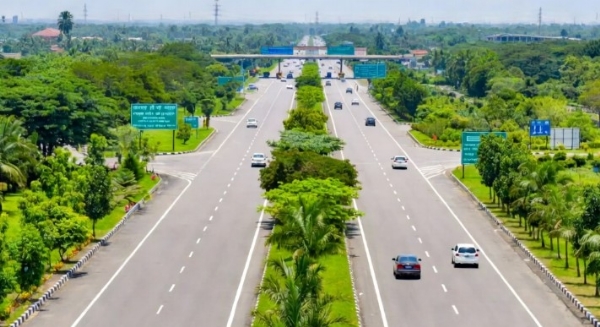
The Central Government has released a detailed assessment of the impact of the Barabanki–Bahraich highway project on India–Nepal trade. The report estimates that this stretch of National Highway‑927 will emerge as a key lifeline for cross‑border trade.
According to the Ministry of Road Transport and Highways, connectivity to the Rupaidiha land port will become faster and more reliable through this highway. The assessment notes that freight movement along the Nepalgunj corridor in Nepal is likely to rise.
Once the project is completed, travel time between Barabanki and Bahraich is expected to fall from about 150 minutes to around 75 minutes, while the average speed will increase from 40 km/h to 80 km/h. This will particularly reduce losses in perishable goods such as vegetables and dairy products.
The Centre has projected that the supply of food grains, medicines, and consumer goods will become smoother via this corridor. In the past, congestion and delays at the border had repeatedly disrupted supply chains, forcing traders to incur losses running into crores. An increase in truck traffic at the Rupaidiha area is anticipated, which will create new opportunities in logistics, warehousing, and the transport sector.
The Union Cabinet approved the project on 18 March, and it is to be developed as a 4‑lane access‑controlled highway under National Highway‑927. Land‑based trade between India and Nepal is the most active in South Asia, with over 60 per cent of Nepal’s total trade taking place with India.
The Rupaidiha–Nepalgunj border route is a major hub for this trade, from where large volumes of food grains, vegetables, dairy products, medicines, and other essential commodities are dispatched.
---------------
Hindusthan Samachar / Jun Sarkar