New Delhi, 11 April (H.S.): The Delhi government on Saturday released the draft of a new Delhi Electric Vehicle Policy for public and stakeholder consultation. All stakeholders have been given 30 days—until 10 May—to submit their suggestions on this proposed policy, after which the policy will be finalised.
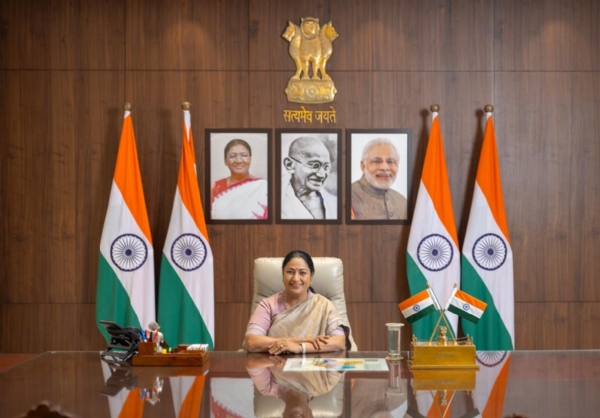
Chief Minister Rekha Gupta said in a statement that the proposed Delhi Electric Vehicle Policy Draft 2026 is an important step towards establishing a clean, affordable and sustainable transport system in the national capital under the far‑sighted leadership of Prime Minister Narendra Modi.
The policy is proposed to run until 31 March 2030. It places a strong emphasis on comprehensive financial incentives, tax exemptions, mandatory provisions and infrastructure development to promote electric vehicles.
The Chief Minister said that, under this policy, all purchase incentives will be provided directly to eligible beneficiaries through the Direct Benefit Transfer (DBT) mechanism. This includes individuals, proprietorship firms, agencies and companies that are residents of Delhi and whose vehicles are registered in Delhi.
Beneficiaries will be able to apply for the subsidy directly through the system prescribed by the Transport Department. She explained that the ex‑showroom price cap for electric two‑wheelers has been set at ₹2.25 lakh. Subsidies for such vehicles will be disbursed in three phases: ₹10,000 per kilowatt‑hour (up to a maximum of ₹30,000) in the first year, ₹6,600 per kilowatt‑hour (up to a maximum of ₹20,000) in the second year, and ₹3,300 per kilowatt‑hour (up to a maximum of ₹10,000) in the third year.
The Chief Minister added that to promote electric three‑wheelers (L5M category), a subsidy of ₹50,000 will be offered in the first year, ₹40,000 in the second and ₹30,000 in the third. For electric four‑wheel cargo vehicles (N1 category), incentives of up to ₹1 lakh in the first year, ₹75,000 in the second and ₹50,000 in the third year will be provided.
The Chief Minister said that additional benefits will also be given under the “scraping incentive” to buyers of new electric vehicles who dispose of old polluting vehicles. An incentive of ₹10,000 will be given for electric two‑wheelers, ₹25,000 for three‑wheelers, ₹1 lakh for non‑transport electric cars and ₹50,000 for four‑wheel cargo vehicles. To avail of this benefit, the new electric vehicle must be purchased within six months of obtaining a certificate from an authorised scrapping centre. The scheme will apply to BS‑IV and older vehicles registered in Delhi.
In the case of electric cars, the benefit will be limited to the first 1,00,000 eligible applicants, and the ex‑showroom price must not exceed ₹30 lakh.
The Chief Minister stated that the policy will provide extensive tax relief on road tax and registration fees for electric vehicles.
During the policy period, all electric vehicles registered in the National Capital Territory of Delhi will receive 100% exemption. Electric cars priced up to ₹30 lakh will be fully exempt from road tax and registration fees until 31 March 2030, while strong‑hybrid vehicles will receive 50% exemption. No exemption will be granted for electric cars priced above ₹30 lakh.
To strengthen charging and battery‑swapping infrastructure, Delhi Transco Limited will be designated as the nodal agency. This agency will be responsible for planning, coordination and implementation. A digital portal will be created or integrated to make approvals, monitoring and operations related to charging and battery‑swapping entirely transparent and hassle‑free. Coordination will also be ensured with the District Magistrate, Sub‑Divisional Magistrate, Revenue Department and other concerned agencies. In addition, a high‑level committee will be constituted under the chairmanship of the Chief Secretary, comprising representatives from all relevant departments and agencies.
The Chief Minister said that the policy also sets some key future‑oriented rules. From 1 January 2027, only electric three‑wheelers (L5 category) will be allowed for new registrations in Delhi. From 1 April 2028, only electric two‑wheelers will be registered. School buses will also be made electric in a phased and mandatory manner: at least 10% by the end of the second year, 20% by the end of the third year and 30% by 31 March 2030. This rule will apply to all school buses, whether owner‑operated, leased or hired.
The Chief Minister added that electric vehicles will be given priority in the government fleet. After the notification of the policy, all vehicles taken on lease or hire by the Delhi government will be electric, except for emergency or specially exempted vehicles.
Moreover, all new inter‑state buses added by the Delhi Transport Corporation (DTC) and the Transport Department will also be electric.
The Chief Minister said that an EV Fund will be created to ensure smooth implementation of the policy. It will include the state budget, schemes and grants from the central and state governments, the Air Ambience Fund, environmental compensation charges, the PM‑eDrive scheme, taxes and other approved sources.
A Delhi EV Apex Committee will also be constituted under the chairmanship of the Transport Minister to oversee the implementation of the policy and the utilisation of funds. A total budget of ₹3,954.25 crore has been earmarked for this ambitious policy, of which ₹1,236.25 crore will be spent on vehicle‑purchase incentives, ₹1,718 crore on scraping incentives and ₹1,000 crore on charging‑infrastructure development.
Expenditure has also been staggered over years: ₹965.5 crore in the first year, ₹1,012.75 crore in the second, ₹1,231.5 crore in the third and ₹744.5 crore in the fourth. This draft EV Policy 2026 will propel Delhi towards clean, green and modern mobility, reduce pollution and provide citizens with better and more accessible transport facilities.
The draft of the Delhi Electric Vehicle (EV) Policy 2026, released by the Delhi Transport Department, has been made officially available on the department’s website at https://transport.delhi.gov.in for the general public and all stakeholders. The department has invited suggestions and comments. Interested persons may send their inputs within 30 days from the date of the notification—that is, by 10 May—either by emailing evpolicy2026@gmail.com or by post to the Joint Commissioner (EV), Transport Department, GNCTD, 5/9, Under Hill Road, New Delhi–110054. The department has clarified that suggestions received after the stipulated deadline will not be considered.
---------------
Hindusthan Samachar / Jun Sarkar