Noida, 28 March (H.S.):
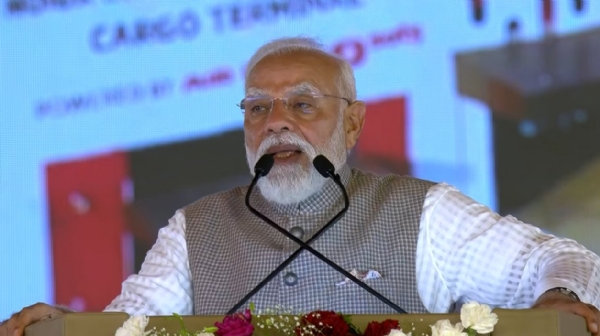
Prime Minister Narendra Modi inaugurated the first phase of the Noida International Airport at Jewar in Gautam Buddha Nagar district, Uttar Pradesh, on Saturday and also laid the foundation stone for a major maintenance, repair and overhaul (MRO) facility at the same site.
Speaking at a public gathering after the ceremony, Modi described the project not just as a new airport but as a new engine of growth for the region, especially for the youth and farmers of western Uttar Pradesh.
A new aviation hub for western Uttar Pradesh
PM Modi said the Jewar‑based Noida airport will act as a fresh growth engine for the western belt of the state, linking Agra, Mathura, Aligarh, Ghaziabad, Meerut, Bulandshahr and surrounding districts with better air connectivity. The first phase of the airport, with a 3,900‑metre runway and a terminal designed to handle 12 million passengers a year, will be expanded over time to handle up to 70 million passengers annually.
The Prime Minister emphasised that the project is part of the government’s broader “Vikasit Uttar Pradesh” and “Vikasit Bharat” vision, positioning the state among the leading regions in India where the maximum number of new international airports are being developed.
The airport has been built as a multimodal transport hub, integrating air, road, rail and metro links, and is expected to ease congestion at Indira Gandhi International Airport in Delhi while also attracting logistics, manufacturing and export businesses.
PM Modi said the facility will create new opportunities for young people in the region, not only through direct aviation jobs but also through ancillary services such as hospitality, retail and transport.
Cargo, connectivity and farmers’ role
The project includes a world‑class cargo hub and a 40‑acre MRO campus, which will allow airlines to conduct heavy maintenance work in India instead of sending aircraft abroad. The MRO facility alone is projected to generate thousands of high‑skilled jobs and save significant foreign‑exchange outflows.
PM Modi highlighted that till now, most Indian carriers had to ship their aircraft overseas for routine and deep‑maintenance checks, but the Jewar MRO will help the country move closer to self‑reliance in aviation maintenance.
The Prime Minister also praised local farmers whose land has been used for the airport, saying their contribution has made the mega‑project possible. He argued that the improved connectivity will boost food‑processing industries and give farmers better access to global markets, helping them fetch higher prices for their produce.
PM Modi drew particular attention to ethanol blending, explaining that it has reduced India’s dependence on imported crude oil and channelled billions of rupees in additional income back to farmers.
Regional projects and “double‑engine” governance
In his speech, PM Modi pointed out that the Jewar airport is a symbol of the so‑called “double‑engine” government model, with the BJP in power both at the centre and in Uttar Pradesh. He claimed that the project, first approved in 2003, was kept in limbo for years under previous governments and only gained momentum once the current alliance took charge.
The Prime Minister cited other recent and ongoing projects in the region, including the semiconductor factory foundation in Noida, the expansion of the Delhi‑Meerut Namo Bharat rail corridor, the extension of the Meerut Metro and the development of freight‑corridor nodes such as Dadri, which, he said, have strengthened the region’s links with seaports along the western coast.
He also contextualised the opening of the airport against the backdrop of global crisis, noting that turmoil in West Asia has triggered supply‑chain disruptions, higher fuel prices and food‑security concerns in many countries. India, he said, remains dependent on imported crude but the government is taking every possible step to shield ordinary citizens and farmers from the worst impact through targeted subsidies, diversification of supplies and domestic alternatives such as ethanol.
Infrastructure push and national unity
PM Modi reminded the audience that in 2014 India had only 74 airports, a number that has now grown to more than 160, with the UDAN scheme making air travel affordable for millions. The government has already cleared thousands of crore rupees for the expansion of the plan, he said, underscoring the administration’s push to create a modern, multi‑modal infrastructure network that includes metros, Namo Bharat trains, expressways and electrified railways.
In a closing appeal, the Prime Minister called on all political parties to place national interest above partisan concerns during a time of global uncertainty. He said the unity and hard work of 140 crore Indians remain the country’s biggest strength, and expressed confidence that the Noida International Airport will not only transform Uttar Pradesh but also give India a new edge in the global aviation and logistics landscape.
Hindusthan Samachar / Jun Sarkar
28 Mar 2026