New Delhi, 22 March (H.S.):
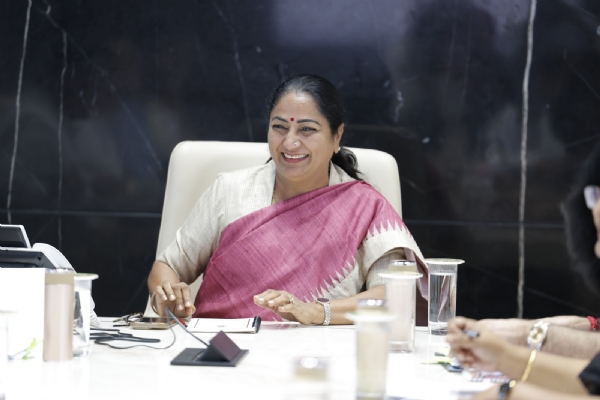
Delhi Chief Minister Rekha Gupta has announced a major restructuring of the capital’s health infrastructure, under which three key government hospitals will be merged into a single AIIMS‑style autonomous medical institution. The move is expected to significantly improve clinical services and substantially increase postgraduate (PG) and MBBS seats in the city, she said in a statement issued on Sunday, 22 March 2026.
The government plans to integrate Guru Teg Bahadur Hospital (GTB), Delhi State Cancer Institute (DSCI) and Rajiv Gandhi Super Speciality Hospital (RGS Hospital) into one unified medical hub. In parallel, the Institute of Human Behaviour and Allied Sciences (IHBAS) will be developed as National Institute of Mental Health and Neurosciences‑2 (NIMHANS‑2), reinforcing Delhi’s capacity in neuropsychiatry and allied disciplines.
Bigger PG and specialist seats
The core objective of the integration is to add a large number of PG seats so that more doctors can receive specialist training and enhance the quality of public health services. Currently, several departments such as Radiology, Pathology and Anaesthesia run across multiple institutions, leading to fragmented faculty and underutilised resources.
After integration, faculties from Assistant Professors through Professors will be pooled under shared departments, enabling seat expansion as per existing medical‑education norms. Under these norms, each Associate Professor can support two PG seats and each Professor can support three, so streamlining the teaching structure will automatically inflate seat numbers.
Officials say Radiology, Pathology and Anaesthesia are among the departments that could see the largest jump in intake. Where seats in Radiology were previously limited or even zero at some centres, the consolidated system may raise the total to around 22. Pathology could go up to about 26 seats and Anaesthesia to roughly 48.
Similar increases are expected as unfilled faculty posts across the three hospitals are filled.
The integration will also open PG courses in specialties that currently lack dedicated training slots, such as certain departments at Delhi State Cancer Institute and Rajiv Gandhi Super Speciality Hospital.
Around 26 new PG seats across Radiotherapy Oncology, Nuclear Medicine, Cancer Research and ICU‑oriented units are projected at DSCI, and about 14 new seats in areas like Cardiology and Cardiac Surgery at RGS Hospital.
Future boost to MBBS intake and infrastructure
CM Gupta added that higher bed strength, rising patient inflow and expanded faculty would also create conditions for raising MBBS seats in the future. To support this, the government will plan new hostels, modern laboratories, expanded lecture theatres and other academic facilities so that students receive a stronger teaching environment. She stressed that the reform is not just about better healthcare delivery but also about scaling up medical education and strengthening research in the national capital.
Health experts in Delhi have welcomed the announcement, saying that a centralised super‑hospital model on AIIMS lines can improve efficiency, standardise care and attract more junior doctors and specialists to the public sector. However, they also emphasised the need for clear timelines, faculty recruitment targets and service‑integration roadmaps to ensure that the projected seat increases translate into actual enrolment within a few academic cycles.
---------------
Hindusthan Samachar / Jun Sarkar