Kolkata, 19 March (H.S.): The Nandigram Assembly constituency in East Midnapore district remains one of the most politically significant and sensitive seats in West Bengal. The constituency is once again set for a high-profile contest in the 2026 Assembly elections.
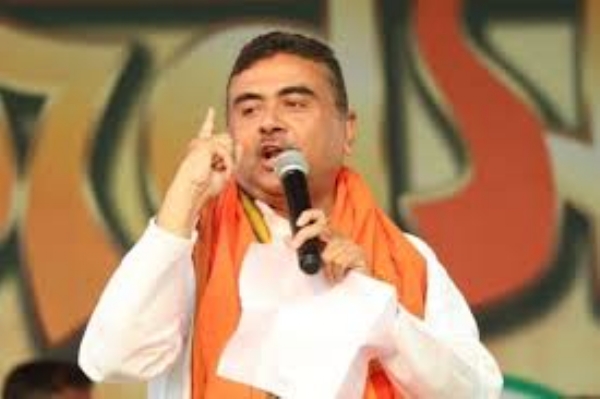
In the 2021 Assembly polls, Chief Minister Mamata Banerjee suffered a narrow defeat here against her former aide Suvendu Adhikari, who had defected from the Trinamool Congress (TMC) to join the Bharatiya Janata Party (BJP). Adhikari has been renominated by the BJP from the seat this time as well. However, Banerjee is not contesting from Nandigram in this election.
Instead, the TMC has fielded Pabitra Kar, a former BJP leader and once considered a close associate of Adhikari. Notably, Kar joined the TMC on the same day the party announced its candidate list.
------
Historical and political background
Nandigram falls under the Tamluk Lok Sabha constituency and comprises the Nandigram-I and Nandigram-II development blocks. Between 1951 and 1967, the area was divided into two Assembly constituencies—Nandigram North and Nandigram South. These were merged in 1967 to form the present constituency.
-----
2007 land movement: A political turning point
Nandigram became nationally prominent after the 2007 anti-land acquisition movement against a proposed chemical hub by the then Left Front government. Fourteen villagers were killed during the agitation, an incident that significantly altered the political landscape of the state.
The movement played a crucial role in strengthening Mamata Banerjee’s political position, eventually contributing to the fall of the 34-year-old Left Front government in 2011.
-------
Mamata vs Suvendu in 2021
Nandigram again drew national attention in 2021 when Mamata Banerjee decided to contest from the seat, leaving her traditional Bhabanipur constituency. She faced Suvendu Adhikari in a fiercely contested battle.
Adhikari defeated Banerjee by a narrow margin of 1,956 votes, marking the BJP’s first victory in the constituency.
--------
Importance rises after 2024 Lok Sabha trends
The political importance of the constituency further increased after the 2024 Lok Sabha elections, where the BJP secured a lead of around 8,200 votes over the TMC in this Assembly segment. This has reinforced the BJP’s strategic focus on retaining the seat.
-------
Electoral history
Nandigram has witnessed 15 Assembly elections so far, including a by-poll in 2009. The Communist Party of India (CPI) dominated the constituency in the early decades, winning nine times.
The Congress and the TMC have won the seat twice each, while the Janata Party won once. The BJP registered its first victory here in 2021.
-------
Voter profile
The total number of voters stood at 231,866 in 2016, rising to 246,434 in 2019 and 257,992 in 2021.
Muslim voters constitute about 23.60 percent of the electorate, while Scheduled Caste voters account for around 16.46 percent. The constituency is overwhelmingly rural, with about 96.65 percent rural voters and only 3.35 percent urban voters. Nandigram recorded a high voter turnout of 88.51 percent in the 2021 elections.
-------
Agrarian economy, limited industry
Located on the southern banks of the Haldi River and opposite the industrial town of Haldia, Nandigram has a largely agrarian economy. Paddy, vegetables and fish production form the backbone of the local economy, with the area supplying fresh agricultural produce to nearby urban centres such as Haldia.
Industrial development remains limited, with agriculture and small businesses continuing to be the primary sources of livelihood.
-------
Connectivity and infrastructure
Nandigram has road connectivity to Haldia and Tamluk. The nearest railway station is Mahishadal, located about 19 km away.
While the area has government schools and some colleges, residents often depend on Haldia and Tamluk for higher education and advanced healthcare facilities.
Nandigram is located about 70 km from Kolkata, 33 km from Tamluk, 13 km from Haldia, 19 km from Mahishadal and 48 km from Egra. It is also geographically close to South 24 Parganas district across the river.
------
High stakes in 2026
The Election Commission has announced a two-phase polling schedule in West Bengal, with Nandigram going to polls in the first phase on April 23.
As the elections approach, the political temperature in Nandigram is rising again. The BJP has once again fielded Suvendu Adhikari, while the TMC has nominated his former associate Pabitra Kar, setting the stage for a politically symbolic contest.
-------
BJP targets Mamata’s absence
With Mamata Banerjee not contesting from Nandigram this time, the BJP has made it a campaign issue, alleging that she is avoiding the constituency after her 2021 defeat.
In a conversation with Hindusthan Samachar, Suvendu Adhikari said he had defeated Banerjee in Nandigram previously and expressed confidence of victory again. He also claimed the BJP was fully confident of retaining the seat.
Attempts to reach Pabitra Kar for comment were unsuccessful.
Meanwhile, the TMC has maintained that it is fighting the election on organisational strength and remains confident of putting up a strong fight in every constituency.
Political observers believe Adhikari’s stature has grown significantly in Nandigram after his 2021 victory over the Chief Minister, while the ruling TMC is also expected to put its full organisational weight behind the contest.
With prestige and political symbolism attached to the seat, the 2026 Nandigram contest is once again shaping up to be one of the most closely watched battles in West Bengal, with potential implications for the broader political narrative in the state.
Hindusthan Samachar / Satya Prakash Singh
19 Mar 2026
BJP unveils second candidate list,Kummanam to contest from Aranmula
BJP unveils second candidate list,Kummanam to contest from Aranmula..