New Delhi, 18 March (H.S.):
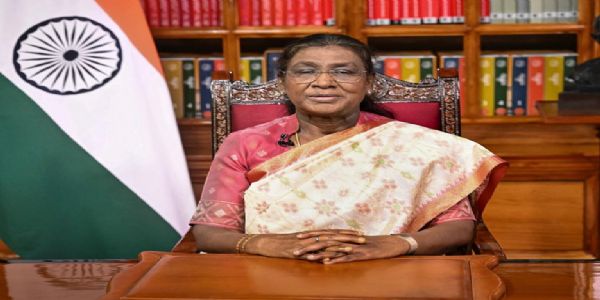
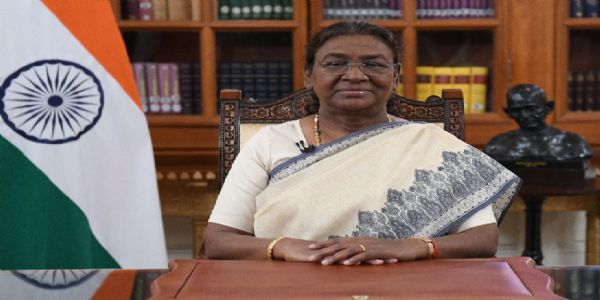
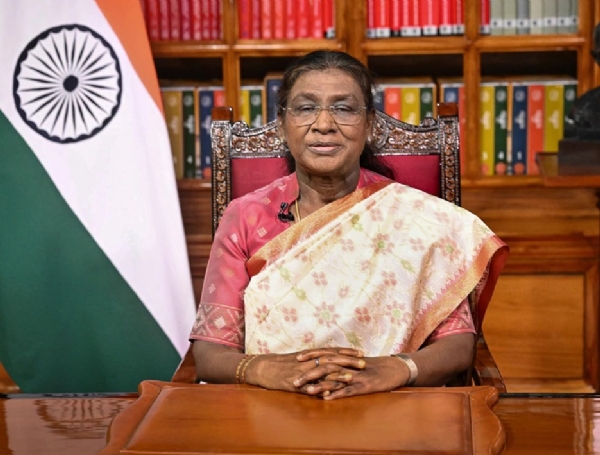
President Droupadi Murmu is set to undertake a three‑day public and religious tour of Uttar Pradesh from 19 to 21 March, traversing the sacred circuits of Ayodhya, Mathura and Vrindavan. The itinerary, packed with spiritual events, Vedic rituals and public‑welfare engagements, underscores both the President’s personal religiosity and the Rashtrapati Bhavan’s symbolic connection with India’s cultural and devotional landscape.
The trip begins on the first day of Chaitra Navratri, widely regarded as the Hindu New Year, with a high‑profile stop in Ayodhya’s Ram Mandir. President Murmu will attend Vedic rituals and preside over the installation of the ‘Shri Ram Yantra’ on the temple’s second floor, a geometric structure built using Vedic mathematics and scriptural design. The Trust says the Yantra, an abode of the deity, is believed to channel positive energy and deepen the sanctity of the temple complex.
Approximately 5,000 guests have been invited to the event, including saints, seers and temple contributors, with Uttar Pradesh Chief Minister Yogi Adityanath and Gujarat Governor (former CM) Anandiben Patel scheduled to attend. Police and temple authorities expect around 7,000 people at the site, and the main ritual—scheduled during the Abhijit Muhurat around 11.55 am—will be accompanied by continuous chanting and processions.
During her roughly three‑and‑a‑half‑hour stay, the President will also felicitate several workers and artisans who contributed to the construction of the Ram Mandir, highlighting the government’s emphasis on recognising grassroots labour alongside ceremonial grandeur.
In the evening, the President will travel to Mathura and Vrindavan, where she will attend the evening aarti at ISKCON’s Krishna Balaram Mandir and Prem Mandir, both key centres for the Hare Krishna movement and broader Vaishnava devotional practice. The visits are consistent with Rashtrapati Bhavan’s pattern of acknowledging major sectarian‑devotional sites across the Hindu spectrum.
On 20 March, President Murmu will visit ashrams and spiritual landmarks in the Mathura–Vrindavan cluster, including the ashram of Premanand Ji Maharaj and the memorial of Baba Neem Karoli. She is also expected to attend the Udiya Baba Ashram and Davanal Kund, reinforcing the tour’s emphasis on ascetic and mystical strands of north‑Indian Hinduism.
The social‑welfare component of the second day comes with the inauguration of the new Oncology Block at the Ramakrishna Mission Sevashram Hospital in Vrindavan. The charitable hospital, run by the Mission, serves large numbers of economically disadvantaged patients from the Brij‑region, and the cancer‑care wing is designed to expand access to affordable, specialised oncological treatment.
The Mission had earlier extended a formal invitation to the President, seeking to spotlight both its healthcare work and her engagement with public‑health outreach.
Alongside the medical inauguration, the President will visit Vatsalya Gram, a township founded by Sadhvi Ritambhara, dedicated to the care of elderly and orphaned children. The institution represents a blend of Hindu‑inspired philanthropy and modern social‑welfare models, and the site‑visit is expected to be framed as a gesture of solidarity with grassroots caregivers.
The Uttar Pradesh leg of the tour concludes on 21 March, with the President proceeding to Danghati Temple in Govardhan, Mathura, for morning prayers. Following the puja, she will undertake the traditional Govardhan Parikrama, a seven‑mile circumambulation of the Govardhan hill that millions of Vaishnavas perform each year as an act of devotion to Lord Krishna.
After completing the Parikrama, President Murmu will depart for New Delhi, marking the end of a tightly scheduled but symbolically dense journey through some of north India’s most venerated religious sites. The trip not only highlights her personal devotion, but also serves as a state‑sanctioned affirmation of the Ayodhya–Mathura–Vrindavan corridor as a central axis of India’s contemporary Hindu identity and pilgrimage economy.
---------------
Hindusthan Samachar / Jun Sarkar
18 Mar 2026