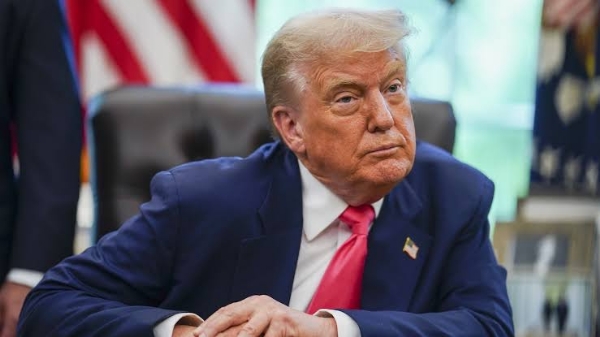
Washington, DC, 12 February (H.S.): US President Donald Trump is expected today, Thursday, February 12, 2026, to announce the repeal of the 2009 Environmental Protection Agency (EPA) “endangerment finding,” the foundational scientific determination that greenhouse gases endanger public health and welfare and therefore can be regulated under the Clean Air Act.
White House Press Secretary Karoline Leavitt has billed the move as the “largest deregulatory action in American history,” saying Trump will appear alongside EPA Administrator Lee Zeldin to formally revoke the finding and simultaneously scrap federal greenhouse-gas standards for automobiles.
What The Endangerment Finding Is – And Why It Matters
The endangerment finding was adopted in 2009 under President Barack Obama after the US Supreme Court’s landmark 2007 ruling in Massachusetts v. EPA, which held that greenhouse gases qualify as “air pollutants” under the Clean Air Act and ordered the EPA to determine whether they pose a danger to public health and welfare.
EPA scientists concluded that six key greenhouse gases, including carbon dioxide and methane, do endanger Americans by driving climate change, providing the legal basis for federal limits on emissions from vehicles, power plants and major industrial sources.
Although the finding was first applied to motor-vehicle emissions, it later underpinned a broad suite of climate rules, including standards for power‑sector carbon dioxide and methane controls on oil and gas operations.
What Trump’s Repeal Will Do In Practice
The administration’s final rule, expected to be unveiled in Washington this afternoon, declares that greenhouse gases should not be treated as pollutants in the traditional sense because their effects are global and indirect rather than local and immediate.
On that basis, the EPA now argues it lacks statutory authority under the Clean Air Act to regulate greenhouse gases, effectively pulling the legal rug from under most climate regulations at the federal level.
Alongside the repeal, the White House will move to void federal greenhouse‑gas standards for new cars and light trucks, a step officials claim will lower new‑vehicle prices and save industry and consumers more than 1 trillion dollars in “regulatory costs,” though they have not provided a transparent methodology for that figure.
Environmental groups and many economists counter that the calculation ignores the benefits side of the ledger – such as lives saved from reduced air pollution and fuel savings from more efficient vehicles – while skewing the auto market further towards larger, higher‑emitting vehicles and undermining US competitiveness in the global shift to electric cars.
Politicising Climate Science And The Legal Gamble
To justify reversing a long‑standing scientific and legal consensus, the administration has leaned on a report produced by an Energy Department‑linked working group of climate skeptics that sought to challenge mainstream climate science.
That report was heavily criticised by independent researchers for basic errors and selective use of underlying studies, and a federal judge later found that the panel had been convened in violation of transparency rules, prompting Energy Secretary Chris Wright to disband it.
Legal analysts say the new rule amounts to a direct challenge to Massachusetts v. EPA, effectively inviting the current, more conservative Supreme Court to retreat from or narrow that precedent.
Climate‑law experts warn the move is unlikely to survive judicial review because the administration is not presenting new evidence that greenhouse gases are harmless but instead is attempting to reinterpret the Clean Air Act and downplay well‑established climate risks.
Environmental And Economic Fallout
If upheld, the repeal would represent the most far‑reaching rollback of US climate policy to date, making it far harder for any future administration to regulate greenhouse gases without new legislation from Congress.
The decision is expected to benefit fossil‑fuel producers and emissions‑intensive industries in the short term by lifting or weakening rules that constrain coal‑ and gas‑fired power plants, oil and gas fields, and high‑emitting vehicle fleets..
Environmental and public‑health organisations argue that the move will exacerbate climate impacts – such as heatwaves, extreme storms and sea‑level rise – and increase respiratory and cardiovascular illness linked to air pollution, particularly in vulnerable communities.
Major green groups and several states’ attorneys general have already signalled they will file lawsuits as soon as the rule is published in the Federal Register, setting up what is likely to be a prolonged court battle over the federal government’s obligation to address climate change.
---------------
Hindusthan Samachar / Jun Sarkar



16 Apr 2026