*By Lakshman Nirani
'Growth, progress, and prosperity' is not just a road; it's a highway to progress. It's not a fairy tale, but a journey of real-life experiences.
It's a highway of development. It's not just a path; it's a journey of experiences. I have travelled to 44 countries across all continents, but I haven't seen a road like the Samruddhi Mahamarg.
The former Prime Minister, Atal Bihari Vajpayee, gave the country a new mantra - Roads for Development. During his tenure, he connected the major cities of Delhi, Kolkata, Mumbai, and Chennai with golden quadrilateral highways, which gave a huge boost to the economy. He showed us that good road connectivity can lead to capital investment, economic growth, industrial development, goods transportation, direct and indirect employment, and increased land value.
Since 2014, 54,000 km of highway network have been built, and currently, an average of 34 km of roads are being developed every day. Today, we have 6-lane, 8-lane, and 10-lane roads that are a testament to the development engine.
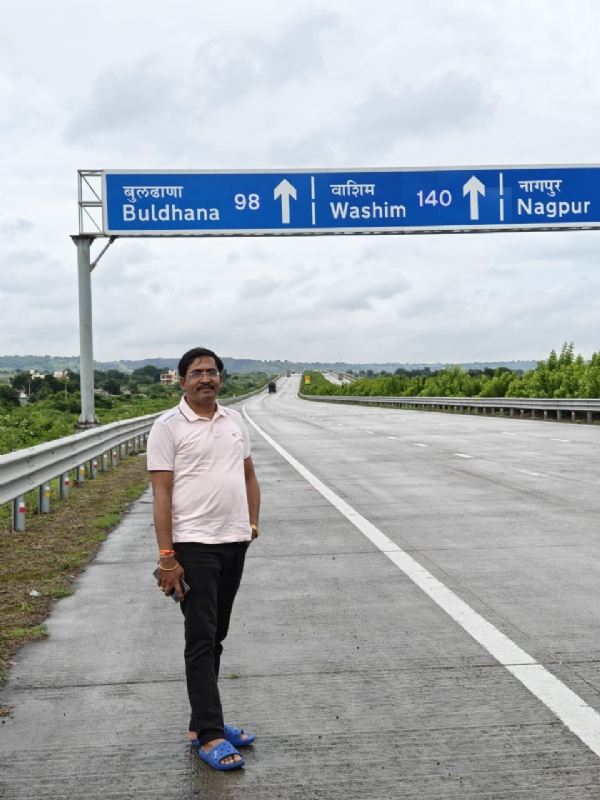
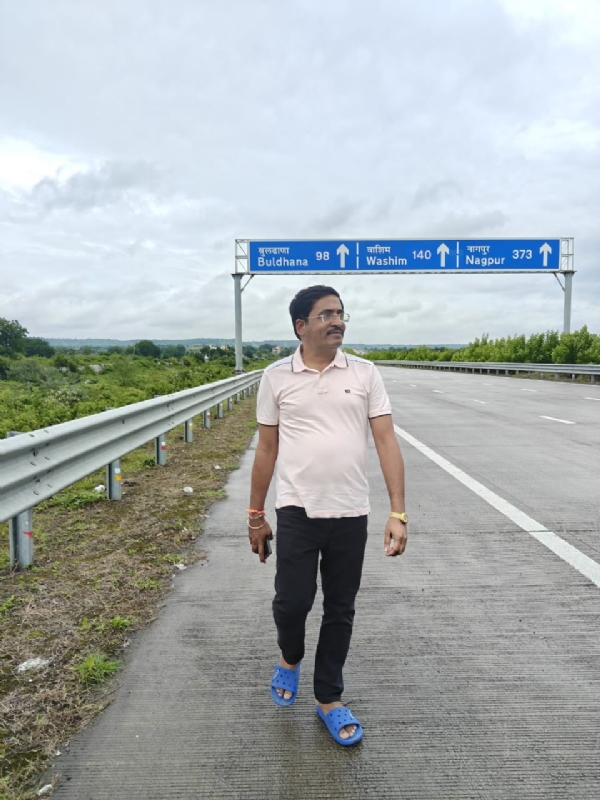
As an industrialist, I travel extensively across the country. Recently, I had the opportunity to travel on the 701 km-long Mumbai-Nagpur Expressway several times. I felt compelled to share my experiences with the public.
The Mumbai-Nagpur Samruddhi Mahamarg or the Hindu Hriday Samrat Balasaheb Thackeray Mahamarg is a marvellous piece of engineering. The highway has brought about a positive transformation in the regions it passes through. I was amazed to see the development and growth it has brought to the area.
This highway connects the two capitals of Maharashtra and has reduced travel time between Mumbai and Nagpur from 18 hours to 8 hours. It passes through 24 districts and has 19 townships developed at every 40-50 km interval. These townships have skill development centres, training centres, IT parks, polytechnics, agro-processing zones, cold storage facilities, hospitals, and truck terminals.
The highway is designed for a speed of 180 km/h, but for safety reasons, it's restricted to 120 km/h. There are rest stops with hotels, toilets, and e-charging stations every 40-50 km. In times of war or emergencies, this highway can be used as a runway for our fighter jets.
The highway also has provisions for optical fibre cables, natural gas pipelines, and electricity grids. There are plans to set up 250 MW solar power plants along the highway. The highway features 65 flyovers, 6 tunnels, 24 interchanges, and over 400 underpasses for vehicles, as well as 300 pedestrian bridges.
The development of this highway is a testament to the forward-thinking approach of the government. The project was conceptualised during Devendra Fadnavis's first term as Chief Minister, and the construction began in 2017. Remarkably, the project is nearing completion within 8 years.
This highway is expected to boost economic growth, industrial development, and job creation in the region. It will also reduce regional disparities and promote agricultural development. The highway will connect major cities and ports, and it's expected to handle 6% of the country's goods transportation.
The development of townships and industrial areas along the highway will provide opportunities for businesses and farmers. The government has planned to develop Agricultural Prosperity Cities with modern infrastructure and amenities.
The Mumbai-Nagpur Samruddhi Highway is a model for other states to follow. It showcases India's ability to build world-class infrastructure and has the potential to transform the country's economy.
*Lakshman Nirani is a widely travelled industrialist.
Hindusthan Samachar / Manohar Yadavatti