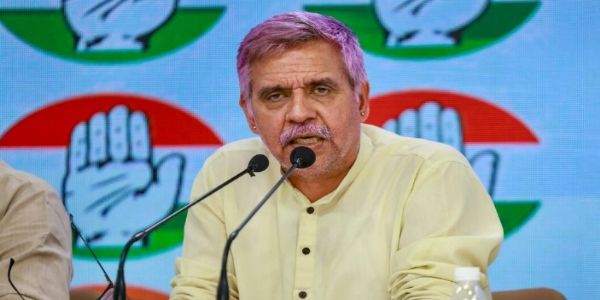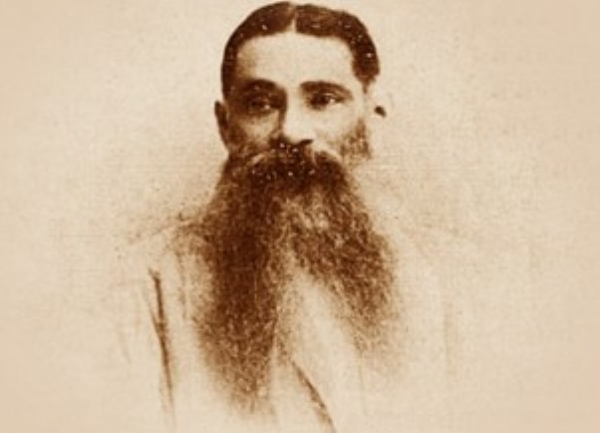
New Delhi, 29 December (H.S.): On the birth anniversary of Womesh Chunder Bonnerjee, the first President of the Indian National Congress and a distinguished freedom movement pioneer, Congress President Mallikarjun Kharge and Rajya Sabha Member Syed Naseer Hussain paid heartfelt tributes on Monday.Both leaders took to social media platform X to honour Bonnerjee’s enduring contributions, describing him as one of the principal architects of India’s early national movement against colonial rule.
In his message, Congress President Mallikarjun Kharge said that Womesh Chunder Bonnerjee was among the founding members and the first President of the Indian National Congress. He presided over the Congress’s inaugural session held in Bombay in 1885.
Kharge recalled that Bonnerjee strongly opposed the salt tax, supported the Swadeshi movement, and advocated for the formation of provincial committees to strengthen the organisation. “We remain eternally grateful for his pioneering role in laying the foundation of the Congress movement,” Kharge wrote.
Congress MP Syed Naseer Hussain also paid homage, stating that Bonnerjee was a distinguished jurist and one of the formative visionaries of India’s national movement. He emphasised that Bonnerjee established the principles of constitutional politics, unity, and democratic dialogue, which laid the groundwork for the freedom struggle. “His legacy continues to remind us of principled leadership, constitutional values, and collective national aspiration,” Hussain added.
Womesh Chunder Bonnerjee was born on December 29, 1844, in Calcutta (now Kolkata). He earned his Barrister’s degree from London’s Middle Temple and began practicing at the Calcutta High Court upon his return to India. Bonnerjee became the first Indian to serve as Standing Counsel, a position he held four times.
In 1883, he notably represented Surendranath Banerjee in a contempt of court case. As one of the founding members of the Indian National Congress, he chaired both the 1885 Bombay session and the 1892 Allahabad session. Bonnerjee was also the first Indian to contest elections for the British House of Commons.
A staunch advocate of women’s education, Bonnerjee played a vital role in fostering national unity during the early phase of India’s independence movement. His liberal and constitutional approach laid the foundation for India’s freedom struggle, later inspiring reformers and leaders such as Gopal Krishna Gokhale and Mahatma Gandhi.Having lost his vision in 1906, Bonnerjee moved to England, where he passed away on July 21, 1906, in London.
---------------
Hindusthan Samachar / Jun Sarkar