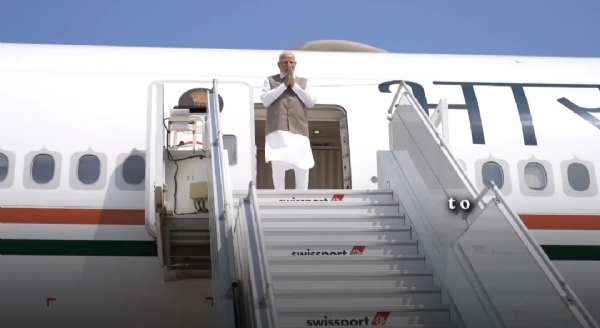
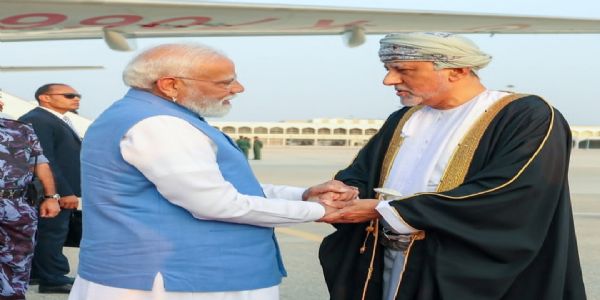
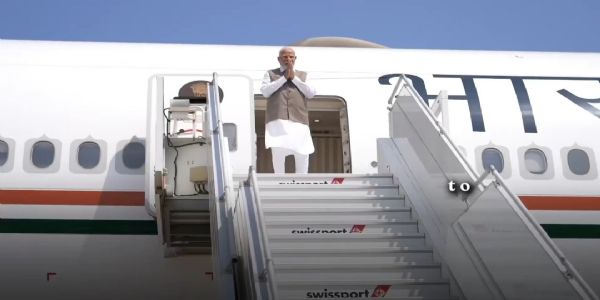
New Delhi, 17 December (H.S.): As Prime Minister Narendra Modi flies to Muscat on the final leg of his three-nation tour, India and Oman are set to deepen a partnership rooted in history, energy interdependence, and growing strategic convergence. This is Modi’s second visit to the Sultanate and follows the 2023 state visit of Sultan Haitham bin Tarik to India, which reaffirmed the relationship as an “all-encompassing strategic partnership.”
Focus of the Oman visit
During his two-day official stay in Muscat from 17–18 December, PM Modi will hold talks with His Majesty Sultan Haitham bin Tarik, with agenda items expected to include defence, maritime security, energy, trade, and digital cooperation.
Officials on both sides are also working to conclude an ambitious Comprehensive Economic Partnership Agreement (CEPA)-style trade pact, which could significantly boost investment flows and market access for businesses in both countries.
PM Modi is being received in Oman not just as the leader of a major Asian economy, but as a partner who has consistently respected Omani sensitivities on regional diplomacy and maritime security in the Gulf and the wider Indian Ocean.
High-level delegation talks are likely to cover safe passage through the Strait of Hormuz, protection of critical undersea infrastructure, and enhanced cooperation on counterterrorism and cyber security
Strategic and defence partnershipOman is widely regarded as India’s closest defence partner in the Gulf, and the only country in the region with which India conducts regular joint military exercises involving all three services: Army, Navy, and Air Force.
Recent meetings of the India–Oman Joint Military Cooperation Committee have underlined shared priorities: joint development, technology sharing, and a stronger defence industrial partnership focused on co-development and indigenous manufacturing.
Access to Oman’s Duqm port has also given the Indian Navy a valuable logistics hub astride key sea lanes, reinforcing India’s maritime posture from the western Indian Ocean to the Gulf of Aden. With growing concerns over regional instability and threats to energy and shipping routes, both sides see deeper defence interoperability as essential to long-term security.
Energy, trade and investmentEnergy remains a central pillar of the relationship, with Oman serving as a reliable supplier of oil and gas to India, the world’s third-largest oil consumer. New synergy is emerging around green hydrogen and renewables, where India’s technology and market scale align with Oman’s ambition to become a regional hub in the hydrogen economy.
A potential trade agreement, along with investment-protection arrangements, is expected to nudge Omani sovereign and private capital toward Indian manufacturing, petrochemicals, and renewable projects, while opening Omani markets further to Indian goods and services.
Officials say such a pact would “open a new chapter” in bilateral economic ties, moving the relationship beyond a traditional buyer–seller energy framework to a more diversified economic partnership.
Diaspora and people-to-people linksIndia–Oman ties are anchored in centuries of maritime trade and cultural contact across the Arabian Sea, long before formal diplomatic relations were established. Today, a large and highly regarded Indian community in Oman plays a key role in sectors ranging from healthcare and education to construction, retail, and technology, serving as a living bridge between the two nations.
PM Modi’s itinerary is expected to include engagements with the Indian diaspora in Muscat, underlining their contribution to Oman’s development and to the India–Oman partnership. As India and Oman mark seven decades of diplomatic ties, both leaderships are framing this visit as an opportunity to combine “civilisational depth with modern strategic utility” in a multipolar world.
---------------
Hindusthan Samachar / Jun Sarkar
17 Dec 2025