Kolkata, 04 August (H.S.) : The West Bengal government has initiated the process of a major overhaul of the state's school education system, with a comprehensive revision of the curriculum and syllabus scheduled for implementation from the 2028 academic session. The newly constituted Syllabus Committee held its first meeting on Tuesday and began preparing a long-term roadmap for the reforms. However, the existing textbooks and syllabus will remain in use throughout the 2027 academic year, during which only a review of the current curriculum will be undertaken.
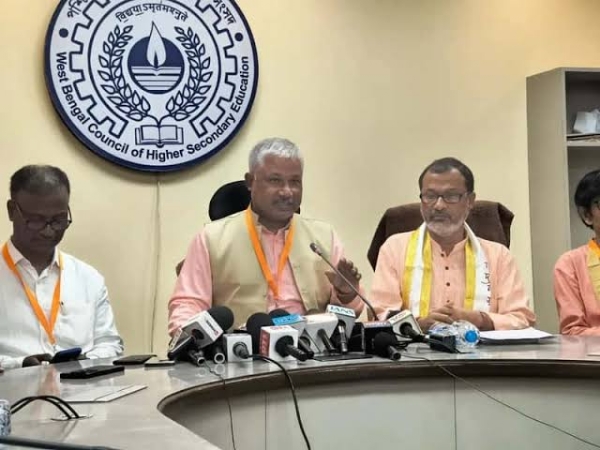
Following the meeting at Vidyasagar Bhavan in Salt Lake, School Education Minister Dipak Burman said the government would not introduce abrupt changes to the education system. He also assured that all students would receive their textbooks before the annual Book Day on January 2, 2027, in line with the state's established practice.
Burman said a draft of the proposed 2028 curriculum and syllabus would be prepared and placed in the public domain. Feedback will be invited from political parties, student organisations, educationists and other stakeholders before the government takes a final decision.
The minister added that major policy issues, including the introduction of a semester system or the restoration of the pass-fail system, would be considered only while finalising the 2028 curriculum and in accordance with the provisions of the National Education Policy (NEP) 2020.
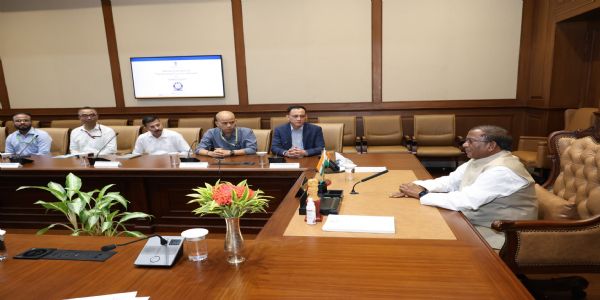
The meeting was attended by Higher Education Minister Jagannath Chattopadhyay, School Education Minister Dipak Burman, Minister of State for Education Kaushik Chowdhury, Information Technology and Electronics Minister Kalyan Chakraborty, Education Secretary Binod Kumar, Syllabus Committee Chairman Professor Debashis Chattopadhyay, committee member Arindam Banerjee, senior university officials, and former Governor Tathagata Roy, who attended as a special invitee.
Responding to questions on whether politically sensitive topics such as the Singur movement or Becharam Manna should remain in school textbooks, Burman said the new curriculum would be free from political influence and would instead focus on fostering a scientific temper and a fear-free learning environment. He said decisions on the inclusion of historical events in textbooks would be taken by educationists, with the government acting on the recommendations of the Syllabus Committee.
Burman also clarified that English-medium schools established under the previous government would continue to function, while proposals to improve their academic standards were under consideration. He dismissed concerns that Bengali would be sidelined and said discussions were also underway to promote Sanskrit more extensively.
Former Governor Tathagata Roy also advocated keeping school textbooks completely free of political content. He argued that subjects such as the Singur movement should not form part of the curriculum and suggested that the contributions of Dr. Syama Prasad Mookerjee, along with other personalities whom he said had not received adequate recognition in the past, should be given appropriate space in school textbooks.
Hindusthan Samachar / Satya Prakash Singh
04 Aug 2026