Instructions given to BSA for timely action, complete all
preparations before school reopening, special attention will be given to
quality of education and basic facilities
From Nipun Bharat to Nav Bharat Literacy, the Basic Education
Department decides roadmap for new session
Lucknow, 07 June (HS): The Basic Education Department has
prepared a comprehensive action plan to make the new academic session more
effective, quality-oriented, and result-oriented. In this sequence, Additional
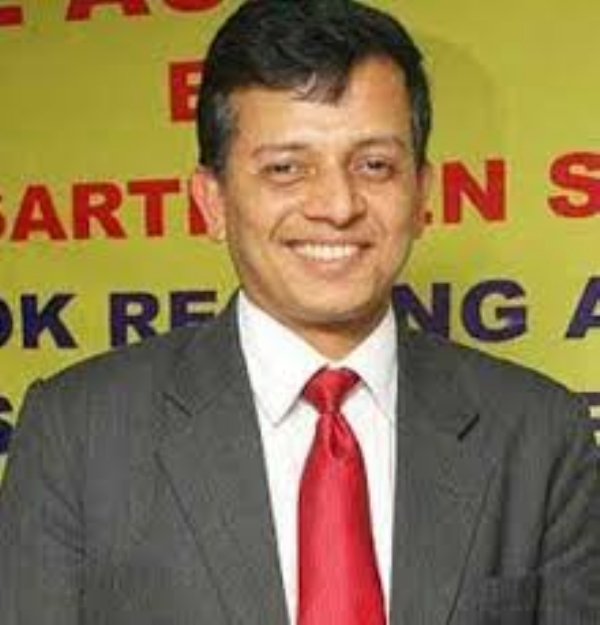
Chief Secretary Basic Education Partha Sarathi Sen Sharma held a review meeting
with all divisional assistant education directors and district basic education
officers through video conferencing and conducted a detailed review of the
functioning of schools after the summer vacation, student enrollment, pending
teacher cases, and the progress of various educational schemes.
In the meeting, the Additional Chief Secretary directed that
all necessary preparations be completed before schools reopen so that children
can be provided with a better educational environment from day one. He directed
that teacher skill development programs be accelerated and the inter-district
transfer process be completed in a transparent and timely manner. He also asked
for the prompt resolution of pending payments for spillover work, composite
school grants, textbooks, and other items under the Samagra Shiksha Abhiyan.
While reviewing the Nipun Bharat Mission, he directed the
immediate completion of the selection process for Academic Resource Persons
(ARPs) and ECCE educators at the district level. He said that the state
government is committed to strengthening basic literacy and numeracy, and
negligence in this direction will not be tolerated at any level.
The meeting also emphasized the need to resolve pending teacher-related
cases on a priority basis. Instructions were given to expedite resolution of
matters related to selection pay scales, promotion pay scales, retirement
benefits, and appointment of dependents of deceased employees, ensuring timely
access to eligible beneficiaries.
Along with ensuring the payment of pending dues under the
Prime Minister's Nutrition Scheme, special emphasis was placed on the action
plan to develop kitchen gardens in schools. Instructions were given to clean
school premises and rooftops and plant locally useful vegetables, which would
further strengthen efforts to provide nutritious food to children.
The Additional Chief Secretary, incorporating the
School Chalo campaign as one of the most important priorities for
the new session, directed the enrollment of all eligible children and 100%
transition from one school to another. He said that after schools reopen,
special attention should be paid to regular teaching, student attendance,
continuous assessment, and learning outcomes in accordance with the academic
calendar.
While reviewing the matters related to the courts in the
meeting, instructions were given to ensure timely compliance of the orders of
the Supreme Court and the High Court and to take action as per rules in the
pending petitions and file counters in time.
To enrich the educational environment in schools, emphasis
was also laid on completing pending admissions under the RTE Act, promoting
regular book and newspaper reading, and developing the habit of independent writing
among students. Instructions were given to make teacher cluster meetings more
meaningful and to fulfill the 19 standards of Operation Kayakalp. In
particular, it was asked to ensure the availability of facilities like safe and
clean toilets for girl students, electricity system, CWSN toilets for disabled
children and ramps.
Emphasizing on the effective functioning of Anganwadi
centres and Bal Vatikas run in school premises, he said that there should be no
compromise in the quality of care and primary education of children in the age
group of three to six years.
The meeting also reviewed the achievements of the New India
Literacy Program. Officials were directed to further expand the identification
of illiterates over the age of 15, the training of volunteers, awareness
campaigns, and online and offline learning activities. The Government of India
is providing assistance at the rate of ₹165 per illiterate person, and detailed
guidelines have been issued for the year 2026-27.
Seven literacy exams have been successfully conducted in the
state so far under the New India Literacy Program. Approximately 13.82 lakh
illiterates participated in these exams, of which more than 11.68 lakh
individuals have been made literate.
Hindusthan Samachar / Abhishek Awasthi
07 Jun 2026
Kerala Minister's brother- in-law resigns from personal staff
Kerala Minister's brother- in-law resigns from personal staff..
07 Jun 2026