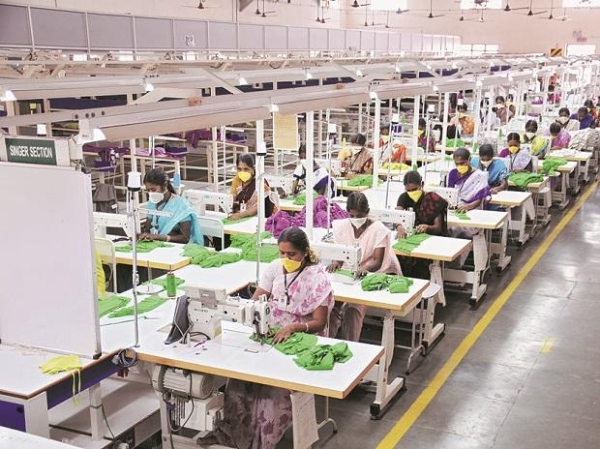
Tiruppur, 15 June (H.S.):Nestled on the banks of the Noyyal River in western Tamil Nadu, Tiruppur has transformed itself from a modest textile town into one of India’s most important manufacturing and export hubs. Popularly known as the “Knitwear Capital of India,” the city has emerged as the backbone of the country’s garment export sector, generating thousands of crores of rupees in business and providing livelihoods to lakhs of workers.
The Tiruppur knitwear cluster is today among the largest apparel manufacturing ecosystems in Asia. The city accounts for nearly 68 per cent of India’s knitwear exports and more than half of the country’s total knitwear shipments to global markets. Major international brands source garments from Tiruppur, making the city an integral part of global apparel supply chains.
According to industry estimates, Tiruppur’s knitwear exports touched around ₹44,747 crore during 2024-25. In addition, the city’s domestic knitwear business generated approximately ₹27,000 crore, taking the overall annual business turnover to more than ₹70,000 crore.
The city’s export performance has witnessed a remarkable resurgence in recent years. After facing challenges arising from the Covid-19 pandemic, global economic slowdown and disruptions in key export markets, Tiruppur’s garment exports rebounded strongly. During the 2024-25 financial year, knitwear exports from the cluster crossed the ₹40,000-crore mark, registering significant growth over the previous year.
Industry leaders attribute this growth to shifting global sourcing patterns. International buyers are increasingly diversifying their procurement away from China and Bangladesh, creating new opportunities for Indian manufacturers. Tiruppur’s strong supply chain, quality standards, timely delivery capabilities and compliance with sustainability norms have helped it attract larger export orders from global retailers and brands.
One of the biggest strengths of Tiruppur lies in its employment-generating capacity. The garment industry supports a vast workforce engaged in spinning, knitting, dyeing, printing, stitching, embroidery, packing and logistics operations. Industry bodies estimate that the Tiruppur apparel sector provides direct employment to more than 10 lakh workers, with women constituting a substantial share of the workforce.
Other estimates place direct employment within the core textile and garment cluster at around six lakh workers, while indirect employment generated through ancillary industries such as transport, packaging, warehousing, machinery servicing and trading adds several lakh more jobs.
The city’s success story has also attracted migrant workers from across India. Thousands of workers from Bihar, Odisha, Jharkhand, Uttar Pradesh and several northeastern states are employed in Tiruppur’s factories. This diverse workforce has played a crucial role in sustaining the city’s manufacturing competitiveness and meeting the growing demand from domestic and international buyers.
Tiruppur’s industrial ecosystem comprises thousands of small, medium and large enterprises. The cluster includes garment manufacturing units, knitting mills, dyeing facilities, textile processing plants and export houses. Special industrial zones further strengthen the city’s manufacturing infrastructure.
Apart from its economic achievements, Tiruppur has also earned recognition for its environmental initiatives. The city is regarded as a pioneer in implementing Zero Liquid Discharge systems in textile processing, enabling recycling and reuse of water in dyeing units.
Looking ahead, the industry has set ambitious goals. Exporters are targeting garment exports worth ₹1 lakh crore by 2030 through increased global market penetration, expansion into new product segments and adoption of advanced manufacturing technologies.
From a small textile town to a global garment powerhouse, Tiruppur stands today as one of Tamil Nadu’s greatest industrial success stories. With its vast employment base, thriving export sector and entrepreneurial spirit, the city continues to drive economic growth for both Tamil Nadu and India.
---------------
Hindusthan Samachar / Arun Lakshman