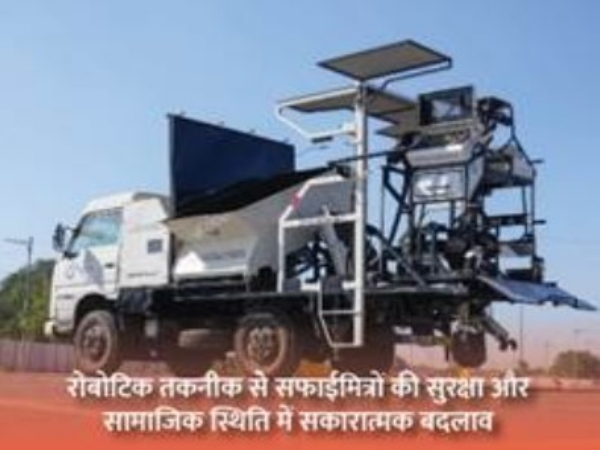
Rajkot, Gujarat / New Delhi, 09 April (H.S.): In a significant step toward eliminating manual scavenging, the Rajkot Municipal Corporation in Gujarat has deployed a “robot operator” system to carry out sewer cleaning, effectively banning the practice of sending workers into manholes by hand.
The Union Ministry of Housing and Urban Affairs noted that with this move, the direct manual removal of waste from sewers will gradually be phased out, and sanitation workers will now operate robots instead of physically entering hazardous underground networks.
The municipal corporation has adopted robotic sewer‑cleaning technology at an estimated cost of ₹2.29 crore, with the system designed to undertake cleaning in locations where it was previously considered too dangerous to send human workers.
The robots are equipped to inspect and clear clogged drains and manholes, removing sludge and debris remotely while the operator stays above ground, thereby minimising exposure to toxic gases, asphyxiation risks and other life‑threatening hazards.
Rajkot’s experience is part of a broader push in Gujarat to mechanise sewer maintenance; similar robotic systems, such as the Bandicoot‑based units, have already been deployed in other cities like Ahmedabad under municipal‑level waste‑management upgrade projects.
These initiatives align with central government schemes such as Swachh Bharat and NAMASTE, which seek to eradicate manual scavenging and replace it with end‑to‑end robotic or mechanised sanitation solutions.
Complementing the technological shift, the Rajkot Municipal Corporation has also constructed a modern community hall dedicated to sanitation workers on the outskirts of the city, designed to benefit more than 5,000 sanitation‑worker families.
The facility includes a wedding and event hall, kitchen, dining area and parking, providing a dignified social and cultural space where workers and their families can host gatherings, thereby enhancing their social status and living conditions.
In the district of Bharuch, the local municipal body marked International Women’s Day by organising a special health camp exclusively for women sanitation workers.
One hundred and eight female workers underwent medical check‑ups, received free medicines and were counselled on nutrition and hygiene, reinforcing the state‑level emphasis on combining technological upgrade with social‑welfare measures.
Taken together, these initiatives signal that Gujarat is attempting to construct a balanced, sustainable model of sanitation—one that integrates robotics, infrastructure, and welfare, not only to make sewer work safer but also to restore dignity and long‑term well‑being to those who have historically borne the burden of the most hazardous tasks in urban sanitation.
---------------
Hindusthan Samachar / Jun Sarkar

09 Apr 2026
PM Modi Slams TMC's Broken Promises at Massive Birbhum Rally, Signals Bengal's Shift from Mamata Raj

09 Apr 2026