Lakhimpur
Kheri, April 9 (HS): Dudhwa Tiger Reserve authorities have set their hopes on
the Indian Veterinary Research Institute (IVRI), Bareilly, to determine the
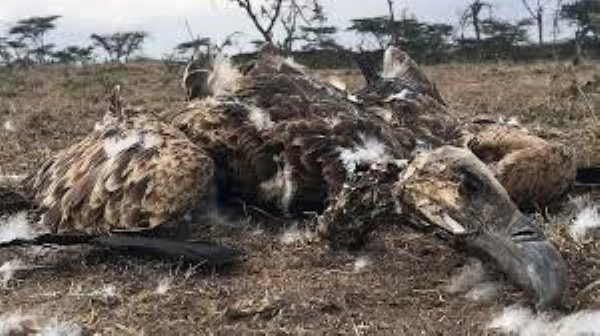
precise cause of death of 25 vultures, whose corpses were retrieved from a farm
within the Bhira range of the Dudhwa buffer zone. On Tuesday, vulture carcasses
were discovered, which are protected species under the Wildlife Protection Act
and classified as severely endangered birds.
According
to deputy director Kirti Chaudhary of the Dudhwa buffer zone, 25 vultures
(presumed to be largely Himalayan Griffin species) were discovered dead in an
agricultural field in Semarai hamlet, which is part of the buffer zone. She
said that five more vultures were discovered unconscious in the field and
treated quickly before being released once they were deemed fit to fly.
According
to Chaudhary, the remains of a few dogs were also retrieved from the same area,
albeit some distance away. She stated that vultures were thought to have
perished after eating the remains. She stated that a panel of veterinary doctors,
including Dr Daya Shankar from Dudhwa, Dr Ankur, and Dr Rajendra Singh,
performed the postmortem on 23 dead vultures, and that the carcasses of two of
them, as well as the viscera of 23 vultures, were sent to IVRI in Bareilly for
further investigation and analysis, as directed by DTR field director and chief
conservator of forest Dr H Rajamohan.
However,
the postmortem failed to determine the specific nature of the poison contained
in the corpses, but it was discovered that the vultures perished after
ingesting the remnants of dog carcasses obtained from the same location. Dr.
Daya Shankar, a member of the postmortem team, stated that the postmortem found
that the dogs' corpses contained some deadly material.
Hindusthan Samachar / Abhishek Awasthi

09 Apr 2026
“Ahamkara Sarvatra Varjayet” - India’s Balanced Message Amid Global Power Politics: Prof Geeta Singh

09 Apr 2026