Lucknow,
April 9 (HS): “The contemporary world order is passing through a profound phase
of transition. Intensifying competition among major powers, escalating regional
conflicts, and deepening ideological polarization have rendered the
international landscape increasingly unstable. In such a scenario, diplomacy is
expected to act as a stabilizing force—one that reduces tensions and fosters
equilibrium. However, recent developments reveal a series of contradictions
that challenge this very ideal. In recent times, global politics has exhibited
a duality wherein the assertion of power and the pursuit of dialogue appear to
operate simultaneously. On the one hand, aggressive rhetoric and hardline
posturing dominate political discourse; on the other, there is an expressed willingness
to engage in negotiations and peace-building efforts. For instance, statements
made earlier by influential leaders such as Donald Trump reflected a tone of
extreme assertiveness—suggesting that, if required, a civilization could be
“wiped out overnight.” Such language symbolized the arrogance inherent in
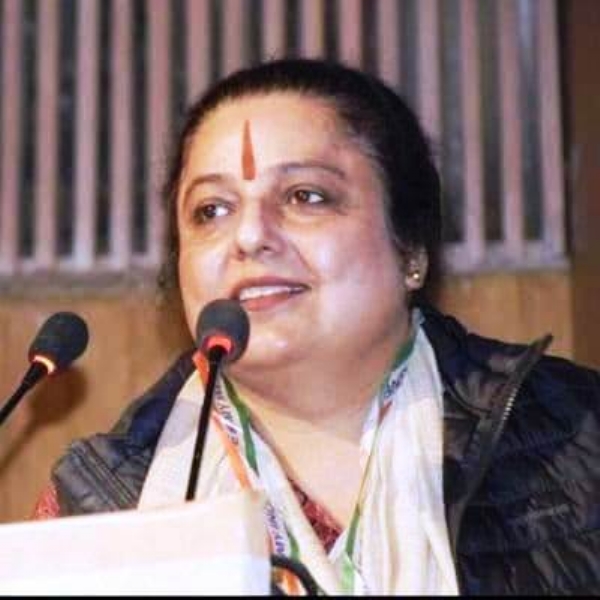
unrestrained power,” opines Professor Geeta Singh, Director, Centre for
Professional Development in Higher Education (CPDHE), University of Delhi, New
Delhi.
“Yet,
the same discourse now appears to be shifting toward engagement, with renewed
emphasis on dialogue and potential agreements with Iran. This shift, in itself,
is not unusual, as diplomacy fundamentally rests on dialogue. Nevertheless, a
crucial question emerges: how credible and sustainable is this transformation?
Does it signify a genuine commitment to peace, or is it merely a strategic
recalibration dictated by changing circumstances? The situation becomes even
more complex when reports suggest that potential negotiations could be held in
Islamabad, with Pakistan positioned as a mediator. In international relations,
mediation is an inherently sensitive and serious process. It demands not only
neutrality and credibility but also broad-based global acceptance. Therefore,
it is legitimate to question the criteria upon which such a choice is made. It
is widely acknowledged that Pakistan’s global image has long been intertwined
with debates surrounding terrorism and regional instability. In this context, its
projection as a mediator in a critical diplomatic process inevitably raises
concerns and invites scrutiny. Is this decision driven by convenience and
short-term strategic considerations, or does it reflect a deeper, more balanced
diplomatic rationale? She quipped.
“This
paradox lies at the heart of contemporary global politics. On one side is the
display of power, often accompanied by aggressive rhetoric; on the other is the
call for dialogue and peace. If this shift stems from genuine introspection and
a sense of responsibility, it is indeed welcome. However, if it is motivated
solely by tactical advantage, pressure politics, or image management, it cannot
serve as a foundation for lasting peace. Amid such complexities, India offers a
distinctive civilizational perspective. Indian thought has, for centuries,
emphasized that power must be exercised for balance and protection—not for
domination or hegemony. In this philosophical framework, power and restraint
are not opposites but complementary forces. The ancient Sanskrit
maxim—“Ahamkara Sarvatra Varjayet” (ego must be renounced in all
circumstances)—captures this wisdom succinctly. It is not merely a moral
injunction but a practical diplomatic principle. Nations driven by arrogance
inevitably gravitate toward conflict, whereas those guided by restraint,
dialogue, and cooperation pave the way for stability and peace,” she added.
“India
has consistently articulated this vision on global platforms through the
concept of “Vasudhaiva Kutumbakam”—the world as one family. This is not merely
a cultural ideal but a comprehensive global outlook that emphasizes
coexistence, mutual respect, and shared responsibility. At a time when the
world appears fragmented into competing blocs, this perspective assumes even
greater relevance. If the process of dialogue with Iran genuinely advances, it
could signal a positive step toward global stability. However, the success of
such efforts will depend not on declarations alone but on the presence of
trust, transparency, and sincerity. Peace cannot be achieved through rhetoric;
it requires a steadfast commitment to ethical and consistent action. The
greatest challenge before global politics today is to align words with actions.
A simultaneous reliance on the language of war and the rhetoric of peace creates
confusion and undermines global trust. Effective diplomacy must be coherent,
consistent, and credible,” she asserted.
“Major
powers must recognize that their true strength lies not merely in military or
economic capabilities, but in how responsibly they deploy that power. When used
for domination, power breeds conflict; when used for the protection of humanity
and the maintenance of balance, it becomes a force for lasting peace. Similarly,
nations entrusted with the role of mediation must uphold the highest standards of
neutrality, credibility, and accountability. Mediation is not an opportunity
for influence but a profound responsibility tied to the trust of the
international community. Ultimately, India’s message in this evolving global
scenario is both clear and profound: the highest form of power is not victory,
but restraint; and the ultimate objective of diplomacy is not dominance, but
the protection of humanity. If the world can internalize this principle, it may
yet find a sustainable path to peace amid prevailing instability. Then, this
timeless Indian wisdom will transcend scriptures and emerge as a guiding
principle of global diplomacy - “Ahamkara Sarvatra Varjayet.” she exclaimed
prior to signing off.
Hindusthan Samachar / Abhishek Awasthi