New Delhi, 08 April (H.S.):
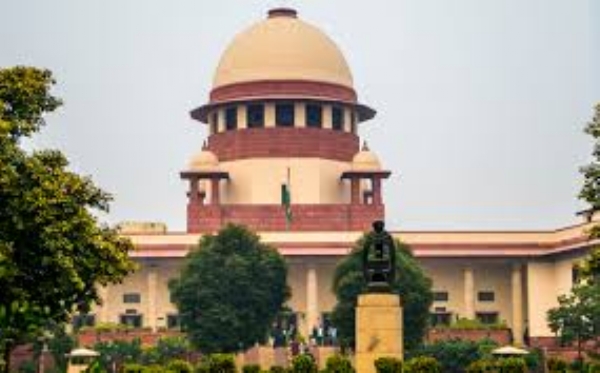
The Supreme Court stated during Sabarimala temple entry hearings that it holds authority to determine which religious practices constitute superstition. This came as the Centre argued secular courts lack jurisdiction over faith matters, given judges' legal rather than religious expertise.
A nine-judge Constitution bench led by Chief Justice Suryakant entered day two of arguments. Solicitor General Tushar Mehta contended courts cannot define essential religious practices, advocating true secularism as non-interference between state and religion. Justice B.V.
Nagarathna countered that public morality evolves—1950s obscenity standards no longer apply—rejecting rigid historical lenses.
Mehta urged judicial restraint on beliefs, citing state priest appointment laws as principle violations. Senior advocate Rajeev Dhavan, for petitioners, sought balanced hearing time.
The Centre's affidavit defends the menstruating-age women's ban as faith and autonomy, urging limited review. The 2018 4:1 verdict (CJI Dipak Misra et al.) struck it down under Articles 14, 19(1)(a), 25, rejecting physiological discrimination; Justice Indu Malhotra dissented, favoring temple autonomy.
The bench includes Justices Nagarathna, M.M. Sundresh, Ahsanuddin Amanullah, Aravind Kumar, A.J. Masih, P.B. Varale, R. Mahadevan, and Joymalya Bagchi.
---------------
Hindusthan Samachar / Jun Sarkar
09 Apr 2026