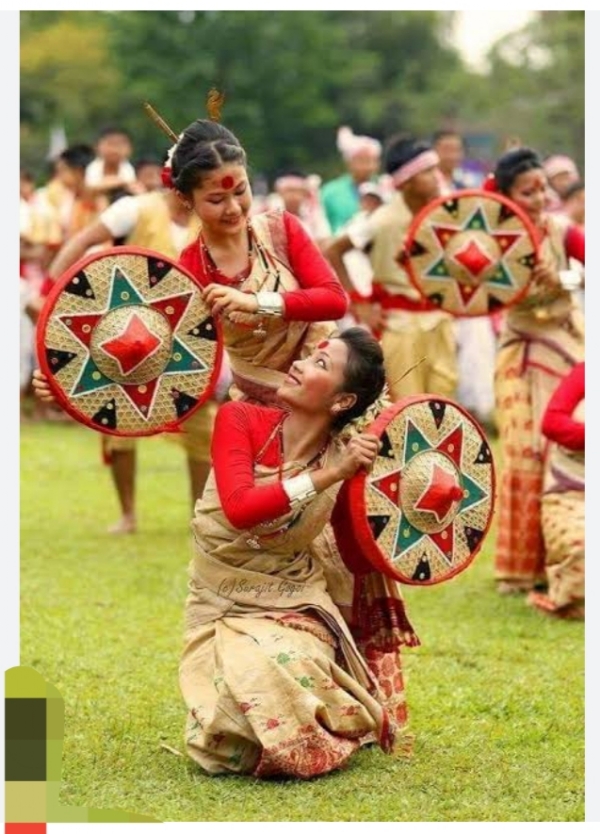
Guwahati, 13 April (HS): Festive fervour has gripped Assam as preparations for the state’s biggest cultural festival, Rongali Bihu, reached their peak now as Bohag Mah (Month of Baisakh) is going to start from 14th. Across both rural and urban areas, the sounds of traditional instruments like dhol, pepa and gagana echo through the air, while youths and young women are seen immersed in the vibrant spirit of Bihu.
People across the state are busy with last-minute preparations, including the purchase of traditional attire such as Bihuwan (Gamochha and other customary garments), to celebrate the festival that begins on April 14. Various bihutolis (community stages) are being set up to host cultural performances, reflecting the deep-rooted traditions associated with the Bohag (Baisakh) month.
Marking the onset of the festivities, followed by Goru Bihu on Tuesday. On this day, cattle—considered integral to the agrarian lifestyle—are bathed early in rivers, ponds and lakes. Traditional rituals include cleansing the animals with a mixture of turmeric and other natural ingredients, symbolizing prayers for prosperity and well-being throughout the year. In the evening, new ropes made of jute are tied to the livestock as part of customary practices.
Rongali Bihu, closely linked with agriculture, is celebrated ahead of the sowing season. Youths actively participate in traditional Bihu dances and songs in fields and open spaces, symbolizing joy and hopes for a fertile year. The festival remains a vital expression of Assamese identity, where music and dance continue to unite people of all ages.
In many villages, the age-old Husori tradition—where groups visit households to perform Bihu songs and dances—continues to thrive. Following Goru Bihu, the next day is celebrated as Manuh Bihu, when people seek blessings from elders and exchange gifts like gamosa as a mark of respect and affection.
Although Bohag Bihu has increasingly found a place on modern stages, its traditional essence remains intact. From villages to cities, the people of Assam are enthusiastically welcoming the arrival of Rongali Bihu, setting aside daily routines to celebrate the cherished festival with joy and unity.------------
Hindusthan Samachar / Sriprakash