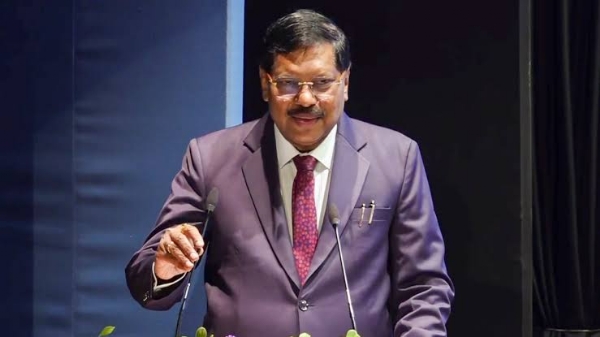
New Delhi, 11 April (H.S.):
Chief Justice of India Surya Kant has said that technology is no longer just an administrative convenience, but has evolved into a constitutional tool that strengthens equality before law, expands access to justice, and enables courts to move beyond rigid procedural barriers.
Speaking at the opening of the National Conference on Judicial Process Re‑engineering and Digital Transformation in New Delhi on Saturday, he described digital transformation as a means to make the justice system more fair, timely, and effective for every citizen, regardless of their means or background.
Justice as a core constitutional promise
CJI Kant told the gathering of Supreme Court judges, high court judges, district‑court judges, advocates, and officials, including Union Ministers Arjun Ram Meghwal and Jitin Prasada, that the heart of any justice system is a simple but enduring promise: every individual must be able to access justice in a manner that is fair, swift, and meaningful.
He stressed that reforms will be judged not by how many digital systems are introduced, but by how tangibly they benefit ordinary litigants, lawyers, and other stakeholders on the ground.
Technology as a constitutional enabler
The Chief Justice argued that modern technology can act as a “constitutional instrument” that reinforces the rule of law rather than merely improving office workflows. He pointed to digital case‑management systems, e‑filing, virtual hearings, and AI‑assisted tools as mechanisms that can reduce delays, enhance transparency, and shrink the gap between rural and urban litigants.
By standardising processes and making judgments more accessible and predictable, he said, technology can help ensure that the quality of justice does not vary unduly from one district to another.
Guarding against digital exclusion
At the same time, CJI Kant warned that technology must not create a new class divide in the justice system. He has repeatedly emphasised that any reform that excludes the poor, the elderly, or people with limited digital literacy is not progress but regression.
The judiciary must therefore design its digital tools so that they remain servant to justice, not its substitute, and that in‑person, low‑tech, and assistive options remain available for those who need them.
The two‑day conference is part of a broader push under the Supreme Court’s e‑Committee and the Department of Justice to re‑engineer judicial workflows through digital transformation. The organisers say the goal is to simplify procedures, integrate emerging technologies, and align court practices with India’s existing laws while preserving the federal and constitutional character of the judiciary.
---------------
Hindusthan Samachar / Jun Sarkar