New Delhi, 28 March (H.S.):
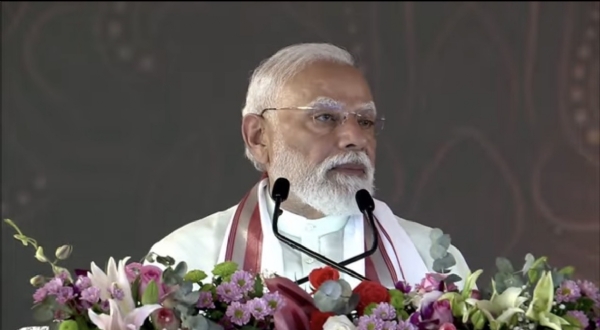
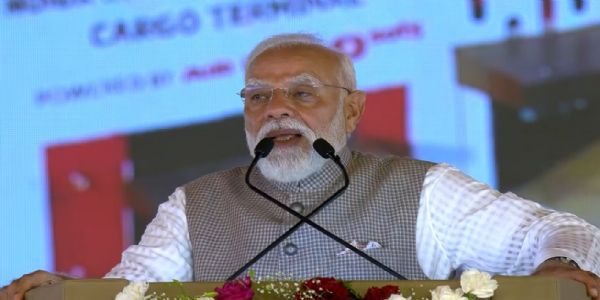
Prime Minister Narendra Modi inaugurated the first phase of the Noida International Airport at Jewar in Gautam Buddha Nagar district, Uttar Pradesh, on Saturday, marking the launch of one of India’s largest greenfield aviation projects.
The event was attended by Uttar Pradesh Governor Anandiben Patel, Union Civil Aviation Minister K. Ram Mohan Naidu, Chief Minister Yogi Adityanath, Deputy Chief Ministers Brijesh Pathak and Keshav Prasad Maurya, along with several other senior officials.
The nearly 11,200 crore rupee project, built on a public–private partnership (PPP) model, is being developed as a major multimodal transport hub for the National Capital Region, integrating road, rail, metro and regional transport links into a single network. Phase 1 of the airport has an initial annual passenger capacity of 12 million passengers per annum, which is designed to expand to around 70 million in later stages.
The airport features a 3,900‑metre runway capable of handling large wide‑body aircraft, supported by modern navigation systems and state‑of‑the‑art airfield lighting that will allow 24x7 operations across all weather conditions.
Noida International Airport is set to function as the second international airport for the Delhi‑NCR region, easing congestion at Indira Gandhi International Airport and strengthening the region’s status as a key logistics and business corridor. The project is also being positioned as a critical step toward making India a global aviation hub, with officials noting that the location along the Yamuna Expressway will boost regional and international connectivity, attract freight and logistics businesses and drive economic growth in western Uttar Pradesh and surrounding areas.
The airport includes a cutting‑edge cargo hub designed to handle 250,000 metric tonnes of freight annually in the initial phase, with the potential to scale up to 1.8 million metric tonnes. A 40‑acre maintenance, repair and overhaul (MRO) facility has also been built alongside the terminal, reflecting the government’s push to deepen the domestic aviation maintenance ecosystem and attract global airlines and engineering firms.
From an environmental standpoint, the airport is being planned as a net‑zero‑emission facility, using energy‑efficient infrastructure, renewable energy sources and sustainable design practices. The architectural layout draws inspiration from Indian cultural heritage, incorporating visual motifs reminiscent of traditional ghats and havelis.
Civil Aviation Minister K. Ram Mohan Naidu said the project is a direct outcome of the government’s push to expand flight connectivity under the UDAN scheme, which has brought air services to many remote and underserved regions and is now being further strengthened by new infrastructure like the Noida airport.
In his address, the minister praised Modi’s focus on continuous service and highlighted the role of initiatives such as Atmanirbhar Bharat, Digital India and the vision of a developed India in shaping the country’s infrastructure trajectory. He said rapid expansion of airports and air services under the National Democratic Alliance government has ensured that ordinary citizens, including those in smaller towns, now have more affordable and reliable air connectivity. The Noida airport, he added, will not only decongest Delhi’s skies but also enhance the region’s competitiveness in global trade, tourism and investment.
With Phase 1 now operational, attention will shift to subsequent phases that will expand terminals, cargo capacity and regional connectivity, while maintaining the goal of a low‑carbon, high‑efficiency airport.
For the millions who travel through the NCR, the Jewar‑based Noida International Airport is poised to become a new landmark of India’s aviation ambitions and a practical example of the government’s stated vision of a developed, self‑reliant and digitally integrated India.
---------------
Hindusthan Samachar / Jun Sarkar
28 Mar 2026