New Delhi, 28 March (H.S.):
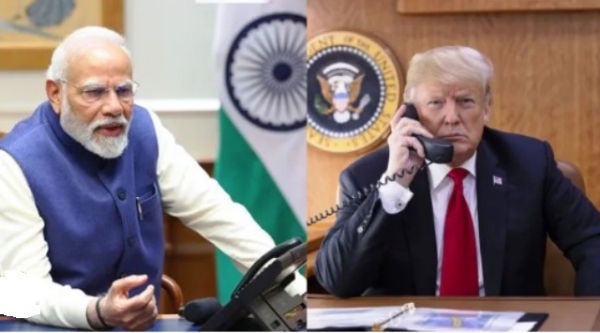
India has clarified that the telephone conversation between Prime Minister Narendra Modi and US President Donald Trump on March 24 was strictly a bilateral exchange between the two leaders and did not involve any third party. The Ministry of External Affairs made the statement in response to media reports suggesting that billionaire entrepreneur Elon Musk had participated in the call, potentially marking an unusual instance of a private individual joining discussions between heads of state during a regional crisis in West Asia.
In a short statement, the foreign ministry spokesperson said, “We have seen the reports. The telephone conversation on March 24 was only between Prime Minister Narendra Modi and President Donald Trump.” Officials said the exchange was intended to share views on the evolving situation in West Asia and to coordinate on developments linked to the ongoing conflict in the region.
The government emphasised that the dialogue was conducted in the usual diplomatic framework and that no additional participants, including business leaders, were present on the Indian side.
The clarification comes after reports in several outlets cited unnamed US officials claiming that Musk had joined the Modi‑Trump call, describing it as an extraordinary move given the sensitivity of wartime discussions. Some reports suggested that the businessman’s presence reflected his growing influence in Washington and his close working relationship with the Trump administration, especially on defence, satellite and artificial‑intelligence matters tied to the Middle East theatre.
Those reports also noted that Musk’s companies have substantial financial and strategic links with sovereign‑wealth funds in West Asian countries such as Saudi Arabia and Qatar, and that he has long sought to expand his business footprint in India, including in space services, digital infrastructure and transport.
Some analysts speculated that his supposed involvement in a high‑level policy call could signal a broader trend of blending private‑sector and state‑level decision‑making during major security crises.
However, the Indian government has not provided any technical or logistical details about the call, instead reiterating that the March 24 conversation was entirely bilateral and did not include external parties on either end.
Officials said India’s position remains that such high‑level diplomatic exchanges are conducted directly between the two governments, and that any auxiliary discussions with private entities, if they occur, are kept outside the formal leaders’ channel.
By publicly stating that the Modi‑Trump call had no third‑party participant, Indian authorities appear to be reinforcing strict protocol and signalling that the administration will not endorse a narrative in which corporate leaders casually join communications between national leaders. The move is also likely aimed at defusing controversy in both domestic and international media, even as the White House has yet to issue a detailed explanation of its own account of the conversation.
---------------
Hindusthan Samachar / Jun Sarkar
28 Mar 2026
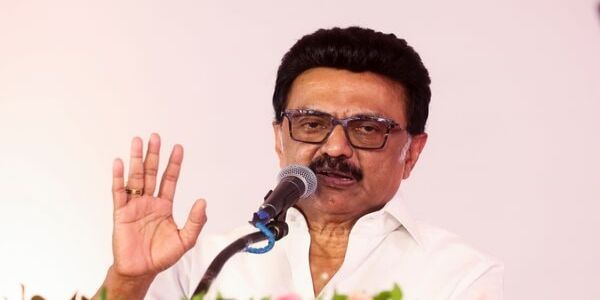
DMK unveils complete candidate list for TN polls, Stalin to recontest from Kolathur
DMK unveils complete candidate list for TN polls,Stalin to recontest from Kolathur..

28 Mar 2026
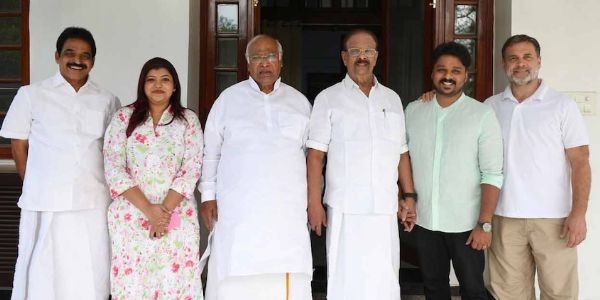
Rahul Gandhi meets K. Sudhakaran, signals UDF unity ahead of Kerala polls
Rahul Gandhi meets K. Sudhakaran, signals UDF unity ahead of Kerala polls..