New Delhi, 28 March (H.S.):
The Indian Council of Agricultural Research (ICAR) and its premier educational arm, the Indian Agricultural Research Institute (IARI), have rolled back their recent move toward online teaching and announced that all academic classes will now be conducted in offline mode. The decision, communicated through a revised institutional order, restores the institution’s earlier schedule for undergraduate, postgraduate and doctoral instruction and sends a clear signal that IARI is reverting to full‑fledged campus‑based education.
Return to offline classes
ICAR‑IARI has clarified that all undergraduate, postgraduate and PhD classes will resume in the prescribed offline mode, following the institution’s original academic calendar.
The Ministry of Agriculture and Farmers Welfare informed that the council has withdrawn with immediate effect its earlier notification of March 25, 2026, which had allowed classes to be conducted online. The decision was taken after a review meeting held on March 26, after which IARI issued a fresh order stating that all academic activities would be restored in a normal and uninterrupted manner.
The move effectively ends a brief experiment with virtual teaching and locks students back into physical classrooms, laboratories and field sessions, which are seen as essential for the practical, research‑oriented nature of agricultural education. The institute has also reaffirmed that hostels, dining facilities and other student services will remain fully operational, ensuring that enrolled students continue to receive the full range of campus amenities.
In its communication, the institute emphasised that the decision was made keeping the best academic interests of students in mind, especially in light of the hands‑on nature of agriculture and agricultural science programmes. Laboratory work, field experiments, and ward‑based teaching in crop and animal sciences are difficult to replicate in a purely online format, and returning to offline mode is expected to strengthen learning outcomes and research continuity.
The timetable for the rest of the semester is to be implemented in the same manner as originally planned, with all examinations, viva voce, seminars and thesis‑related activities proceeding on campus.
University officials have told students to follow their course schedules as published in the official calendar, while the administration has asked teaching staff to adjust their lesson plans accordingly and to ensure that no group of students is left academically disadvantaged by the earlier temporary shift to online delivery.
---------------
Hindusthan Samachar / Jun Sarkar
28 Mar 2026
DMK unveils complete candidate list for TN polls, Stalin to recontest from Kolathur
DMK unveils complete candidate list for TN polls,Stalin to recontest from Kolathur..
28 Mar 2026
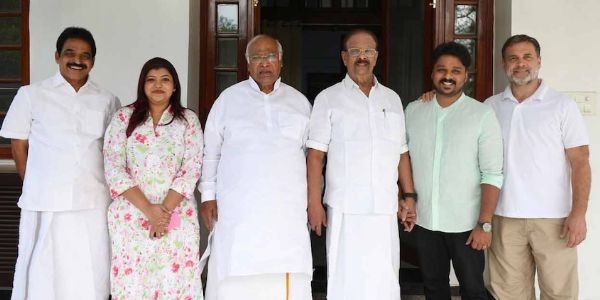
Rahul Gandhi meets K. Sudhakaran, signals UDF unity ahead of Kerala polls
Rahul Gandhi meets K. Sudhakaran, signals UDF unity ahead of Kerala polls..