New Delhi, 28 March (H.S.):
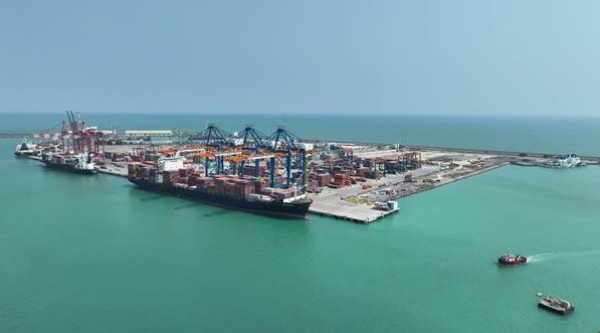
The Indian government has accelerated the development of “green ports” and greener maritime infrastructure by rolling out the Green Tug Transition Programme (GTTP) at major ports and pushing for higher renewable‑energy use, electrification of equipment and low‑carbon cargo operations. Under the Maritime India Vision 2030 framework, the Centre has set a target to cut port‑related carbon emissions per tonne of cargo by 30 percent by 2030, while expanding clean‑energy share and port‑area green cover.
The GTTP, implemented across key ports such as Deendayal (Gujarat), Jawaharlal Nehru, Visakhapatnam and V.O. Chidambaranar, replaces conventional diesel‑driven harbour tugs with electric or hybrid tugs. The Ministry of Ports, Shipping and Waterways says these cleaner tugs are already being deployed in pilot phases, with orders issued for electric tugs at Deendayal, JNPT, Visakhapatnam and V.O. Chidambaranar.
In parallel, major ports have installed on‑shore power‑supply systems and shifted to renewable‑energy‑based power, electrified cargo‑handling equipment and zero‑emission trucks and vehicles.
The Ministry of New and Renewable Energy has designated Deendayal Port, Paradip Port and V.O. Chidambaranar Port as green‑hydrogen hubs, paving the way for green‑hydrogen and green‑ammonia projects. Green‑hydrogen‑ and electrolyser‑based plants are being set up at these locations, along with infrastructure for green methanol bunkering, aimed at decarbonising both port operations and the wider shipping sector.
At Paradip Port, a green‑hydrogen or green‑ammonia handling jetty is being developed under a public‑private partnership at an estimated cost of 797.17 crore rupees. The Centre says nearly 180 port‑modernisation, coastal‑shipping and green‑port‑development projects have been approved over the past two financial years, covering dredging, hinterland connectivity, climate‑resilient infrastructure and emission‑reduction measures. These projects are part of the government’s broader push under the Sagarmala and Maritime India Vision 2030 agendas.
According to Minister of Ports, Shipping and Waterways Sarbananda Sonowal, the Maritime India Vision 2030 envisions that by 2030: renewable energy should account for more than 60 percent of port‑area power use, at least 50 percent of port equipment and vehicles will be electrified, the green‑belt area inside ports will rise by up to 20 percent, and carbon emissions per tonne of cargo will fall by 30 percent.
The Harit Sagar Green Port Guidelines, 2023, formalise these commitments and align them with India’s nationally determined contributions under the climate‑change process, including a 45 percent reduction in emissions intensity by 2030.
By combining green‑tug deployments, hydrogen‑based bunkering, on‑shore power and expanded solar and wind capacity at ports, the government aims to make Indian ports part of a low‑carbon logistics chain while simultaneously upgrading their capacity and efficiency.
Hindusthan Samachar / Jun Sarkar

28 Mar 2026
DMK unveils complete candidate list for TN polls, Stalin to recontest from Kolathur
DMK unveils complete candidate list for TN polls,Stalin to recontest from Kolathur..


28 Mar 2026
Rahul Gandhi meets K. Sudhakaran, signals UDF unity ahead of Kerala polls
Rahul Gandhi meets K. Sudhakaran, signals UDF unity ahead of Kerala polls..