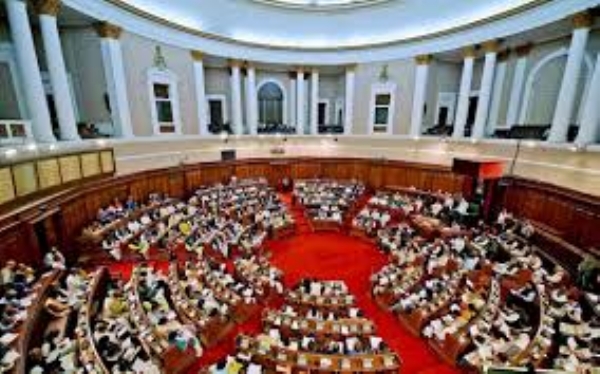
Kolkata, 26 March (H.S.) : Despite claims of inclusive representation during election campaigns, a recent research report has revealed that women, minorities, and marginalised communities remain significantly underrepresented in the committees of the West Bengal Legislative Assembly.
The study, titled “Diversity and Representation of Seventeenth West Bengal Legislative Assembly”, was prepared by Sabir Ahmed and Ashin Chakraborty, based on data obtained under the Right to Information (RTI) Act. It analyses 42 committees of the Assembly between 2021 and 2025, focusing on the participation of women, minority communities, and backward groups in policymaking bodies.
According to the report, Muslims constitute nearly 27 per cent of the state’s population, yet their representation across Assembly committees is far lower. Of the 256 committee members, only 38 (14.8 per cent) are Muslim. Notably, key standing committees such as the Department of Scheduled Castes and Tribes Welfare and School Education have no Muslim members. Excluding the Minority Affairs Committee, Muslim representation across the remaining 41 committees drops to 14.3 per cent. Among the 38 committee chairs, only seven are Muslim. Historical data indicates that Muslim legislators’ participation peaked at 20.4 per cent in 2011 but fell to 14.7 per cent in 2021.
Women, who make up roughly half the state’s population, account for only 13.3 per cent of committee members (34 out of 256). Eight key committees, including Health and Family Welfare, Finance and Planning, Land and Land Reforms, and School and Higher Education, have no female members. Only four of the 38 committee chairs are women (10.5 per cent), and female representation in the Assembly has historically never exceeded 13.9 per cent.
Scheduled Castes are represented in proportion to their population (23.8 per cent), but Scheduled Tribes face significant underrepresentation. Although STs comprise around six per cent of the state population, they constitute only 4.7 per cent of committee members. None of the 42 committees have a Scheduled Tribe chairperson, and 16 committees have no ST members at all.
One of the report’s authors, Sabir Ahmed, highlighted that while political discourse often emphasises equality, the voices of marginalised communities remain largely excluded from the centres of power. The report notes that Assembly committees play a crucial role in designing and implementing social welfare policies, and the lack of equitable participation limits effective policymaking.
Responding to the findings, outgoing Assembly Speaker and Trinamool Congress candidate from Baruipur West, Biman Bandopadhyay, rejected the statistics, asserting that “all legislators have been assigned to at least two, and in some cases three, committees, with many appointed as chairs. There has been no form of discrimination, which is also in line with our party and government policy.”
Hindusthan Samachar / Satya Prakash Singh
26 Mar 2026
Ensure no carelessness in resolving concerns appropriately and achieving their satisfactory resolution: Yogi
26 Mar 2026