New Delhi, 18 March (H.S.):
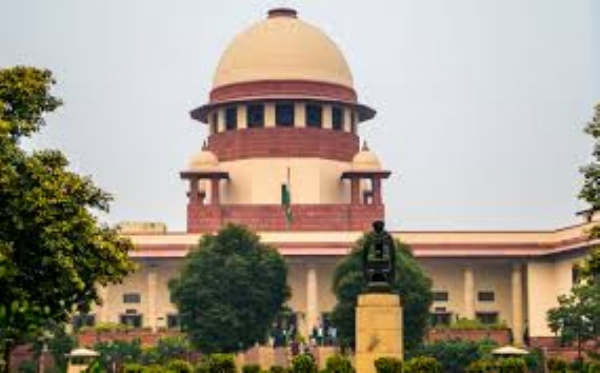
The Supreme Court has refused to defer the hearing of the Enforcement Directorate’s (ED) plea in the I‑PAC raid case involving West Bengal, rejecting the state government’s request for more time to respond to the ED’s reply affidavit. A bench headed by Justice Prashant Kumar Mishra heard preliminary arguments on Wednesday and scheduled the next hearing for 24 March.
West Bengal’s counsel, senior advocate Shyam Divan, opened the proceedings by seeking an adjournment, arguing that the state needed adequate time to file a detailed response to the fresh reply affidavit submitted by the ED about four weeks earlier.
Divan contended that the affidavit contained several new factual assertions that required a point‑wise rebuttal. On the ED’s behalf, Solicitor General Tushar Mehta countered that the plea was an attempt to stall the judicial process and stressed that the reply had been on record for a substantial period.
During the arguments, Divan reiterated the state’s central contention that the ED does not possess the constitutional right under Article 32 to file a writ petition before the Supreme Court and warned that allowing such a suit could set an adverse precedent for federalism. He also challenged the legality of the raid, asserting that no effective prior notice was issued before the search at the India Political Action Committee (I‑PAC) office and the residence of its director, Prateek Jain, and accused the ED of violating privileged communications between the state and its political entities.
In response, Mehta highlighted the seriousness of the ED’s allegations, including claims that Chief Minister Mamata Banerjee personally intervened at the site of the raid, obstructing investigation activities and allegedly removing key documents.
The Solicitor General argued that, in a functioning democracy, central investigating agencies have the legitimate mandate to probe corruption and financial crime, and that state governments cannot invoke “political activity” to shield such agencies from scrutiny or restrain them from exercising lawful powers.
The bench echoed concerns about the balance between federal autonomy and investigative independence, observing that it would be improper for any state to prevent a central agency from carrying out lawful investigations merely on the grounds of political work.
The Court also reiterated its earlier position that while central agencies must not target political parties’ electoral programmes, they retain the authority to act against illegal and suspicious financial transactions wherever they occur. At the same time, the Court indicated that any attempt by state authorities to obstruct or intimidate ED officers would be treated as a grave matter affecting the rule of law and federal order.
Earlier, on 15 January, the Supreme Court had issued notices to the West Bengal Chief Minister and senior police officials, including Director General of Police Rajiv Kumar, after the ED accused them of interfering with the 8 January raid at the I‑PAC office and Jain’s residence. The ED’s probe related to the alleged coal‑scam case, and the agency claimed that the state had tried to hamper document collection and evidence‑preservation.
The Court had also stayed FIRs registered by West Bengal Police against ED officers, directing the parties not to impede ongoing investigation and keeping CCTV footage and digital storage devices from the premises under judicial protection.
ED’s latest prayer against police chiefIn its current petition, the ED has gone further and sought the removal or suspension of West Bengal’s top police officials, including DG Rajiv Kumar, alleging that they colluded with the Chief Minister to obstruct the probe and facilitate the alleged theft of electronic and documentary evidence.
The agency has also pointed to the DG’s past role as Commissioner of Kolkata Police, where he reportedly sat on a protest platform alongside Banerjee, to underscore what it claims is a pattern of blurring the line between party and administrative identity.
The West Bengal government, through its earlier affidavit, has urged the Supreme Court to dismiss the ED’s writ petition altogether, arguing that an identical matter is already pending before the Calcutta High Court, and that parallel proceedings at the constitutional level are unnecessary and procedurally defective.
For its part, the Centre has stood by the ED’s plea, portraying the dispute as a broader test case on whether state executives can interfere with or intimidate central investigative bodies without facing constitutional consequences.
With the bench declining to adjourn the matter, focus now shifts to the 24‑March hearing, where the Court is expected to rule on the maintainability of the ED’s petition and the contours of permissible state action in the face of a central probe.
---------------
Hindusthan Samachar / Jun Sarkar
18 Mar 2026