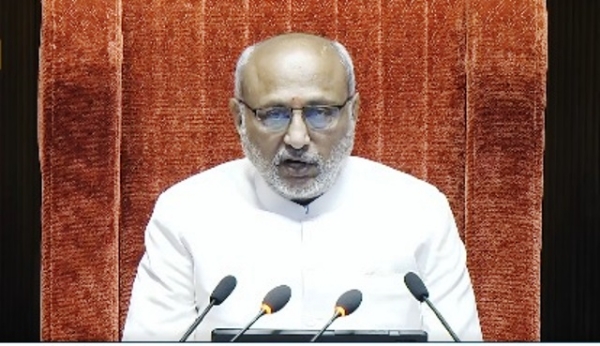
New Delhi, 18 March (H.S.): Vice President and Rajya Sabha Chairman C. P. Radhakrishnan has said that retirement from the Upper House should not be seen as closure, but as the beginning of new roles, responsibilities and continued public service. He made these remarks while bidding farewell to 59 members whose terms will conclude between April and July and who are stepping down after completing their tenure in the Council of States.
In his valedictory address, the Chairman noted that, under the provisions of the Constitution, one‑third of Rajya Sabha members retire every two years. This rotational change, he said, sustains continuity in the House’s working, preserves institutional memory and simultaneously opens space for fresh voices to participate in national debate. “Retirement is a natural process that balances experience with new energy,” he observed, urging the outgoing members to view it as a phase of renewed contribution rather than withdrawal from public life.
The Chairman emphasized that the contributions of retiring members—from legislative interventions to constituency‑specific advocacy—will remain woven into the House’s legacy. He highlighted that former and retired members can continue to shape policy through advisory roles, think‑tanks, academic forums and grassroots movements, leveraging their experience and wisdom long after their formal tenure ends.
In his speech, Radhakrishnan specially acknowledged the contribution of former Prime Minister H. D. Deve Gowda, saying he had consistently articulated the concerns of farmers and rural India with clarity and compassion in the House.
The Chairman recalled that Deve Gowda’s deep‑rooted connection with agrarian communities and his sustained focus on rural livelihoods had enriched parliamentary discussions and strengthened the representation of farming states.
He also recognized the role of the Leader of the Opposition, Mallikarjun Kharge, highlighting his efforts to uphold parliamentary traditions and democratic values. The Chairman described Kharge as a key voice in reinforcing the norms of decorum, debate and accountability, and credited him with helping keep the Opposition’s role robust and constructive.
The Chairman further praised the tenure of Deputy Chairman Harivansh, noting that he had presided over the House with dignity, impartiality and patience, earning the goodwill of members across party lines. He said Harivansh’s conduct had contributed to maintaining the Rajya Sabha’s reputation as a deliberative and balanced forum.
Radhakrishnan said the retiring members had been “strong representatives” of their respective states and communities, articulating local aspirations, voicing critical issues and enriching the democratic process through constructive participation. Citing a Tamil adage—“Good work survives time”—he underlined that the efforts of members would outlive their formal tenure and remain part of the House’s collective memory.
Concluding the farewell address, the Chairman wished the 59 retiring members a healthy, peaceful and purposeful future, expressing confidence that they would remain active in nation‑building, whether through public advocacy, social initiatives or institutional leadership.
---------------
Hindusthan Samachar / Jun Sarkar
18 Mar 2026